Monday, October 30, 2006

Baked Apples


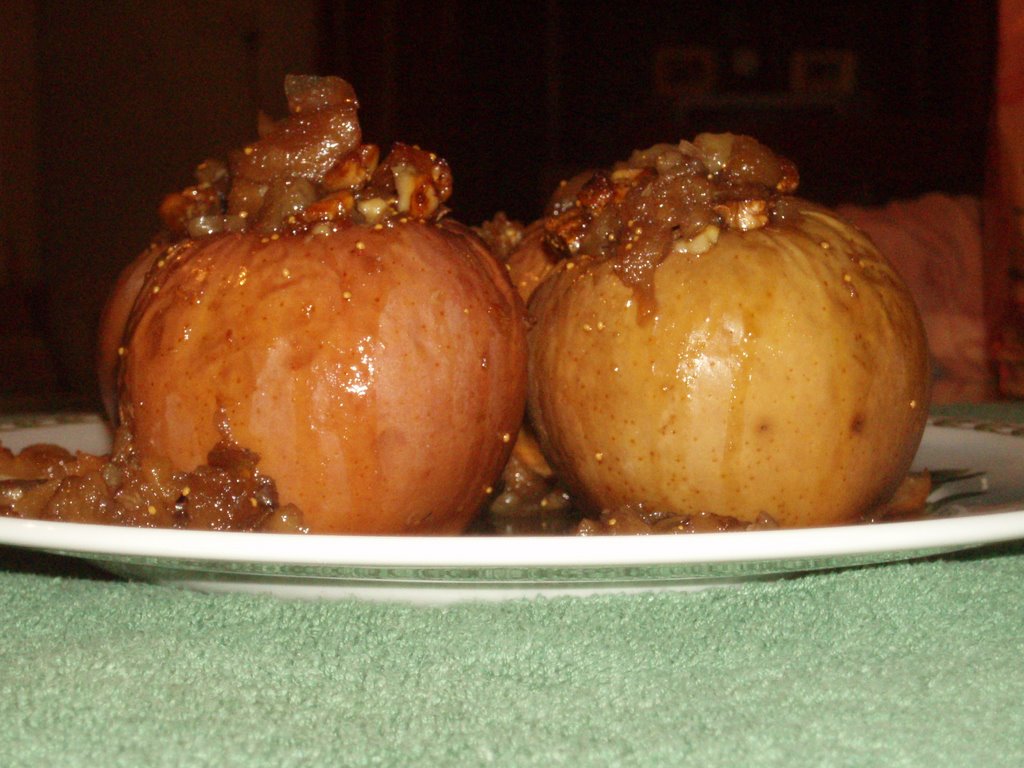
Here’s a simple recipe, the only thing time-consuming about it is coring the apple if you don’t have a corer. I adapted this recipe from Cook Right For Your Type by Dr Peter J. D’Adamo (with Catherine Whitney), published by Century, 2001. This can even be had for breakfast, the books suggests. The link will tell you a little about this diet but meanwhile, happy baking!
I substituted the maple syrup with 'lemon-honey'. I don’t know whether that’s allowed, but this recipe is given here solely for cooking/eating pleasure and the book acknowledged because I feel honour-bound to do so, certainly not to promote any diet nor take away from it with substitutions/additions/omissions.
Here’s how:

4 apples (Rome, Granny Smith, Fuji)
½ cup chopped walnuts
½ cup mixed dried figs and apricots – I softened dry apricots by soaking them in hot water for an hour but maybe it’s not necessary
juice of ½ lime (I used a full lime)
2 tbsps butter or margarine
1 cup (236 ml) boiling water
2 tbsps honey

Preheat oven to 180 C (350 F, Gas Mark 4). Core apples, make sure you don’t pierce the bottom. Mix walnuts, dried fruit and lemon juice. Pour enough honey over this mixture to moisten well. Fill apples without packing them too tightly. If the mixture mounds at the top, it’s alright. Put a bit of butter on the top and put apples in a baking dish. Pour boiling water into the dish around the apples. Bake 20-30 minutes till the apples are tender.
While they are baking, the book says, you can baste the apples with the pan juices. I’m wary about this so I didn’t do it. When apples are done, transfer to a serving dish, pour liquid in pan (and any fruit mixture left over) and reduce over medium heat until thickened. Pour sauce over apples before serving.
The end result was a not-very-sweet-until-you-came-to-the-filling apple, but it really seemed to work as a light dessert. Maybe you could try it with a bit of ice-cream, or you could scoop out more of the apple and put in more filling. If you try it, let me know!

Wednesday, October 25, 2006

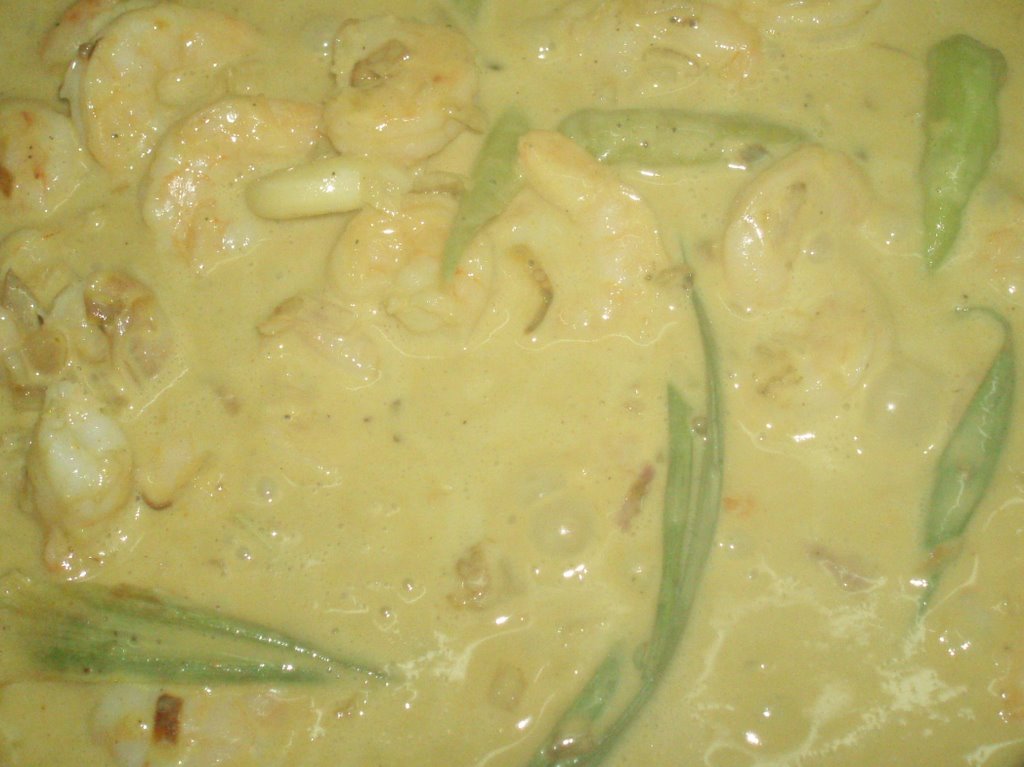
Pandan Prawns


Palav or fried rice at home often had these aromatic, long leaves curled languidly around it. They didn’t know what it was called, but were using it on the advice of a friend who brought them the plant from Malaysia many, many years ago. Only recently, I asked that friend’s family to give me one, and it arrived after two months, with a pretty pink ribbon tied around the pot!
This is the first dish I’m using it in – after letting it grow a bit in my own place. I can’t say it tasted of pandan - but it filled the house with its fragrance even before it went into the pan, tempting me to break off a conversation on the phone in the next room and savour its richness to the full.

Here’s how I made it:

250 gm shelled and de-veined prawns
1 onion, chopped
2 cloves garlic, crushed/minced
3 green chillies
200 ml coconut milk
1 tbsp coriander powder
½ tsp turmeric powder
3 pandan leaves
1 tbsp oil, or even less
Salt and pepper

Heat the oil, fry onions, garlic and green chillies together till soft. Then put in the coriander and turmeric powders, and on low heat, fry till they release their flavours. Put in the pandan leaves, stir for a few seconds, slip in the prawns and coconut milk. Add some salt, stir and let it simmer till it thickens. Take off heat and add pepper. Serve with rice, ordinary or Basmati. I also think it will taste good with dosa, aapam or idiaapam.

Monday, October 23, 2006

Zesty zucchini


It was the picture and the unusual combination that inspired me, not to mention the lone, fat, zucchini rattling about in my refrigerator. A night of sleeplessness ensured that I prepared the zucchini as well as the zest for this morning’s blogging at 2 a.m. My picture’s not as good, but it will have to do. The recipe is from Reader’s Digest’s 30 Minute Cookbook, with minor changes.

Here’s what you need:
500 gm zucchini (smaller ones, the book said)
Zest of 2 limes (1 lemon in the book)
1 tbsp olive oil
Salt and pepper (the book asked for flakes of sea salt)

Trim the zucchini and slice very thinly on the diagonal. Heat oil in a frying pan, add the zucchini and fry till tender. Meanwhile, finely grate the rind of the lemon. Sprinkle on the cooked zucchini and season well with flaky salt and black pepper.

Warning: It tended to be a little bitter in places, so you may want to be more careful than me about taking the zest off the limes!

Sunday, October 22, 2006

Jiffy cheese ’n peas


(DRY MATAR PANEER)

All the visiting and eating that goes with Deepavali makes for a very lazy cook the next day. But the demands of a potluck meal call out loud, so to balance my lassitude with those and come up with a dressy dish, I made this stir-fry of cottage cheese and fresh peas. If you use fresh peas or dried peas soaked overnight, boil them till soft/pressure-cook them for one whistle. It’s even faster if you use frozen peas. You can use tofu in place of the cottage cheese. And oh yes, don’t forget to season the peas with some salt while they boil!

Here’s how:
225 gm/2 big fistfuls of cottage cheese/tofu, cubed
A cup of peas, shelled & boiled
A tsp of oil
3 green chillies, slit
½ a tsp of cumin/jeera
Some salt and cracked pepper
Coriander leaves/cilantro for garnish

Heat oil in a pan, put in cumin. Once in splutters, put in the chillies, saute for a few seconds, then put in the peas and sauté for a while. If you’re using frozen peas, put in a teensy-weensy bit of salt and mix. Now put in the cottage cheese/tofu and sauté again. All this can be done on low/medium heat – make sure the cheese doesn’t stick to the pan. Now check for seasoning and add a little more salt if necessary, turning once again. The cheese might splutter a bit but don’t worry, it will stop soon. Now add the coriander leaves, stir lightly, turn off the heat and sprinkle with cracked pepper. Turn once more et voila, dry matar paneer is ready!
PS: Am testing comment moderation

Friday, October 20, 2006

HAPPY DEEPAVALI!


HERE'S WISHING YOU ALL HAPPY, HEALTHY, WEALTHY, FOODSY TIMES AHEAD! MAY YOUR LARDER ALWAYS BE STOCKED, YOUR BELLIES PLEASANTLY FULL AND MAY YOUR BLOGS ALWAYS DAZZLE WITH FOOD, FRIENDSHIP, LIFE, LAUGHTER AND LOVE!

Thursday, October 19, 2006

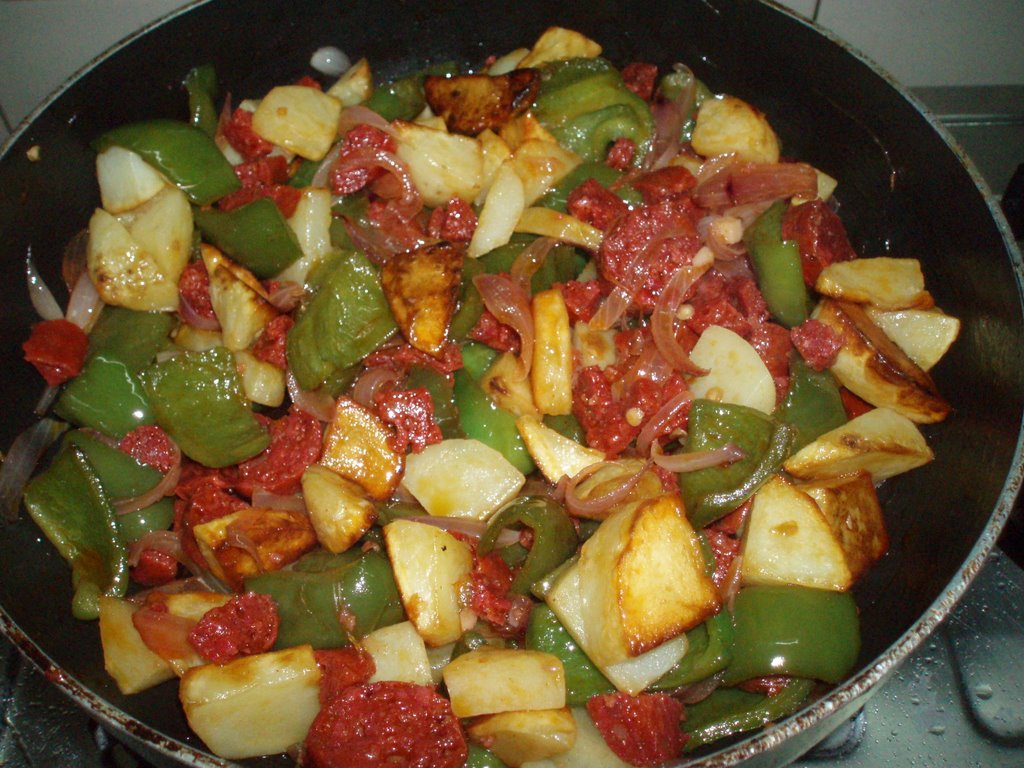
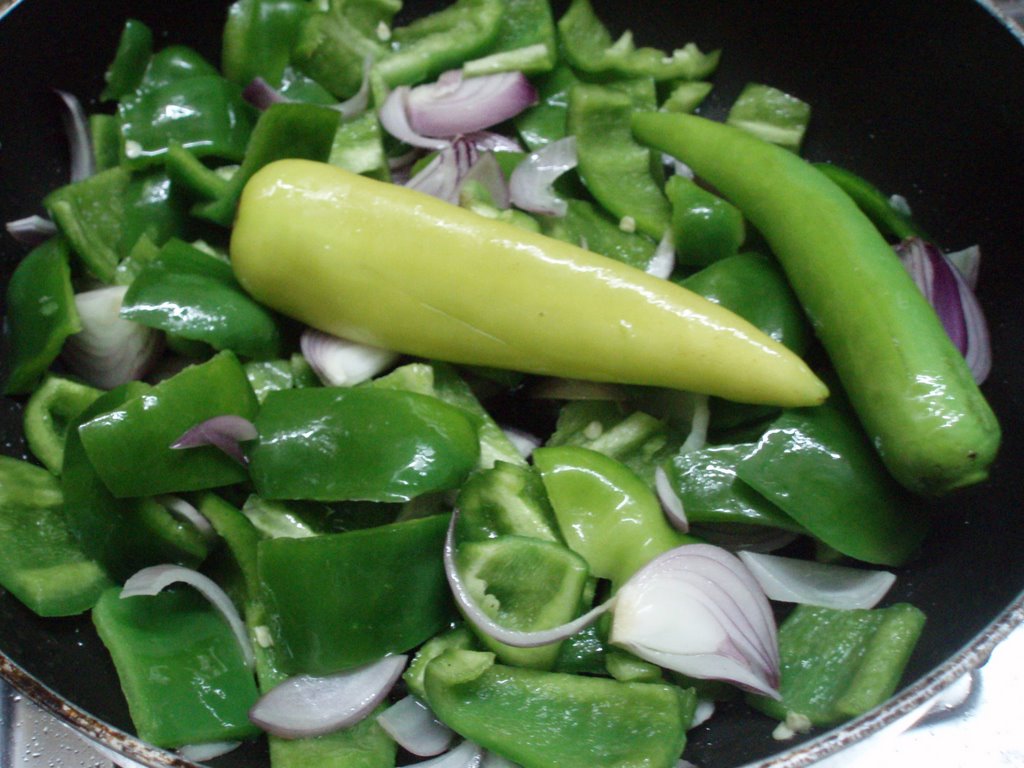
Emerald-ruby-topaz stir fry

Actually, it’s chorizo sausage, capsicum (peppers) and potato. And a bit of onion. Ever since I got my hands on the chorizo, almost a new ingredient for me, I’ve been itching to make this, but it materialized only today.
Once I tasted the chorizo, I realized it’s a lot like pepperoni. Go easy on the salt, though, the sausage has enough of it.

Here’s what you need:
½ a kilo of potatoes, peeled, cubed medium-size
Some oil – just enough to coat the frying pan and a little more - the sausage oozes its own fat
1 big onion, sliced
½ a kilo of green capsicum/peppers, cut into medium-sized pieces
¾ cup white wine
A bit of salt and pepper

Fry potatoes with salt, turning frequently, in heated oil, on medium heat until browned – about 15 minutes. Remove potatoes, reserve. To the same pan, add chorizo, capsicum and onion until softened – about 10 minutes, but keep checking and turning. Now add wine and boil down. Take it off the heat and add potatoes to this mixture, check for salt and then season with pepper and more salt, if necessary.
I mopped up the juices with a slice of white bread, heavenly!

Tuesday, October 17, 2006

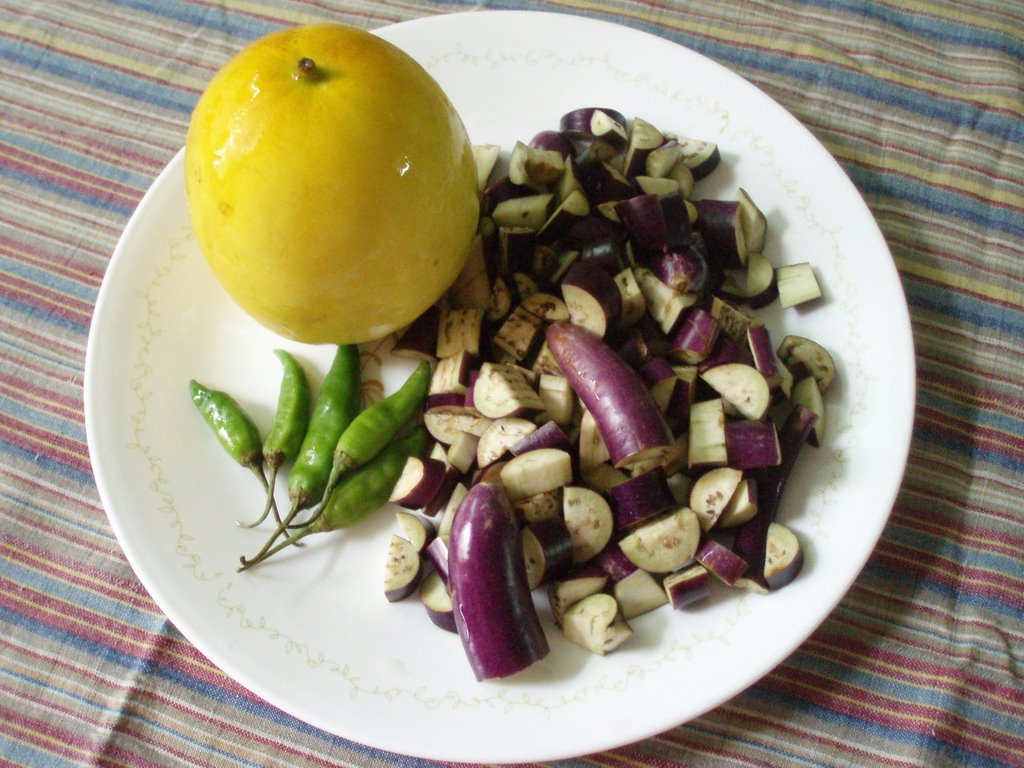
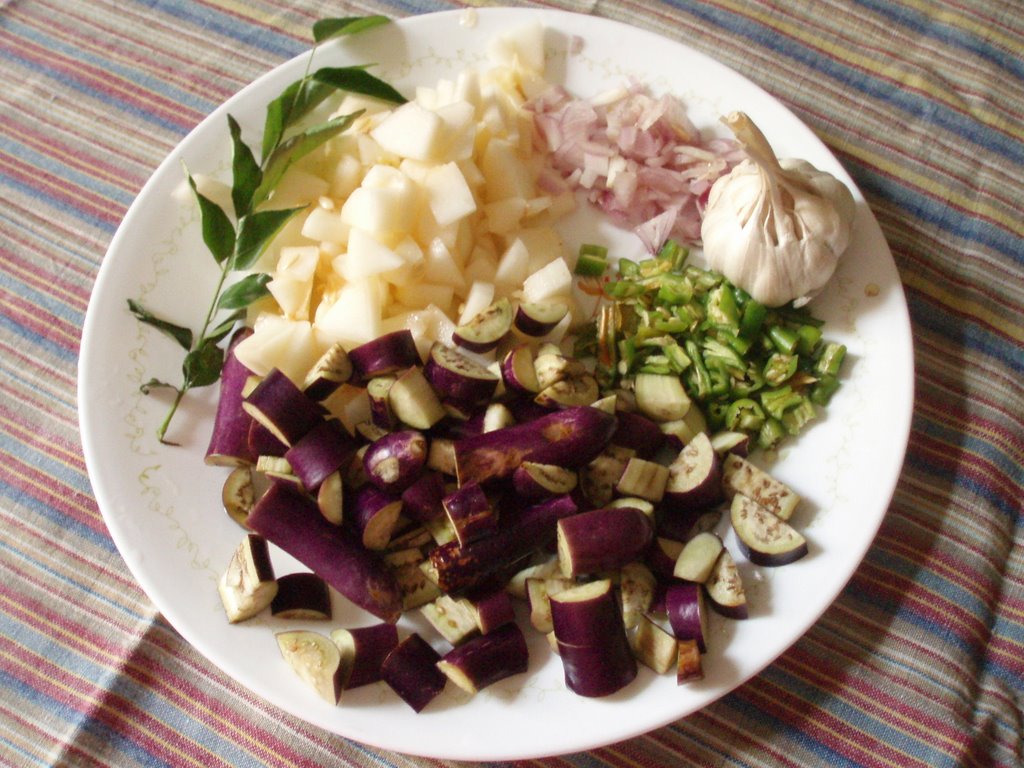
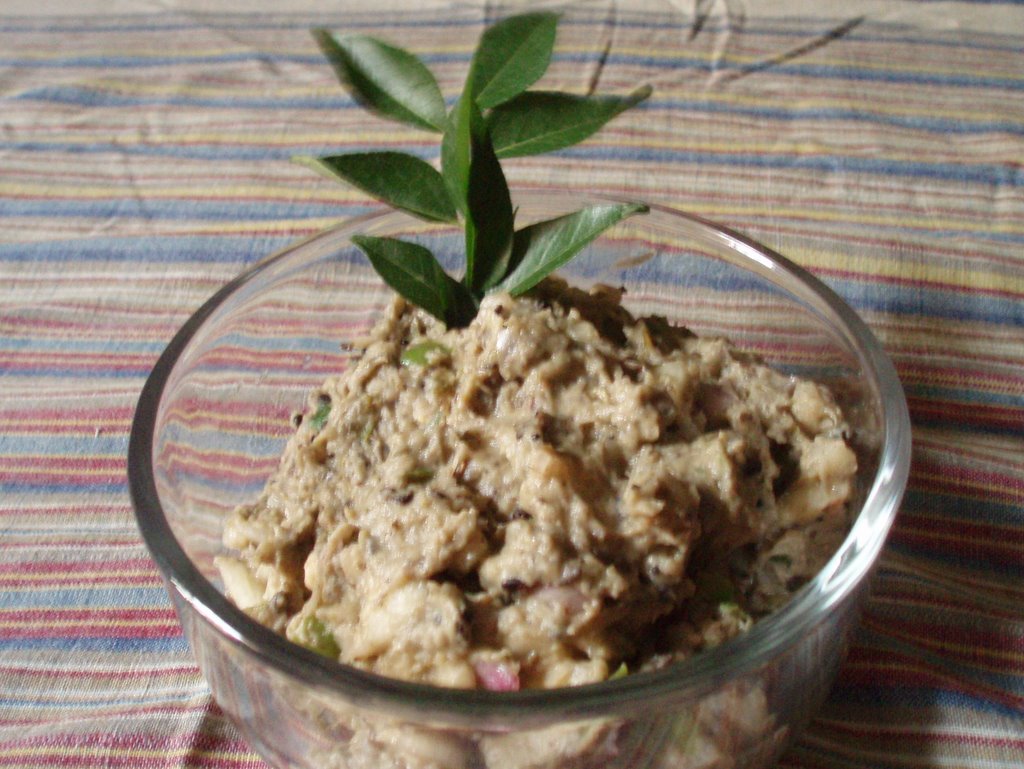
One more chutney (Vankaya-dosakaya)


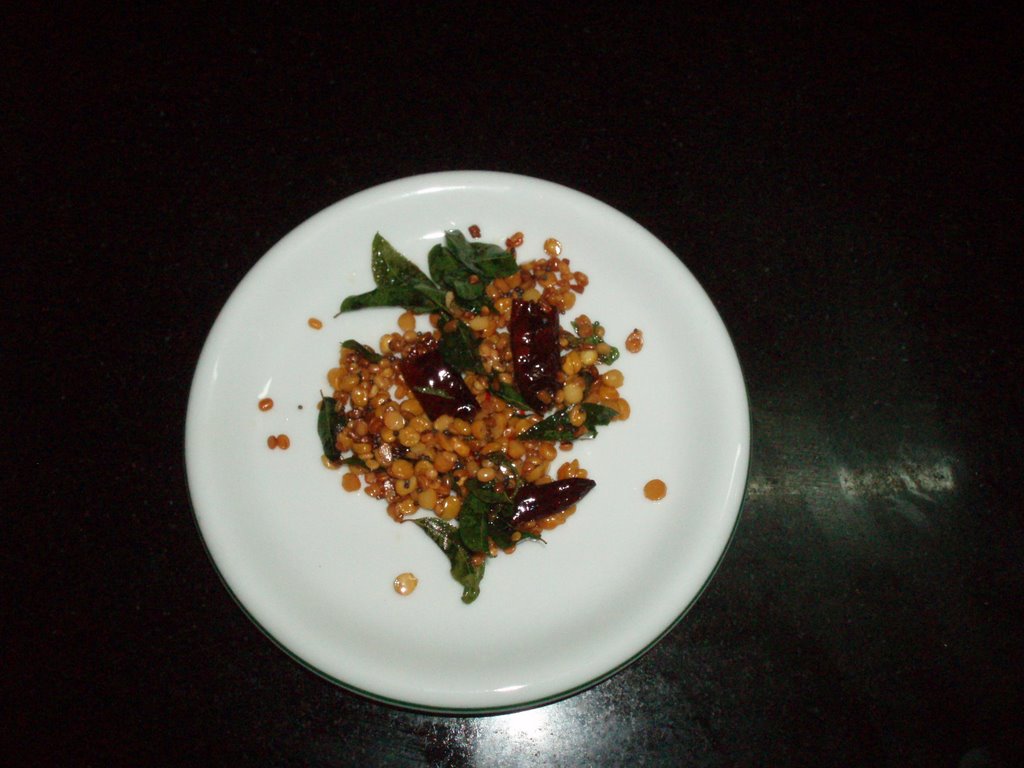
A friend’s mother made this once, and I’ve been sold on it ever since. Mine is not a patch on hers. Anyhow, I think the best thing about these chutneys is the tempering –the brown, crunchy bits of black gram, the cumin and the mustard lend texture to the otherwise soft mix. But again, it’s not as if the chutney doesn’t have texture in its softness – if it hasn’t been whizzed to paste, you can feel the vegetables too. In any case, my friend’s mom’s preparation was a glorious amalgam of purple and yellow, tempering in thick, golden sesame oil pooling in the depressions made by the spoon. I know, I know, oil is not politically correct, but I’m wondering if we should make an exception for pachchadis.


Here’s what you need:
Dosakaya/Round yellow cucumber – 1 (but not a full one if it’s big), sliced rather fine but thick enough to hold its shape Brinjal/Eggplant – ½ a kilo of the long, purple variety, but you can probably use the bigger ones as well – cut into small pieces
Green chilli – 8-10 or more, chopped
Onion – 2 small, chopped
Oil – Ahem! Well, enough to fry the eggplant well, chillies and tempering one after the other
Tempering – Mustard seed, cumin, black gram as much as you like (but not in fistfuls, no), a few curry leaves
Tamarind – marble-sized
Garlic – 7-8 cloves
Rock salt

Fry the eggplant in hot oil till soft, remove and set aside. In the same oil, fry the green chillies. Set aside. Now put in the black gram. As it turns golden, put in the cumin and the mustard seeds, let them pop. Add the curry leaves. Turn off the heat. Cool everything if your mixer’s the kind which should not be used with hot ingredients. Transfer eggplant, chillies and tempering into the mixer jar, add tamarind, garlic and rock salt and use the lowest speed to blend. Do this in very short bursts otherwise you may still end up with paste. Now spoon this into a bowl, mix in the cucumber and the onion. You can add more tempering if you want. Serve with rice and ghee.

Saturday, October 14, 2006

Not Quite Mush (Dondakaya pachchadi)

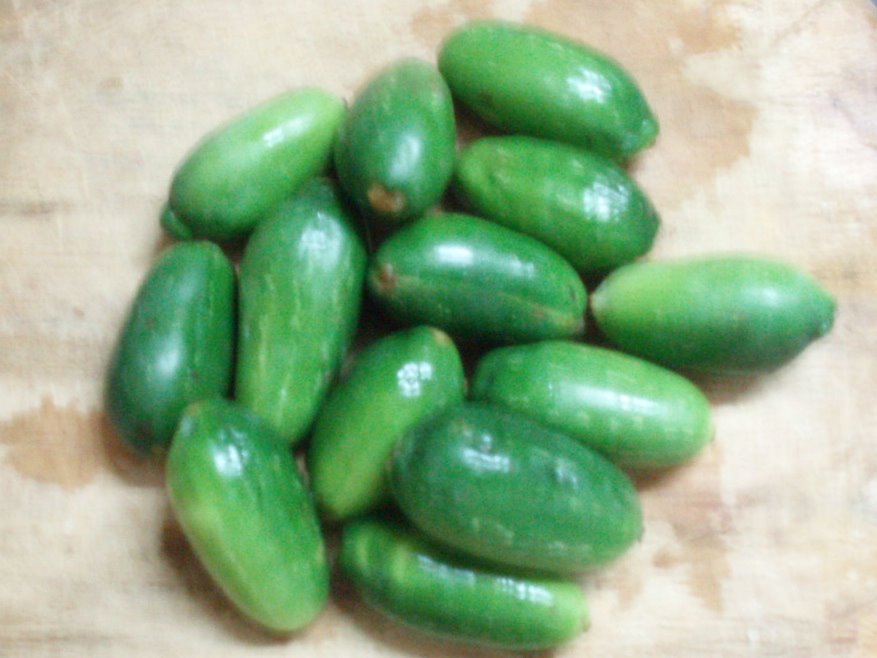
It’s not supposed to be mushy, I think, but I’d probably sliced the Dondakais too fine, so it almost got pulverized. The taste remains the same, though the texture could do better. Here’s the recipe for this crunchy, tangy, fresh-tasting chutney:

Dondakaya: ½ a kilo
Gingelly/sesame oil: about 8 tsp (aargh!) or less
Mustard seed, cumin, black gram dal, curry leaf, garlic (optional) - as much as it takes to give a crunchy feel
Green chillies: as many as you can take
Tamarind: walnut-sized or a little more, wetted in water
Rock salt

Cut the vegetable into small pieces, salt them and leave them to get rid of some water. Meanwhile, chop chillies, fry them in the gingelly oil, put them aside and fry the mustard seed, cumin, black gram and curry leaf and garlic in the same oil. Now go read a paper or a book for a while. Then come back, squeeze the vegetables well to get rid of the water, put them into the mixer with the chillies, fried seeds, tamarind and rock salt and pulse it – I think I went wrong in letting it run continuously, but it seemed to work the last time I made it.
Meant to be eaten with rice and ghee.

Thursday, October 12, 2006

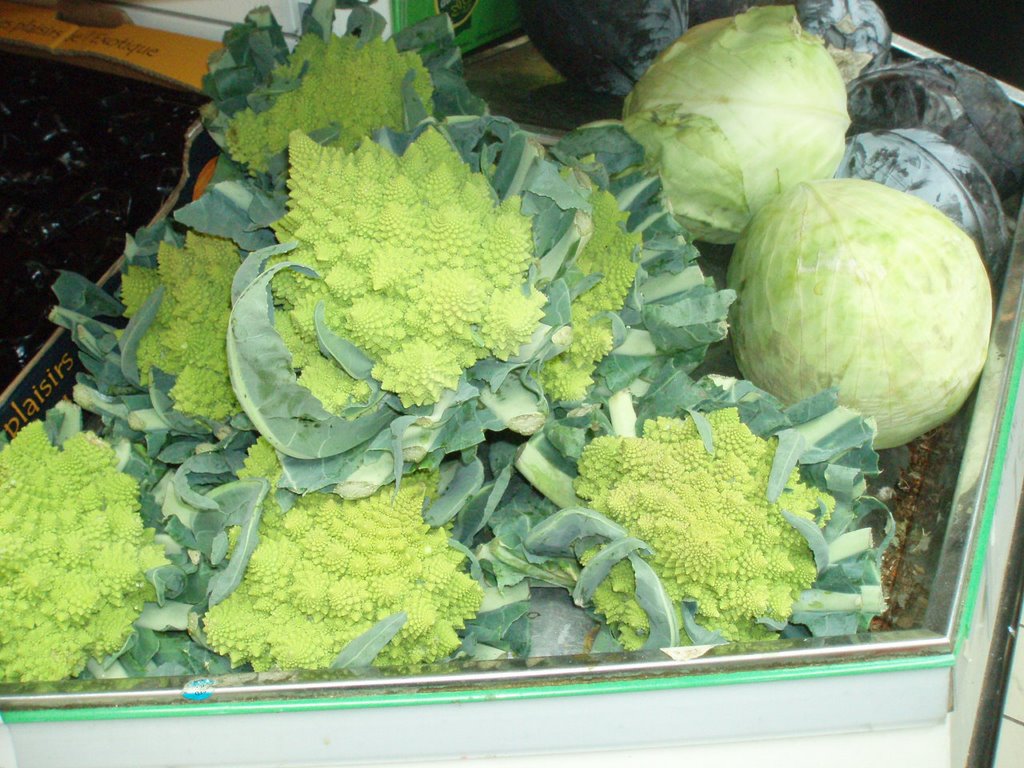
WHAT ON EARTH IS THIS?

What does it remind me of? A dragon? A dinosaur? I really can't put my finger on it. But then, I've never, ever seen this vegetable, described as choux romaine in the supermarket. Never even heard of it. Have you? What does one do with it?

Wednesday, October 04, 2006

Five things to eat before I ... Aargh!


Five things to eat before I ... (And want a steady supply of)

Thanks Asha, for tagging me.

As I write, I can only think of three. One is something I’d like to try, the others are something I’ve eaten and yearn for. As for the other two, let me see if I can come up with something!

The first is raw food of the vegan kind. I read about it in the New York Times, which said it was fast acquiring cult status and even reviewed a few restaurants. It was a fascinating read. The pictures looked, well, good enough to eat. I want to try it before I decide whether I want a steady supply of it.

Where have all the oranges gone? That’s the second item on the wish list. Big, heavy, loose-skinned tangerines with juicy segments. Which exploded with juice when you bit into them. It’s at least 10 years since I’ve seen that quality. All I find are diminutive, fist-sized abominations that are sour and very often, dry, orange-turning-sickly-white and wrinkled inside. Or the big, very orange, imported ones that seem to have an endless web of fibre and thick skin inside that by the time you get to the flesh, most of the juice would have slipped through your fingers and you’re left with two choices: lick all the surfaces it dripped on to and eat the remainder uncomplainingly, or not eat them at all. I take the easier way out.

This receding citrus brings me to the fourth item on my wish list - its cousin, the pommelo. This sometimes conical, sometimes round green fruit with its thick peel and pinkish-inside membrane parts to reveal segments with sturdy, pale pink ‘pearls.’ Sometimes they could be yellow, but I prefer the pink beauties. They make an appearance in the bazaars only in August, and only a week long, at most. If you don’t have a tree yourself, their presence in your home largely depends on the grace of neighbors who possess a tree or kindly aunts who arrive bearing a limited bounty of two or three. No sourness here, just a hint of it and a suggestion of bitterness - a taste all its own! Sigh!

The third item on my list is Haleem. The haleem I ate in Hyderabad’s old city in the month of Ramzan many years ago. That’s the real thing, they said. You get authentic haleem only in the old city, they said. There on a visit during the same time last year, I was surprised to notice several restaurants all over the city offering it. I wish I’d had the time to try it, but at least, it’s not uncommon anymore, like the tangerines or the pommelos.

And lastly, there is no fifth item. There are several foods I’d like to try and they are too numerous to list. It’s also happened that sometimes, the foods I’ve finally tasted are not as good as I’ve imagined them to be. Which, I think, is a good thing, though a bit romance-killing, because that way, you can keep deep disappointment at bay.

I would like to tag Sudha of Food Newbie for this meme.

Monday, October 02, 2006

Playing Tag - The Butterfly Effect Meme

I’m tagged, for the very first time. Thank You, Paz!
This meme asks us to name food items or events that changed our foodie lives. Specifically, we’re asked to recall an item, person, event or place that affected us profoundly, and marked defining moments in our lives. Not necessarily “big and splashy” but can be something small and simple, something that changed the way you view the world. I’m not sure if they changed the way I view the world, but they did change the way I cooked, thought of food and made it a joyful experience.
These are the categories:
An Ingredient: Yeast. My interest in cooking began with baking. And like many who take on a new hobby, I was all into it, wanting to make my own bread, my own pizza bases, and what not! But my yeast would never “start foaming”. I didn’t realize that I had to use warm water, not hot water, which was killing it off. When I finally used warm water, by accident, it worked, and for me, it was a big day – the joy that I’d got something right, that I finally owned the knowledge to make something work. A moment of pure happiness.
A Dish: This is more recent. It’s not so much a dish as a method. I’ve always liked stir fries but this recipe for vegetables I saw in a Bengali cookbook somehow makes it very simple and quick, and is a great way to use up the stray vegetables in your refrigerator. I also like the spice mix that goes into it: a teaspoon each of mustard seed, aniseed, fenugreek, ginger, nigella and cumin sauteed in oil, pieces of five different veggies (potato, eggplant, peas, okra, most veggies, really) then stir-fried on a high flame , then simmered in their own juices, covered – the result is an inviting mix of veggies, neither squishy nor hard.
A Meal: Each new meal is a discovery and affects our lives in its own way. However, I will name a traditional favourite that brings back fond memories of grandmothers and airy kitchens and a day buzzing with activity: Rice with ghee and mango pickle of the first day. Fresh pickle is always pungent and even a tad bitter with its freshly-ground fenugreek and mustard seed powders. At home, pickle was made by the barrel and emptied into jaadis (earthen jars) to cure before it was ready to be shipped out to the rest of the family. The residue in these barrels would then be mixed with hot, soft, rice. Some butter would be added to it and that would be the treat of the day! Watching the white butter melt rapidly in the red, hot rice was magical!
A Cookbook or other written work: I have to say that my love for food and cuisine was intensified by the Dining and Wine columns of The New York Times. I wish I could write like that.
A Food Personality: Sanjeev Kapoor, I guess, but I haven’t watched his show, or anyone else’s, in years.
Another person in your life: My family and friends – Some didn’t really approve of my hobby, but would always indulge me, try a bit of what I made and invariably say it was good; the others always encouraged me, one to the point of calling me a food artist!
Paz of The Cooking Adventures of Chef Paz tells me Dan@saltshaker.net started this meme and that we should let him know and link to the original post, so here it is!
http://www.saltshaker.net/20060630/the-butterfly-effect
I would like to tag Asha of Foodie's Hope http://www.foodieshope.blogspot.com for this meme.

Friday, September 29, 2006

MIXTRESS OF SPICES


The minute I saw the announcement for JFI-Ghee http://cookingmedley.blogspot.com I knew what I would enter. Only, I didn't know the recipe. My friend at college used to bring out a Horlicks jar of ghee with pale pink onion bits floating at the bottom during dinnertime. Maybe there was pepper and cumin too, I’m not sure. For extra flavour, she would say, her eyes shining with anticipation as she set the jar down on the table.
I don’t remember ever tasting it because I wasn’t a fan of ghee then. I’m no fan now either, but definitely more adventurous, so when this memory got raked up, I had to somehow find a way to make it. I mulled over it, imagined it several times, trawled the Net, asked people, looked up recipe books, but finally decided on the ingredients after reading a recipe on this web site http://rwood.com for seasoned homemade ghee.
The recipe called for a pound of butter, but as she writes, yours truly realises she reversed the kilo-pound equivalents in her fevered new blogger’s enthusiasm and ordered a kilo of butter to be delivered home. The shop around the corner only had 750 gm, and so she ended up using that rather than the kilo she wanted, and the 450 gm that she was supposed to use! The result wasn’t too bad, anyway, and it was a wonderful photo-op! How I made it:
750 gm butter
1 white onion, chopped
2 big cloves garlic, chopped
1 tsp cumin
1 tsp coriander powder
1 tsp black peppercorns
½ tsp turmeric
1-inch piece cinnamon
1 bay leaf
A few cardamom
Some powdered nutmeg or mace

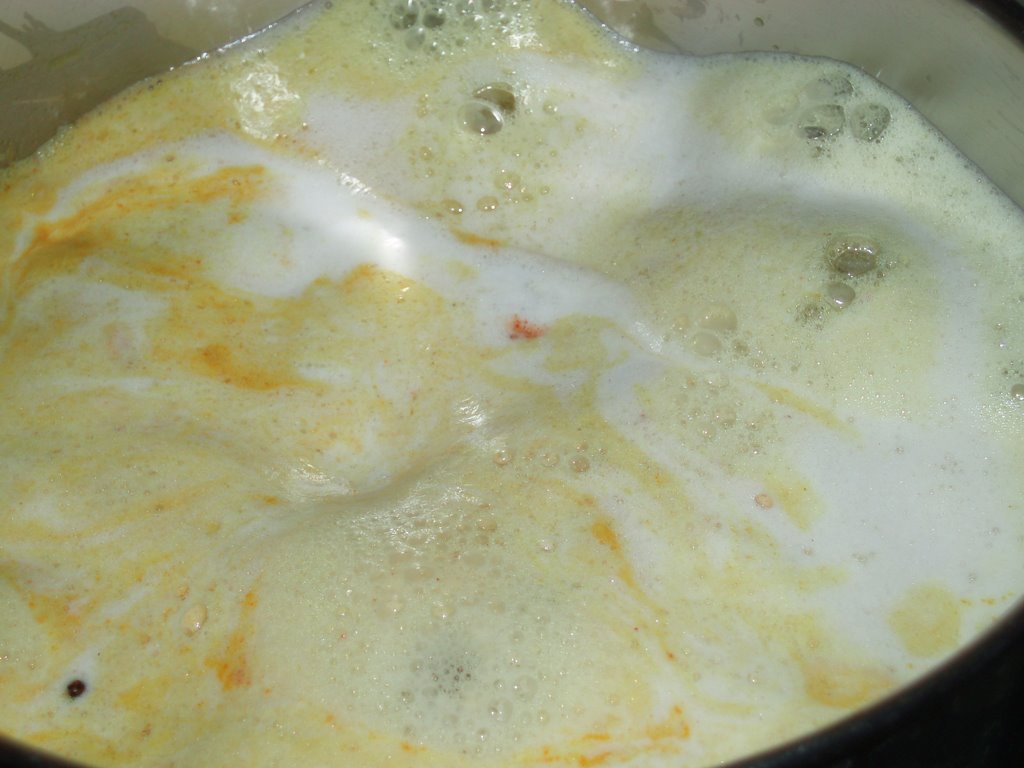
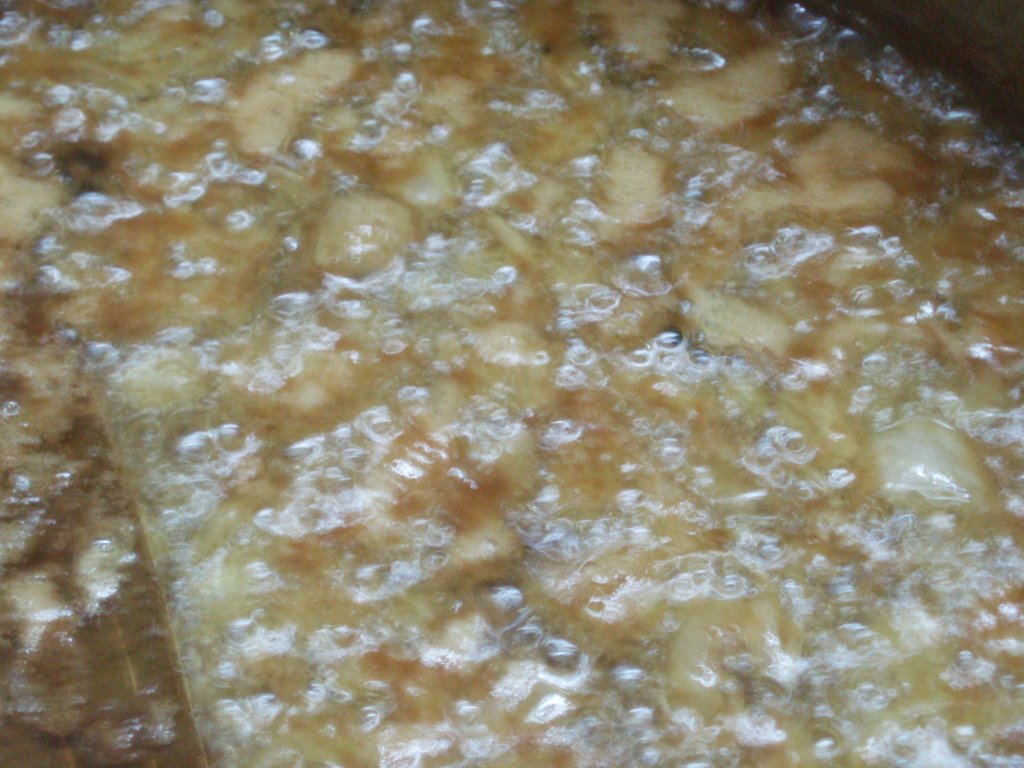
Method: Place the butter and spices in a heavy saucepan and melt over medium heat. Don’t cover the pot. Soon, the butter will start foaming. Once it begins, reduce the heat and simmer uncovered and undisturbed for about half an hour. You’ll begin to wonder if your kitchen hasn’t turned into Niagara Falls - that’s the kind of noise my ghee made. At home, it was never such a big production - it was made, the solids (called Godaari) were scooped into a spoon and given out as a treat to eat, and that was the end of it. By now, you would have realized this was my first attempt at ghee-making, so I was anxiously looking for the signs the recipe specified:


Changing from cloudy yellow to clear golden colour (it never seemed to)
Developing a popcorn-like aroma (it never did, not even when I risked burning my face sniffing into the saucepan)
Stops foaming and making crackling noises (nope, it did neither, but later the foam broke up into small bits, though it still covered the surface)
Develops a thin, light tan crust on the nearly motionless surface (when did it ever stop bubbling?)
Milk solids at the bottom turn from white to tan (it was all so murky, I couldn’t see a thing till I fished for them with a fork)


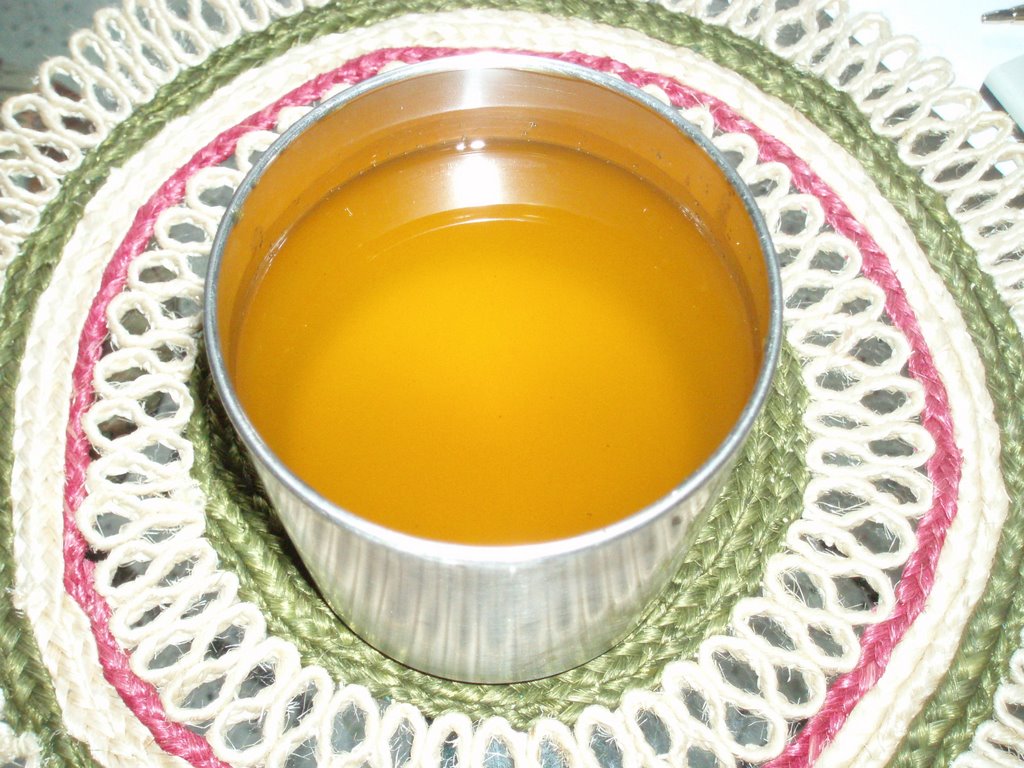
You’re supposed to keep a close watch on the ghee and remove from heat when done. Signs of overcooking, says the web site, are browning and foaming (heavens, mine looked like that throughout, from foaming to finish - I'm not sure where I went wrong but I was determined to not give up, so I continued hovering anxiously over the stove.) Let cool until it is just warm. Sieve it into a jar or a container, discard the strained solids.


At this stage, mine looked fine. And it tastes nice too. Kaaram neyyi (Hot ghee), a guinea pig said, but they probably meant spicy, as nothing chilli ever went into it!
We tried it with plain rice, with various kaarams, dal and chapati, it tasted best with plain rice and plain dal. It will probably make a good base for pulaos and enhance the taste of plain basmati rice! I’ll let you know.

Monday, September 25, 2006

WHEW!

That’s what I said after I finally finished making today’s dish, Tomato Bread Pudding. I found it pretty time-consuming, probably because I was doing a few other things at the same time.
I’d never come across TBP earlier. A few years ago, my aunt presented me Michele Anna Jordan’s The Good Cook’s Book of Tomatoes but somehow, this recipe escaped my eye. I had a surplus of tomatoes this week and I needed to use some of them, so when I spied this recipe, it sounded interesting enough to put in the blog.
My experiment resulted in a moist, very slightly pinkish custardy bread when you broke through the golden-brown crust on top. The recipe asked for half a pound of bacon but since I don’t stock any, I just left it out but added an onion fried in olive oil.
What you need:
Pure olive oil
4 cups bread, torn into medium-sized chunks
2 medium tomatoes, sliced
An onion, fried till pink (optional)
3 tbsp finely minced coriander
2 ounces Cheddar
2 eggs, beaten
2-¼ cups milk
2 tbsp commercial tomato puree
2 cloves garlic, finely minced
Salt and freshly ground black pepper
Method: Rub a decent-sized but not too large baking dish with a thin coating of olive oil. Toss bread, tomatoes, cheese, coriander in a mixing bowl. (At this stage, you can pause, admire your handiwork and go on to serve this as salad with a bit of salt and pepper!) Transfer to the baking dish. Whisk eggs, milk, tomato puree and garlic, season with salt and pepper. Pour custard over the bread and make sure it is distributed evenly.


[Photo]Bake in a 325 F oven (160 C) for 35 minutes and then in a 425 F oven (about 230 C) for another 10-15 minutes till top browns. The top browned in the first stage, though a knife inserted into the centre came out wet - I baked it in the second stage, it got browner, as you can see, but the inside was still moist (notice the pale patch in the dish, I scraped off the top to see how the inside was) - it had been 40 minutes by then, so I lost patience and switched off the oven, but as it turned out, didn’t end up tasting too bad. Don’t need to tell you the aroma from the oven was heavenly![Photo]
PS: I must say this tasted rather like the Tomato Baath that is made in South India! I knew it tasted like something but it came to me only a few hours later! I heated the leftovers well today for dinner - it tasted different, like bread and pudding, maybe the trick lay in the heating.

Nimmakaaya Kaaram (Lemon Zinger, do we call it?)


Some mornings, idlis or dosas for breakfast would be accompanied by this kaaram. As the years passed, I left home, the cook took over from Grandmom, this recipe got lost, or maybe it so happened that it was never made when I was around. I only remember the lemony taste and grainy texture, which I thought came from poppy seed but as it turns out, comes from a bouquet of ingredients that doesn’t have any poppy seed in it.


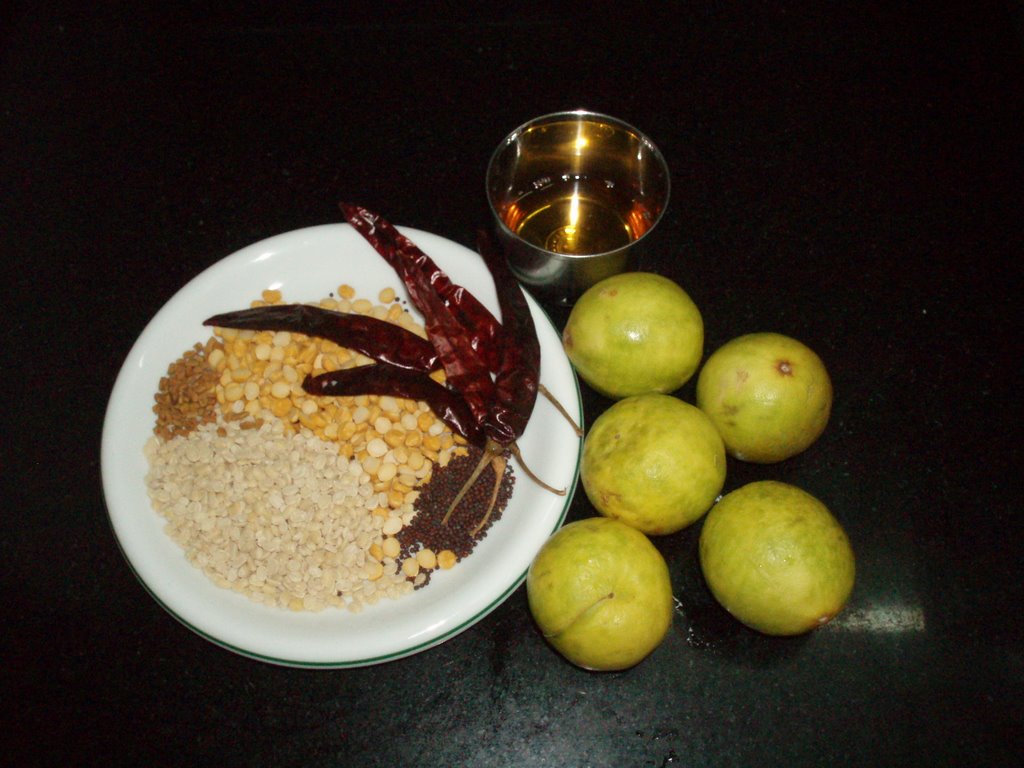
What you need:
Juice of five lemons
Channa dal/Bengal gram: 1 tbsp
Urad dal/Black gram: 1 tbsp
5 red chillies
Fenugreek/methi: ½ tsp
Mustard seed: ½ tsp
Curry leaf/karivepaku: A loose fistful
Salt
Gingelly (Sesame) oil

Method:
Fry everything except lime juice and salt in oil. Allow it to cool. Grind to a paste. Add lemon juice and salt. I think this can even be made with citron (dabbakaaya) juice. For variations, you can add coriander leaves or crushed garlic, I suppose at the time of frying, I’m not sure, really. I added curry leaves as an afterthought. It is a good accompaniment to rice and most traditional South Indian breakfasts but am sure it will taste good on other bland stuff, or rather, food that doesn’t have too many flavors in it already, such as bread. Let me know when you try.

PS: This is my contribution to the You Can Feed a Hungry Child Campaign

Sunday, September 17, 2006

Sunday lunch, and a forgetful cook(book)


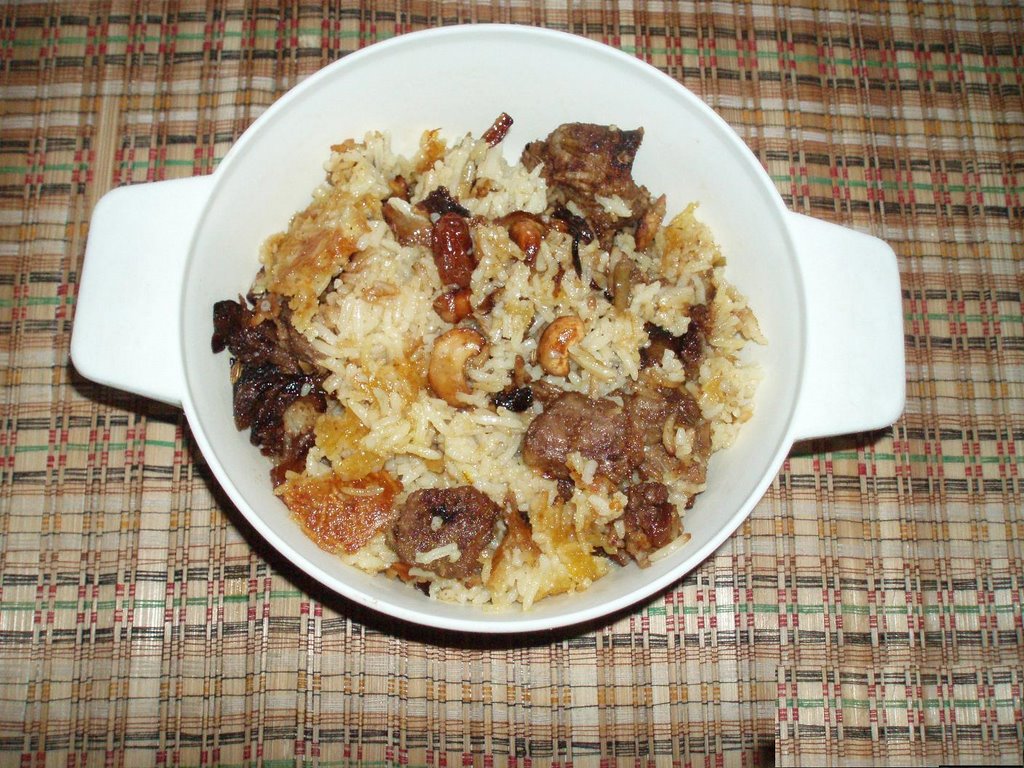
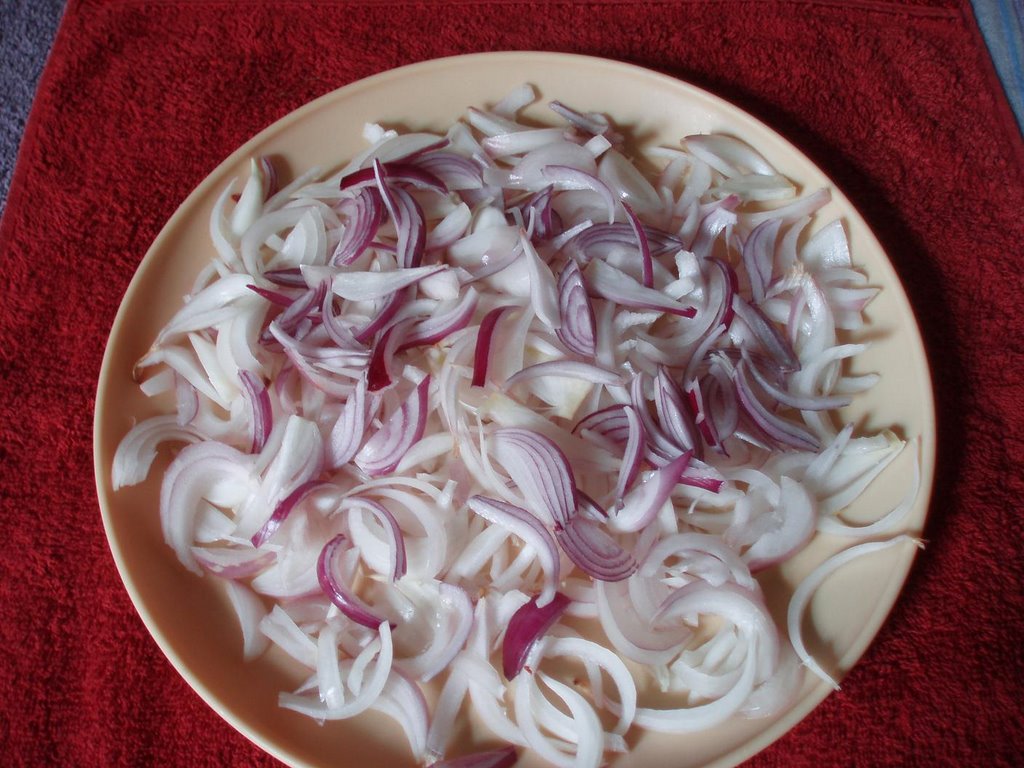
Unusual it would be, I decided, and summoned ingredients for a tomato bread pudding (!) but as it turned out, ended up making Yakhni Pulao instead. This recipe’s been lying in wait in a much-used, dog-eared, spice-and-grime-stained cookbook for many years and revealed itself to be not so labour-intensive if you didn’t grudge slicing four onions fine at the outset. No masalas to be pounded/ground, no meat to be marinated for hours, just some tears to be shed.

Between slicing the onions, reading the recipe and pressure-cooking the meat, I forgot that the recipe called for one cup of beaten curds. And guess what, the cookbook went on to forget too! And it asked me to fry three onions crisp and save another, but didn’t tell me what to do with that! I realized only halfway through the procedure, but I didn’t really bother to deduce at which stage the curds and the solitary onion went in but I bet my pulao came out tasting all golden and mellow because it lacked the tartness of the curds. The onions and raisins lent it a touch of sweetness.
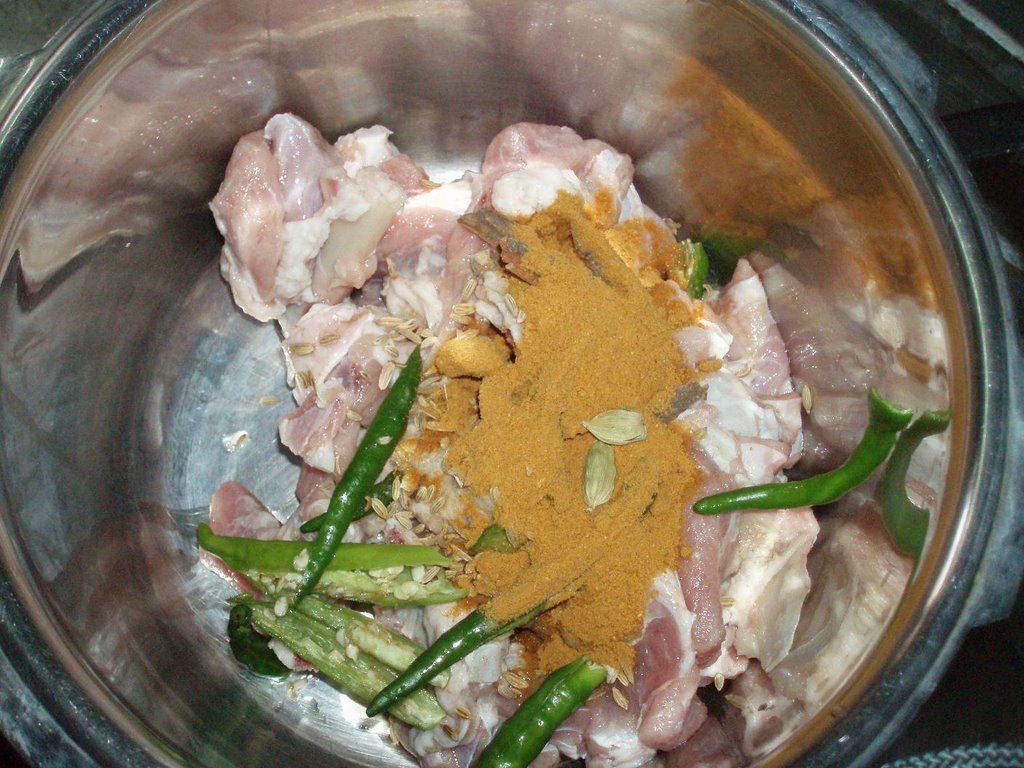
What you need: 500 gm mutton, 250 gm Basmati rice, 2 pinches saffron soaked in ½ a cup of warm water, a handful each of raisins and cashew nuts (I used very few) fried in ghee (clarified butter), 2 tsp garam masala (curry powder), 6 green chillies, 3-4 tbsp ghee/oil, 10 flakes garlic, 1-inch piece ginger (I used an equivalent amount of ginger-garlic paste), 2 cardamoms, 2 tsp fennel seed (saunf), 2 tsp coriander seed (I used powder), 2 pieces cinnamon, salt
Method: The meat goes into a pressure cooker with 1-½ glasses of water, the ginger and garlic, chillies, salt and the whole spices (cardamoms, fennel seed, coriander seed and cinnamon) tied in a piece of muslin. I dispensed with the cloth. (I suppose the forgotten cup of beaten curds goes in now.) Once it’s done, strain the stock, reserve it. I cooked the meat on high pressure till the cooker hissed thrice, then on simmer for about seven minutes.
In half the amount of ghee, fry the meat till it turns pink; remove. (Maybe the lonesome onion goes in at this stage, just before you pop the meat in?) Put in the rest of the ghee, add the rice, fry till pink (my rice didn’t turn pink).
Add the stock, warm water (dunno where this came from, but I warmed some) and salt — now, figure out how much water you need to use — my 250 gm of rice came to two cups, so I used four cups of liquid including the stock, the ½ cup of saffron water and the warm water, and added about 1-1/2 cup more later (as the rice hadn’t cooked completely). Once it’s done, cover the rice with the fried onions, garam masala, fried mutton and nuts and raisins, cover tightly (or put some heavy stuff on the lid so that no steam escapes) and let everything infuse for about 20 minutes. Mix and serve.

Friday, September 15, 2006

Crunchy!


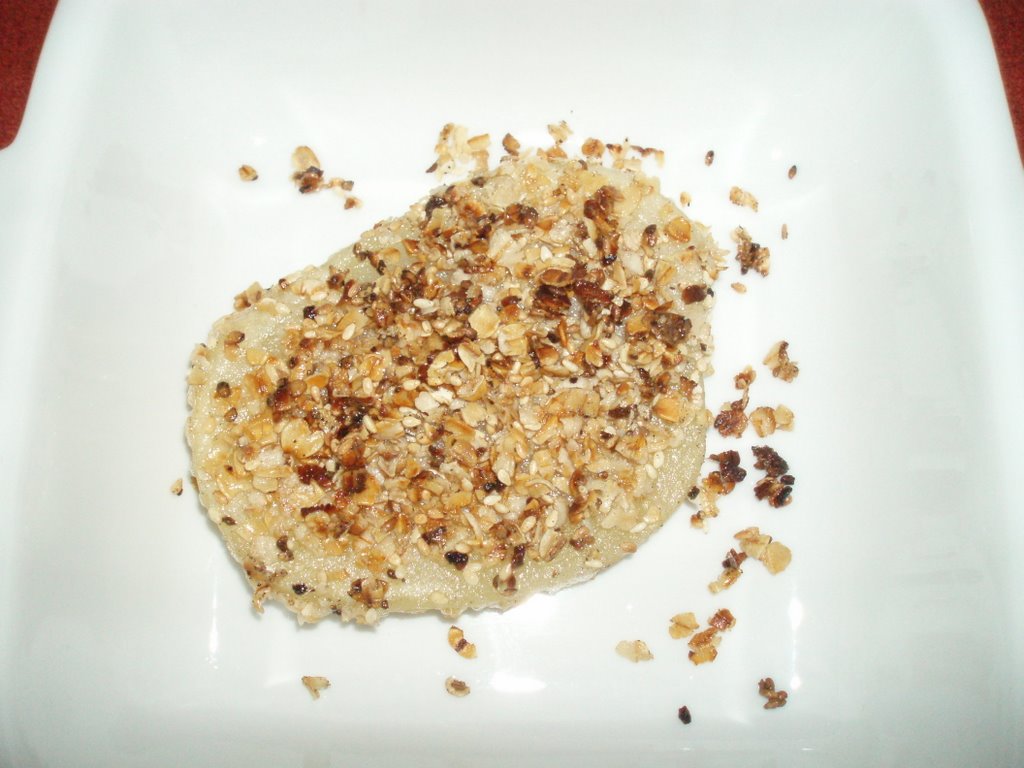
Thrilled that I'd actually got down to blogging, I came up with another attempt today. I’ve had this big jar of quick-rolled oats for a while. I was supposed to have a virtuous upma of them for breakfast once in a while, but it stood crowded and forgotten among many others in my pantry. But – I definitely remembered buying it in the recent past (four months ago) and though squinting at the ‘BB’ date gave me the sinking suspicion that it said ‘one month’ I bravely forged ahead and set about using it up.
What I did was try and replicate a crunchy coating of oats on fried nuggets I’d had at a restaurant once. I looked for some recipes on the Net till I found a few for fish and chicken rolled in oats and baked but since I didn’t have either handy, I decided to use a couple of mammoth potatoes that were just threatening to turn green.
I hadn’t really bothered to keep an eye on the quantities specified, so I threw together some random amounts for the first spud - they nearly didn’t suffice. Then I put together another batch for the second.
I dipped the slightly-boiled slices in the beaten-to-foam white of an egg, rolled it in the oats-sesame-cracked pepper-ajwain (oregano)-salt mix and baked them on a greased plate in the oven. Not a big success, they didn’t soften, and the coating tasted so-so.
However, I shallow-fried the second batch with a little olive oil in a non-stick pan, and that’s what I’ll do till I find out what went wrong with the oven batch. Better still, I’ll figure out a way to get just the coating (scrumptious!) to hold itself together and not get some humongous tuber into the act!

Thursday, September 14, 2006

Nutty Beginnings!

Hi, my food blog's finally cooking! I thought about the name for days and it came to me in a flash, then I got caught up with work and a holiday and then with several thoughts about what I should feature in the first post. I wasn't inspired to write about the everyday food I was making either because most of it was turning out brown, thanks to a certain masala I got from my wanderings last week. And everyday brown is such an uninspiring colour, and I wasn't sure it would reproduce well on the blog either!
So, here's a very simple, no-fuss breakfast I sometimes have and like to recommend - curds/yoghurt with nuts and dry fruit! It can double up as dessert as well, with a sprinkle of sugar or jaggery if you have a sweet tooth. And you can add any dry fruit you want - the dish in the picture contains raisins, walnuts and toasted sesame seed but other breakfasts have seen a mix of dates (makes it really sweet), pista nuts, almonds, cashews, peanuts, maybe even a slow splash of honey, though I've never tried that. My folks have a mixture of honey, ripe bananas and curds for dessert in a silver bowl; indulgent, but not for me. I tried it with a bit of nutmeg for a touch of the exotic, still think this nutty creation's better. There are no proportions, though I find it tastier when the nuts don't swamp the curds.
Bon appetit!