Showing posts with label spices. Show all posts

Monday, January 04, 2021

Sambaar Kaaram


Yesterday, I had a big thrill from the blog. I checked it for comments after a long time. There was a comment from someone who said she had been using my recipe of sambaaru kaaramu to make her pappucharu taste extra special but could not access the link When My Soup Came Alive: Value-Added Mix to it. Funnily enough, I've had the same problem a couple of times in the recent past but it's not broken most of the time. I decided to put it up again here with a direct headline that is easily found rather than an indirect, pun-filled one that gets lost in the ether!

It's been nearly fourteen years since I put up that recipe. I've looked high and low for information related to it but have only come up with scraps. Beyond the fact that the word sambaaru/sambaaram/sambhaaram stands for spices used to flavour food (or "provisions, preparations, collection, supplies, constituents, ingredients and requisites") and that it can be used for a range of dishes from stir-fries to dals, I know little about it. The link above leads to a discussion on the lore surrounding sambar! My grandmother would say that this sambaaru kaaram and that sambar are different, which is true, in my experience. Sambar powder contains so many more ingredients ... even if the etymology is the same. From what I have observed and read, it's used mostly in farming families of Guntur and Krishna districts of Andhra Pradesh. 

We used to eat it with steaming, ghee-smeared idlis as children, dipping the idli in a spoon of the kaaram served to a side on our plates. When she was alone at home, it was her dinner for the day, my mother says, with rice and ghee, like any other podi or kaaram that we make. Here's the recipe, provided by my grandmother's sister:

(I read somewhere recently that pure castor oil is added to this mixture.)

Dry red chillies: 500 gm (remove the stalks)
Coriander seeds: 250 gm
Fenugreek/Methi seeds: 50 gm
Cumin/jeera seeds: 50 gm
Black gram/urad dal: A little less than 50 gm
Salt, to taste
Garlic: to taste

Dry roast the first five ingredients separately.

Let cool, whiz to a powder in the grinder.

Add salt.

Crush garlic roughly, add to the powder and mix it with the kaaram.

Store in an airtight container.


Wednesday, November 12, 2008

Clearing Botanical Odds & Ends

I don't know which benevolent star was ruling when I white-lied to my trainer last month that I would be taking a break from the personal training classes (but not from the routine workout at the gym, oh no!) on account of impending travel, but have I been travelling! It's nothing compared to most people but for someone who doesn't travel often and cannot get enough of it, it's a lot. It's not even as if I've been travelling for pleasure or to new places, but it's fun to get away from everyday surroundings.

Some of this travel resulted in me buying a lot of spices, usual and unusual, but I've used only one of those yet in anything I've made. However, I've been making an effort to eat a wide variety of vegetables and clear the fridge of its botanical odds and ends, and many mixed vegetable curries have been seeing the light of day, as have been many cookbooks and spices.


This recipe is simple and easy on the stomach but there's elbow grease involved: cutting various vegetables and grinding a spice mix. I found the idea for the spice mix in a book on Orissa's cuisine but the choice of vegetables is entirely mine.

Mixed vegetables, diced/cubed: 2-3 cups
(I used red capsicum/red pepper, baby potatoes, bottlegourd (peeled), carrots, radish)

Roast and grind
Aniseed/saunf/sompu: 1 tbsp
Pepper, whole: 1/2 tsp
Poppy seed/Khuskhus: 1 tbsp

Salt, to taste

Oil: 1-2 tsp
Mustard: 1 tsp
Dry red chillies: 2

Water: a little

In a heavy-bottomed pot or pan, place half of the vegetables and sprinkle some of the spice mix on top.

Now put in the rest and top with the spices.

Sprinkle the salt.

Put in tiny amounts of water (just enough to ensure that the vegetables don't burn), cover and simmer. Check now and then to ensure they are not burning. Cook till they are done.

In a pan, heat the oil. Pop the mustard, add the red chillies. Tip this into the vegetables, mix well and serve. This results in a nice, dry dish with lots of texture and taste.


I'm sending this off to Think Spice ... Think Anise being hosted here this month.

I'm also sending this to Suganya's Vegan Ventures - Round 2.

Friday, September 29, 2006

MIXTRESS OF SPICES


The minute I saw the announcement for JFI-Ghee http://cookingmedley.blogspot.com I knew what I would enter. Only, I didn't know the recipe. My friend at college used to bring out a Horlicks jar of ghee with pale pink onion bits floating at the bottom during dinnertime. Maybe there was pepper and cumin too, I’m not sure. For extra flavour, she would say, her eyes shining with anticipation as she set the jar down on the table.
I don’t remember ever tasting it because I wasn’t a fan of ghee then. I’m no fan now either, but definitely more adventurous, so when this memory got raked up, I had to somehow find a way to make it. I mulled over it, imagined it several times, trawled the Net, asked people, looked up recipe books, but finally decided on the ingredients after reading a recipe on this web site http://rwood.com for seasoned homemade ghee.
The recipe called for a pound of butter, but as she writes, yours truly realises she reversed the kilo-pound equivalents in her fevered new blogger’s enthusiasm and ordered a kilo of butter to be delivered home. The shop around the corner only had 750 gm, and so she ended up using that rather than the kilo she wanted, and the 450 gm that she was supposed to use! The result wasn’t too bad, anyway, and it was a wonderful photo-op! How I made it:
750 gm butter
1 white onion, chopped
2 big cloves garlic, chopped
1 tsp cumin
1 tsp coriander powder
1 tsp black peppercorns
½ tsp turmeric
1-inch piece cinnamon
1 bay leaf
A few cardamom
Some powdered nutmeg or mace

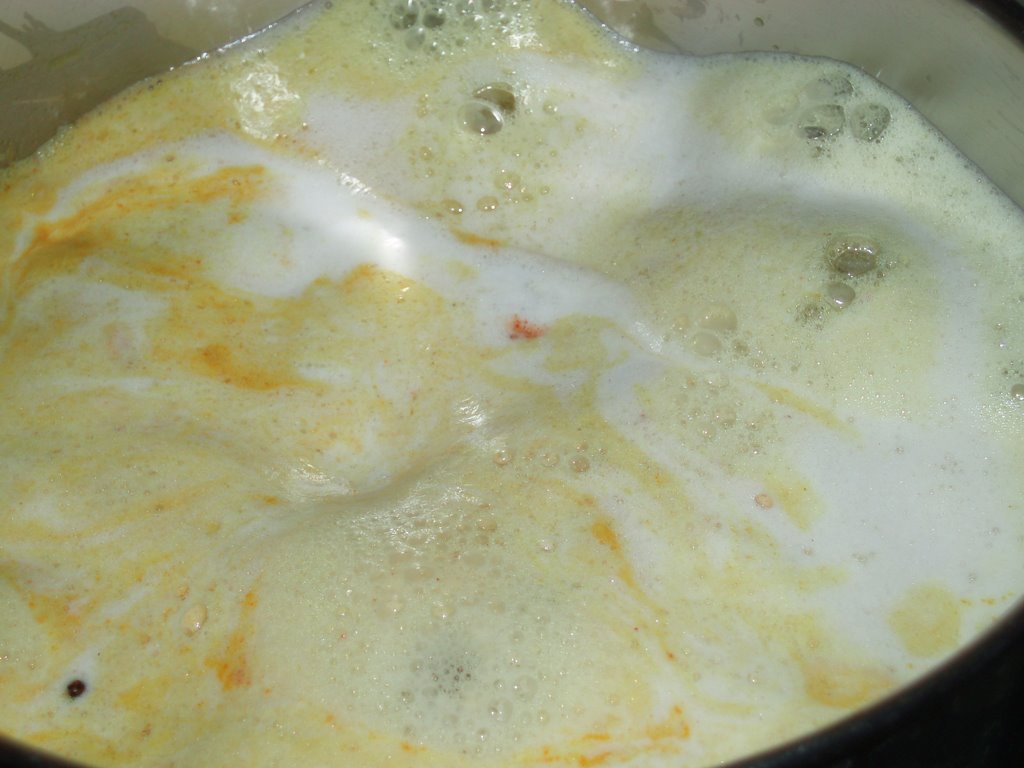
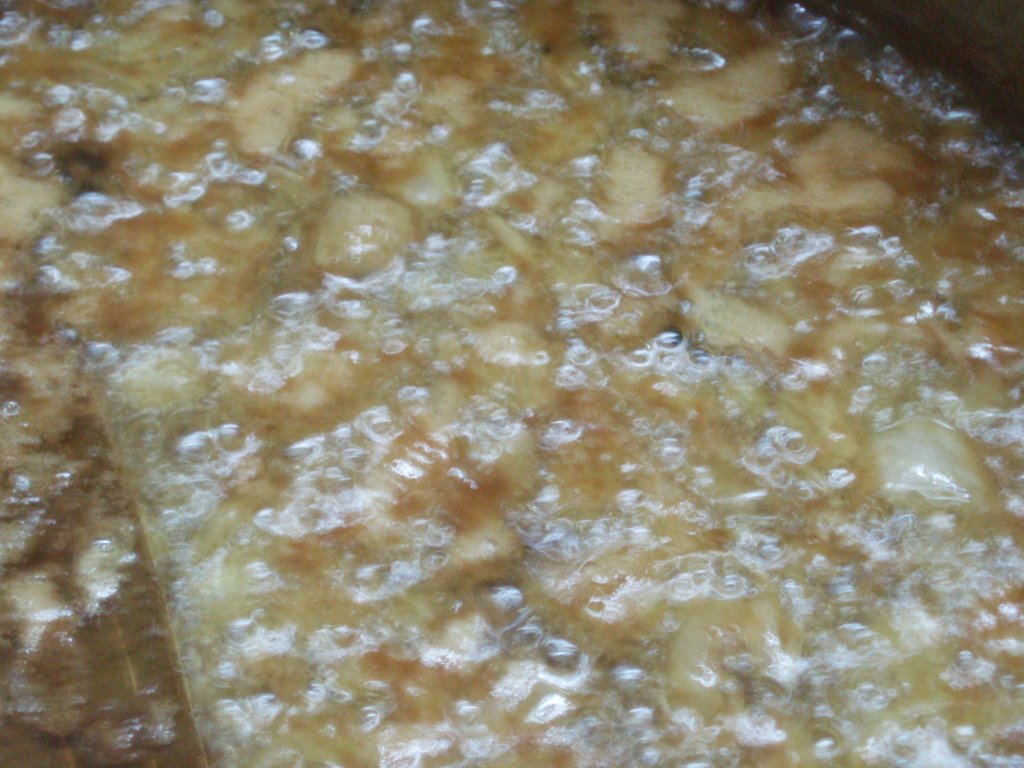
Method: Place the butter and spices in a heavy saucepan and melt over medium heat. Don’t cover the pot. Soon, the butter will start foaming. Once it begins, reduce the heat and simmer uncovered and undisturbed for about half an hour. You’ll begin to wonder if your kitchen hasn’t turned into Niagara Falls - that’s the kind of noise my ghee made. At home, it was never such a big production - it was made, the solids (called Godaari) were scooped into a spoon and given out as a treat to eat, and that was the end of it. By now, you would have realized this was my first attempt at ghee-making, so I was anxiously looking for the signs the recipe specified:


Changing from cloudy yellow to clear golden colour (it never seemed to)
Developing a popcorn-like aroma (it never did, not even when I risked burning my face sniffing into the saucepan)
Stops foaming and making crackling noises (nope, it did neither, but later the foam broke up into small bits, though it still covered the surface)
Develops a thin, light tan crust on the nearly motionless surface (when did it ever stop bubbling?)
Milk solids at the bottom turn from white to tan (it was all so murky, I couldn’t see a thing till I fished for them with a fork)


You’re supposed to keep a close watch on the ghee and remove from heat when done. Signs of overcooking, says the web site, are browning and foaming (heavens, mine looked like that throughout, from foaming to finish - I'm not sure where I went wrong but I was determined to not give up, so I continued hovering anxiously over the stove.) Let cool until it is just warm. Sieve it into a jar or a container, discard the strained solids.


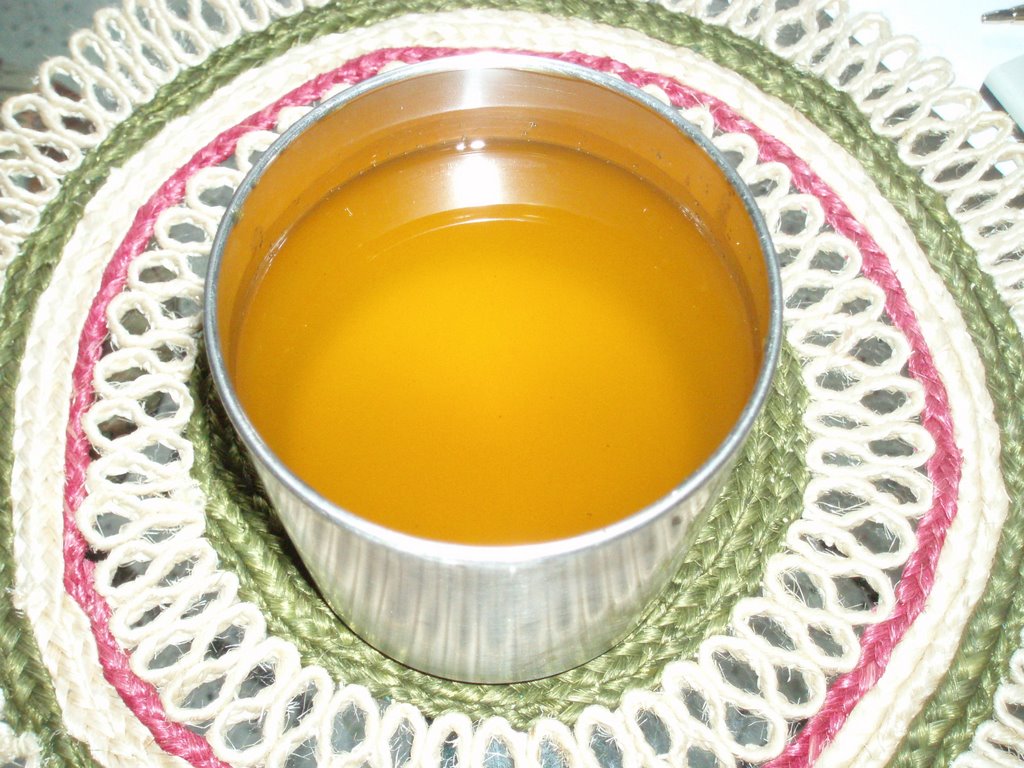
At this stage, mine looked fine. And it tastes nice too. Kaaram neyyi (Hot ghee), a guinea pig said, but they probably meant spicy, as nothing chilli ever went into it!
We tried it with plain rice, with various kaarams, dal and chapati, it tasted best with plain rice and plain dal. It will probably make a good base for pulaos and enhance the taste of plain basmati rice! I’ll let you know.