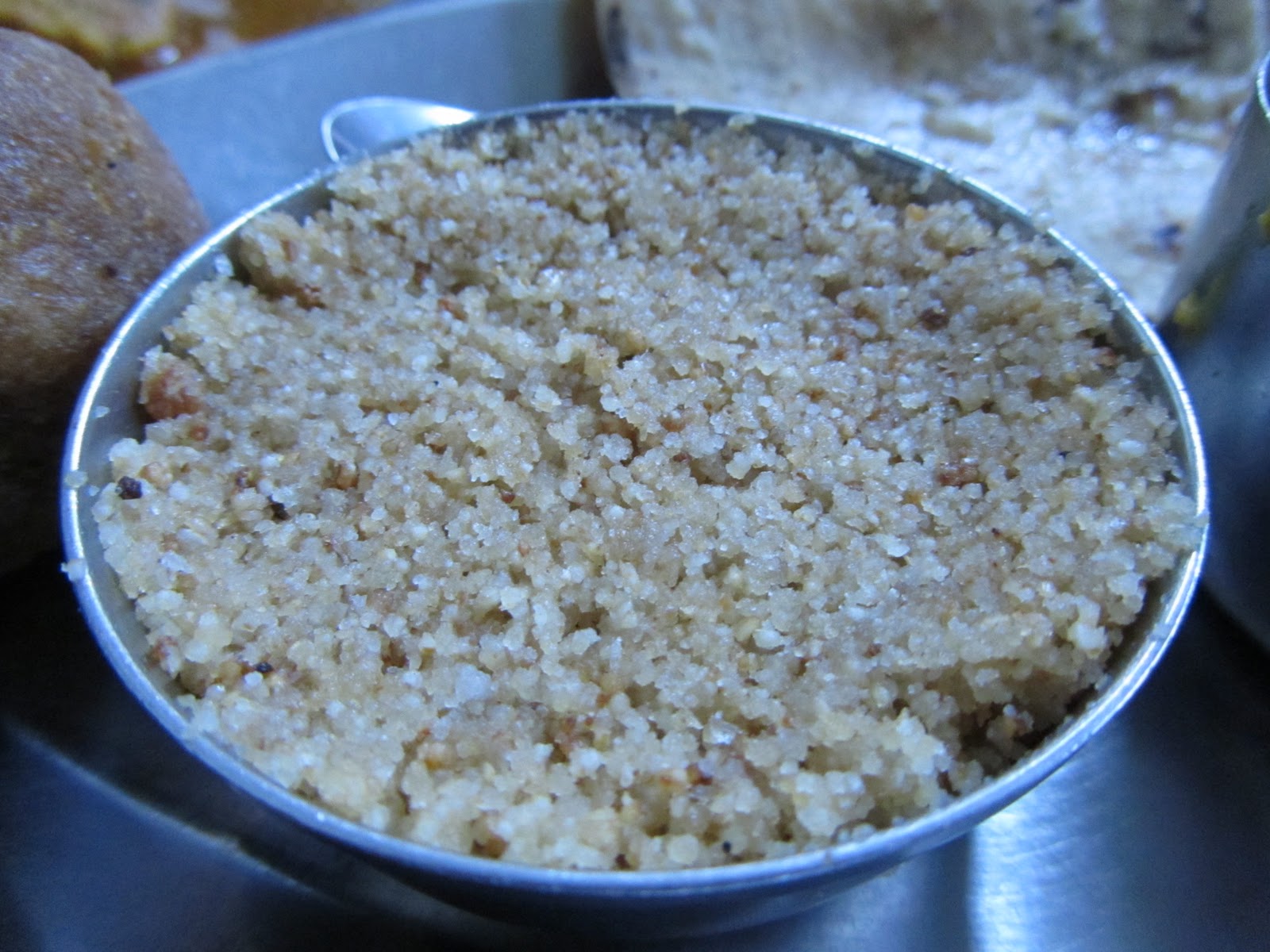
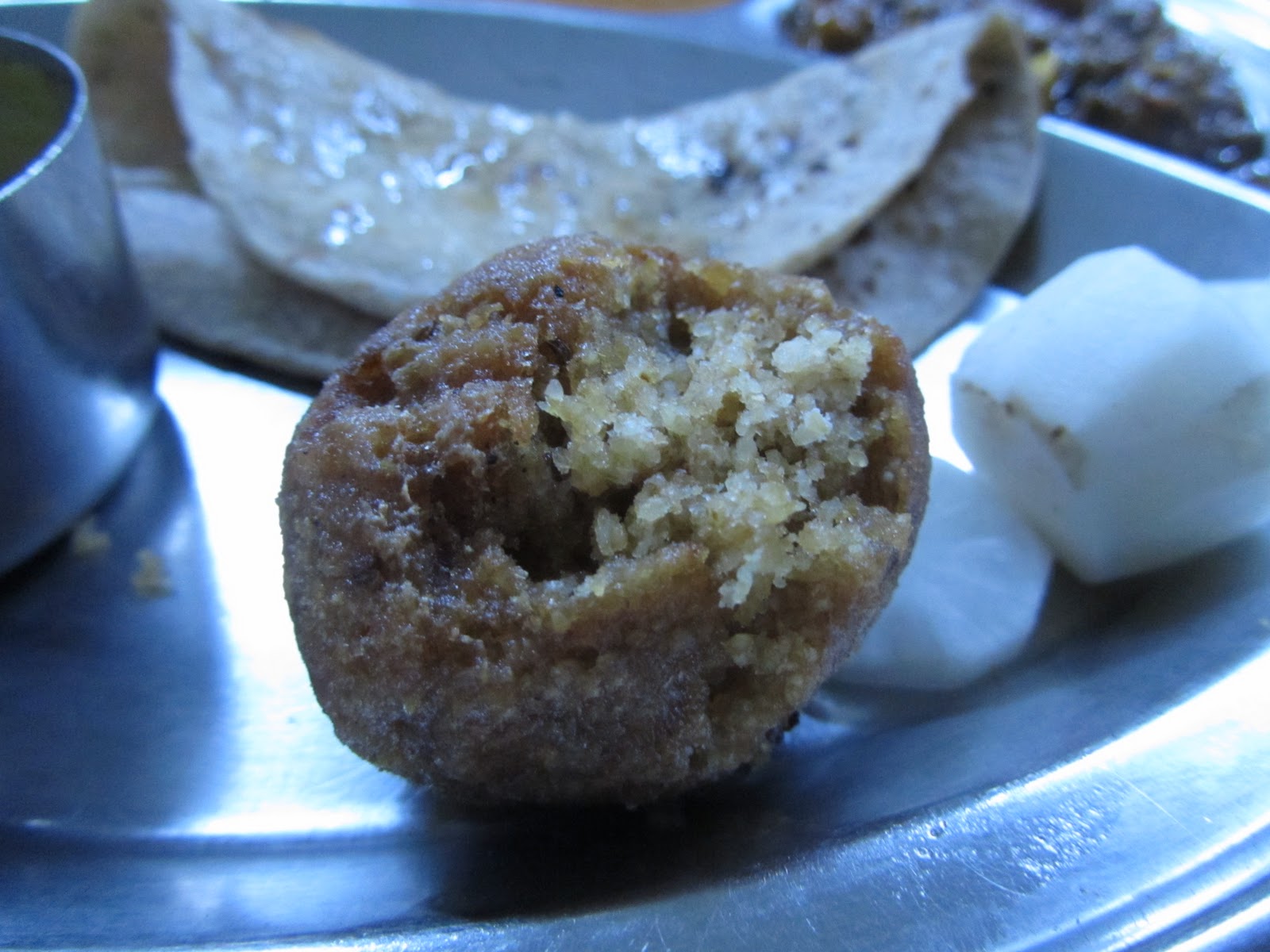
Thursday, February 17, 2011

Mixed Vegetable Kachri


Scene1

Spouse, Sra having dinner

Spouse: Uncle just didn't like this dish, you know, he found it too sour, but I loved it, of course, because I love sour stuff.

Sra: Hmm.

Scene 2

Dinner next day

Spouse: Hey, there's brinjal (eggplant/aubergine) in this!
Sra: No, there isn't.
Spouse: Come on, I can see the pulp, all squishy.
Sra: Yes, it's there.

Spouse, Sra continue with their dinner

And so there was, the brinjal pulp. But it wasn't any ploy to get the Spouse to eat something-that-he-doesn't-which-is-good-for-him, just a way to include more vegetables into a mixed vegetable dish and include him in the process of cleaning it out faster!

Most of the vegetables are stuff that the Spouse won't even deign to look at when their identity is clear - yellow pumpkin, beans of the country variety, small gourds further cut up, you get the picture ... It did have something the Spouse took a liking to, though - kachri powder from my recent trip to Rajasthan.
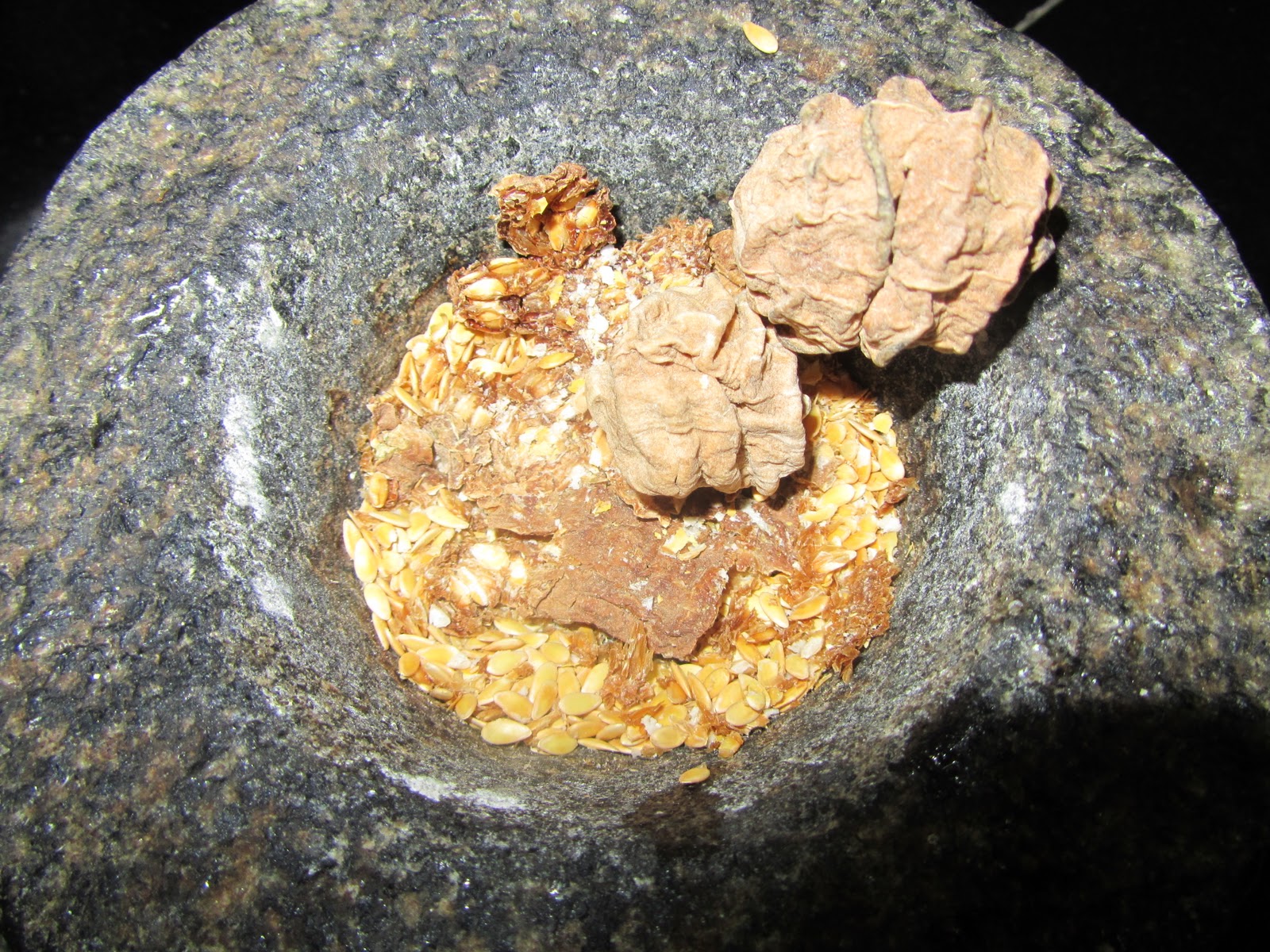

See that wrinkly little thing there, looking like a bleached walnut, a crumpled dead leaf? It's actually a gourd itself, like a small, tiny watermelon. My friends and I visited the market near our hotel in Jaipur at about 8 p.m specifically for this - I bought about half a kilo of the fresh ones and during the vegetable seller's patient description of how it could be used in a chutney, lost patience but kept nodding, so naturally, I did not know what to do with it when I got back home. More frustratingly, peeling it didn't help - it depleted the gourd of three-fourths of its substance and I was left with very little to use - the peel was quite tough and took much of the flesh with it!


I probably didn't know how to do it right, because there's a picture below from my trip that shows that someone in Rajasthan got it right!

I put it in dal and it tasted very much like dosakai (melon cucumber). But I got tired of it after two dals and gave it away. Perhaps there is a recipe for fresh kachri chutney on the Net, but none else.


Then I launched into the dried kachri that I had bought in Jaisalmer (which is also where I saw the fresh kachri first). It needs to be pounded to powder, a chore I somehow enjoy. Perhaps pervertedly, but I do.

I used Tarla Dalal's recipe at first but two tries on, I've developed my own mix of vegetables with whatever's available, and spices. In doing so, I'm probably violating some hallowed rule about amounts and proportions or ratio of hard to soft vegetables and non-includables, but that makes it an ever-original, and evergreen recipe, doesn't it, with surprises at every stage! Most recently, I used a combination of yellow pumpkin, brinjal, dondakai/tendli/coccinea and I forget what else, with this recipe.

What you need:

Assorted vegetables, chopped - to make 3-4 cups
Garlic: 5-10 cloves, minced (optional)
Shah jeera/jeera/caraway/cumin seed: 1 tsp
Plain chilli powder/mixed up chilli powder: 1-2 tsp (I use the latter)
Turmeric powder: 1 tsp
Tomato: 2-3, diced
Kachri powder: 1 tbsp
Lime juice: To taste
Salt: To taste
Oil: 2-3 spoons

Temper heated oil with the cumin/caraway and the garlic.

Add the vegetables and the turmeric and chilli powder and mix well. Cover and cook on a slow flame till the vegetables are cooked, ensuring they aren't sticking to the bottom of the pan.

Add the tomato and salt and cook for a few more minutes.

Add the lime juice and kachri, and mix well.

This is a very popular meat tenderizer. See a pretty picture and more info here.

And here's more info from Tarla Dalal herself!

Quite a few recipes mention amchur as a substitute and I've made similar curries with both - the tastes are very, very different.

Here's a post that attracted my attention and two more discoveries and experiences of kachri from the blog world.

This post goes off to Graziana of Erbe in Cucina who's hosting Weekend Herb Blogging now run by Haalo and created by Kalyn.

Friday, February 04, 2011

Not Quite Curd Rice


As you know, losing weight is one of my obsessions. And in pursuit of that, going around organic food stores in search of interesting things to eat and replace routine things with, my pastime.

That's how I came across amaranth seed (or rajgeera as it's known in Hindi) a year or two ago. The leaf (thotakura, in Telugu) is popular, I regularly use it with dal or by itself to make a stir-fry. It looked like tiny globules of dry yeast, stuffed into plastic packs with cooking instructions typed on white paper. I took a pack home, and quite liked it. I learnt this was the same grain that the rajgeera chikki (brittle) or laddu was made with. There's also popped amaranth sold in these organic stores - the suggested use is as breakfast cereal, but I'm coming around to realising microwaved idlis, eggs and fruit are my kind of breakfast. (I'm the kind who buys idli batter off a shelf but today, there were reports in the newspapers that 55 per cent of the readymade batter brands, including four well-known ones, were contaminated with fecal matter, so I won't be buying it for a while, I'm sure.)

Back to amaranth, though! The pack suggested it could be eaten with dal and curds/yoghurt, just like rice. I don't remember what I did with the majority of the pack, but I do remember how good the curds mixed with the cooked seed tasted, and that's what I made today, with my second pack of amaranth.

I have a small problem, though - this current pack has some mud/stones in it, and I don't quite know how to rinse this teensy-weensy grain efficiently - in a way that the mud/stones are weeded out, but it's not too bad. Maybe I just got a badly done batch - as long as I don't find out it's fecally contaminated, I'll be fine.

Quite the wonder food it seems to be, with no gluten, high levels of iron and amino acids not often found in grains:

"Amaranth seed is high in protein (15-18%) and contains respectable amounts of lysine and methionine, two essential amino acids that are not frequently found in grains. It is high in fiber and contains calcium, iron, potassium, phosphorus, and vitamins A and C.

The fiber content of amaranth is three times that of wheat and its iron content, five times more than wheat. It contains two times more calcium than milk. Using amaranth in combination with wheat, corn or brown rice results in a complete protein as high in food value as fish, red meat or poultry."
Read more here.

There's a lot of information about amaranth seed on the Internet, it sounds good and healthy though I have only done a little bit of reading about it, and I may eat it more often to give my meals more variety - and, of course, hopefully consume fewer calories or a better class of calories in the process. Here's a curd preparation with it - tastes like the traditional curd rice in my South Indian home, with the seed giving it the touch of the exotic!

Here are the seeds.

Close up, they look big, but they aren't.

This is a cup of amaranth seed after being cooked in 1.5 cups of water brought to the boil 
and simmered until absorbed.

Up close, doesn't look very appetising, does it?

But persevere.

Take about two ladles of curds/plain yoghurt and add it to a cup of cooked amaranth seed. Add some salt to taste.

Temper a spoon of hot oil with a little bit of mustard seed, cumin, red and green chilli, chopped and broken up, and some curry leaves.

Garnish with coriander.


Enjoy!

Somewhere along the way, I forgot I knew that amaranth was also a colour. Did you know?

I'm sending this off to Weekend Herb Blogging hosted this week by Janet of Taste Space, administered by Haalo and created by Kalyn.

Sunday, January 30, 2011

Fancy Fennel, Simple Salad


This past week, I undertook something that I hadn't ever. I invited a large number of people over for dinner. Eight, to be exact. (And yes, that is a large number for me.) I was very nervous as I haven't cooked for that large a number in all these years. It was a day off from work and I spent about 6-7 hours prepping and cooking and assembling, with a break of about two hours for shopping and lunch.

There is a hypermarket at the far end of the road we live on and getting there is a journey. But the reward for it were some small (read relatively inexpensive) boxes of strawberries, good black grapes and a bulb of fennel (which produces the saunf we Indians are familiar with) that I've never seen here earlier. I took the smallest of those, which cost Rs 40, knowing I would make a salad that I'd eaten I don't remember where earlier.

The fennel stayed in my fridge for three days - naturally, I'd forgotten all about it as I'd not opened the vegetable crisper as I hadn't needed to cook because there were lots of leftovers from The Dinner for Eight People - till I remembered about it yesterday. (In the process, I also noticed a big bunch of greens, which I converted into two stir fries, one with the leaves and one with the stalks.) Then I set about looking for recipes and then for sites which would tell me how to process fennel into paper-thin shavings. I realised rapidly it wouldn't be a simple case of taking the peeler and shaving it - it involved 'removing tough outer portions', 'cutting off the stalks and saving them for use in soups later' and such.

I regret to say my fennel didn't come with any 'ferns' or 'fronds' (just a few tiny, ragged, blackening-at-the-tips leaves) and the inner portions seemed as tough as the outer portions. My bulb of fennel was rapidly attenuating as I attempted to remove the Tough Outer Portions, so I simply stopped discarding the T. O. P. after a minute or so and cut it into thin strips.

'Aromatic' is an understatement, and, I think, rather inaccurate. My fennel smelt of an entity that could straddle the paint and petroleum derivatives categories and yet be pleasant - I can't be more accurate than that myself.

I looked for recipes for simple fennel salad and chose this though I didn't have half the ingredients with me. (I had powdered Parmesan cheese in a tin, which I didn't want to risk using.) So I made it with just fennel, lime juice, olive oil, salt and pepper but felt that it lacked something, so added a sliced onion to the mix. It was just right.

Fennel bulb, cut into strips: 150-200 gm
Onion, small/medium: 1, sliced thin and well separated
Olive oil: 2 tbsp
Lime juice: from 1 big lime
Salt and fresh cracked pepper, to taste

Mix the olive oil, lime juice, salt and pepper and whisk a little with a fork till it begins to emulsify. Pour it over the fennel and onion and mix. It tastes good a couple of hours later.

I read that India produces about 30,000 tonnes of fennel (not sure how recent the link is) but I do wonder, what happens to all those bulbs?


I'm sending this off to Astrid who's hosting Kalyn's Weekend Herb Blogging this week, now managed by Haalo.

Friday, January 14, 2011

Dragon's Teeth

That's what Uncle, the creator of this pudding, called it. "You can take a picture of it and use it on your blog," he said. The Spouse said it was indeed a work of art and that I should see it. So off we went after a Thai dinner to behold his creation.

When they said "art", I had assumed Uncle had done some finger painting on it, like he is wont to once in a while. I've seen him make a checkerboard pudding in pink and yellow, draw a star in vanilla yellow amidst a top layer of chocolate. One of his favourite pastimes is to call an ordinary jelly and custard pudding a 'blood and gore' pudding and serve it to people who are so sensitive they cannot bear to see a wobbly entity such as jelly, even one sans the slightest quiver - it's the knowledge that it could have quivered, not that it actually did, that puts them off.

So when I entered the house, I thought I'd see some pudding in fantastic shades of flaming orange and red with pointy motifs around the edges but what I saw was this:


Once I got over the surprise of seeing the strawberry and black grape creation, I could do nothing but photograph it with my mobile camera. The Spouse then extracted his big camera from its case and took just two shots, and this is one of them. I couldn't bring myself to disturb it so Uncle finally took a spoon and a bowl, dug into it and served himself some, after which The Spouse and I followed.

This is actually a rather simple layered pudding put together with various flavours of custard powder, sponge cake, raspberry syrup, milk and sugar. I've never attempted to make it myself but one useful trick that I have picked up from Uncle is what he calls his secret to thick curds (yoghurt) from standard-issue slim milk. He is full of (mock) indignation over my stealing all his secrets so I won't share that with you, though it's not really rocket science - it's just that when I was all green and younger and a cook with little experience, it seemed like a big deal to me, but it was common sense, really!

Wednesday, January 05, 2011

When My Soup Runneth Over ...

May I speak to Mr Sra ji, on the so-&-so section ...?"

"I am Sra, who's this?"

"I want to speak to Mr Sra ji, on the so-&-so section, and it's a male."

"I am Sra, and I am very much female."

"No, the other day I called and spoke to someone called Mr Sra, it was a male, and he gave me his e-mail ID and I wanted to send some info and anyway the ID was not appropriate maybe I am mistaken or something but I want to ..."

"Who is speaking, where are you calling from and what do you want to talk to me about?"

"Haan, I wanted to speak to Mr Sra ji, about ..."

"I am Sra, and I assure you there's no one else by that name here ..."

"Haan anyway, I want to know ki agar ... (lapses into Hindi - now should we discuss how she assumes I know Hindi, but it's okay, I'm not too bothered about these things unless someone tells me - they actually did - that they thought all the South Indian languages were one and the same ...)

This exchange took place today but I go through this every other day as someone or the other gets confused with my name and it's become a spectator sport, even though I'm a participant. I love seeing the variations my name goes through and have a hearty laugh at its metamorphoses from time to time. Yesterday, there was a similar funny moment in the gym which had me howling with laughter.

P, whom I've come to know over the last few months, is a fellow worker-outer at the gym. We've shared several moments of wild laughter, philosophical discussion and my-(body part)-refuses-to-shrink kind of talk, all perched on exercycles, treadmills and such.

Recently, I told her I write a blog. I told her its name and then we got on with our lives and our exercising. It was only yesterday that she said, "Hey, I still haven't visited your blog, what's it called? My Soup Runneth Over?"

"P, you're thinking of my cup runneth over ... It's called ..."

"Oh yes, hah hah hah (by now, both of us are laughing hard), I knew it had something to do with ..."

" ...When My Soup ..."

" ... soup, I knew it had something to do with soup ..."

I just checked Google to see if the words "my soup runneth over" brought people over to my blog. They don't, not in the first few pages at least. But here are some search terms that did bring people over, over the last couple of months:

1. Famous hostess alive

2. Can you extract capsicum from chilli to make painkilling paste?

3. Vegan qurbani (Vegan sacrifice? Nah, they must have meant qubani ka meetha)

4. Big qurbani knife photo

5. Where can I find Phalsa berries in NYC? (Where can I find phalsa in India, besides Hyderabad?)

6. Kinowa recipes (You can find quinoa, not kinowa, here and here)

7. South indianpuking hostal.in (What the hell! But it's probably this, and other associated searches)

Saturday, January 01, 2011

May The Year Ahead Be Full Of Gifts


Here is wishing you an exciting, prosperous, recession-controlled, job-secure, promotion-assured, hike-replete, war-free, quake/flood/tsunami-
free, fun-filled, air/water/rail/road-safe, terrorist-free, friends-filled,
romance-blooming, healthy NEW YEAR!!!

May you get no bills from you dentist, your cardiologist, your
gastroentereologist, your psychiatrist, your plumber and income-tax
folks ...

May your hair, teeth, abs, your face-lift and your stocks not fall, may your blood pressure, blood sugar, cholesterol and your mortgage interest
not rise and may someone love you, forgive your faults, be blind to your
blemishes and tell the world about your virtues.

May what you see in the mirror delight you and what others see in you delight them ...

(From a forwarded e-mail)

May the coming years be full of gifts of all kinds - may they give you what you need, what you want, what you deserve. Happy New Year!

Wednesday, December 29, 2010

Plk Mngdi

Technology, specifically, the cell phone, has brought my friend V and I, who go a long way back, closer. Almost every night, we SMS (text message) each other quite a lot. The Spouse begins to feel the day is incomplete if he doesn't hear my mobile phone ping and wonders why she or I haven't begun yet. Sometimes I've to tell him it's because she knows I'm staying back late at work, or that maybe our fingers are too knotted up from all the texting. And sometimes I text her just to quell his restlessness, that V's in my cell and all's right with the world. (Sorry, Mr Browning!)

Neither of us use the 'predictive text' feature - I find it too troublesome to bother with, I don't know why she doesn't, but we have our own SMS lingo which we seem to follow rather well, skilled at it over a few years of practice and the rather common tactic of doing away with the vowels. But a couple of days ago, I was rather foxed with this: "Don't rmbr td dint hve ful rec then ggld." Er ... Okay, she "didn't remember", "then Googled", i got dat, but who or what was 'td' and what wasn't there, in between? She was telling me about the Ker Sangri we got during our recent trip to Rajasthan and which she'd finally attempted, and I was asking her which recipe she followed. So I texted her back - "ur sms lngo 2 hrd 4 me 2 get" (Your SMS lingo too hard for me to get). Then she texted back properly to say she tried Tarla Dalal's site but it didn't have the full recipe so she Googled it and found it somewhere else and she doesn't remember the source. Whew!

Then it struck me I had to use up my stash too. But I remembered that the grocer who sold it to us in Jaisalmer told us it would turn out well if soaked overnight and well, overnight was over the previous night. But the golden yellow mangodis glinted from the dark corner of the shelf, and I had a bunch of Rs 15-spinach (ordinarily Rs 6, have you been reading about the horribly expensive time we're having, vegetably speaking) so I made the Palak Mangodi instead. Palak is spinach and Mangodi are bits of sundried moong dal (green gram) or urad dal (black gram) paste, usually used as an accompaniment to various curries in Rajasthan, from what I gather.


This is from TD's book on Rajasthani cooking but I halved the recipe as I had only one bunch of spinach - and added a tomato. I was also careless and added the original amount of onion prescribed.

1 bunch spinach/palak
1/2 cup mangodi, crushed (some info here)
1 tsp cumin seed/jeera
1/2 cup finely chopped onion
1 tsp ginger-green chilli paste
1/2 tsp garam masala
a pinch turmeric
1/2 tsp chilli powder
1-1/2 tsp oil
salt to taste

Cook the spinach briefly in hot water, dunk in cold water and drain completely.

Then puree the spinach and tomato. Keep aside.

Add a cup of water to the mangodi and pressure cook for 3 whistles. Drain, keep aside.

Heat the oil and add the cumin seeds. Once they splutter, add the onions and saute till pink.

Add the ginger-green chilli paste and saute for a few seconds.

Add the rest of the spices and the puree. Let it cook for a while.

Now add the cooked mangodis and salt and simmer for five minutes. We ate it with rice, roti and by itself, nice all three ways.

I'm sending this off to Priya who's hosting Susan's MLLA this month.

Tuesday, December 21, 2010

Star of Wonder, Star of Light


This star and its shadows confronted me this evening when I got back home from work. I fished out my cell phone and took a couple of pictures. Then I went up to my apartment, brought my camera downstairs and took some more pictures. Then it turned out there's an event in NCR called Festive Photos and I'm hoping Jacquie will accept it even though the round-up is due any moment.

Season's Greetings!

Thursday, December 16, 2010

Meetha, Doubled, Tripled


It was an evening when my heart ruled over my head. There was a buffet waiting in the restaurant but I stubbornly decided to go out of the hotel, find a store and buy myself a snack. It was too early for dinner, but I could do with a snack.

The hotel in which I was staying shared space with several blocks of apartments, and there was a store somewhere amidst all those apartments. I took the long walk over to the other side, located the store and bought myself two packets of chips and a bar of dark chocolate with almonds.

I didn't wait to get back to my room. I opened one pack of chips and tried them - not a fan of assembly-line chips, I rarely buy them, but this was not bad, I thought, reflecting on the taste and detecting a hint of clove! It was only a 35 gm pack, so most of it was gone by the time I reached my room. I am fond of hotel rooms - I love the fact that they are 'housekept', unlike my own house, and I try to leave them in as pristine a state as I find them. I tried to enjoy the room, sitting in the chairs, reading at the table, watching the TV, and sinking into the big bed underneath a cool blanket (it should be a warm blanket but the air-conditioning keeps it cool, even after you turn off the AC).

Two meals of conference food were bad, and though I tried to wriggle out of one, given that it was laid out in the open for humans, mosquitoes and other flies to flock to it, my gracious hosts didn't let me go back to my hotel hungry, shooing off the caterers who advanced every minute to pack up. So I had to eat something there and after trying a few bits here and there, managed to down some rice and dal and escaped to the sanctuary of my hotel room. The irritation of not having had a fulfilling meal went to my head and I reached for the chocolate, dreaming of the breakfast buffet ...

Second day of conference and I had planned to go out to lunch with my friend, but a text message from the powers that be put paid to that plan - I had to call Friend and tell her to have her lunch, I'd call her when I was leaving ... the silver lining to the disappointment was that I got to eat a little bit of the double-ka-meetha that was being served.

Rich, moist and spongy. It must have haunted me, because back home the next day, I went shopping for a loaf of bread and proceeded to make it as per a recipe in Pratibha Karan's 'Hyderabadi Cuisine'. I made one change - instead of the rose water she mentions in the recipe, I used orange flower water because I have a full bottle of it and haven't used it yet since I acquired it two years ago. I didn't use the almonds, just a packet of cashews. And oh, I also didn't stick to her direction to use 2/3rds of a cup of ghee. I used less.

Or probably more. Because I didn't measure it, used it in tablespoons.

So here's what you do. Take 10 slices of bread, cut off the crusts. (What do you do with them? Dump them if you're not environmentally-friendly, dry them and crumb them if you are, or glaze them and lattice the pudding with them later. Glaze them how? I don't know, I just assume it can be done.)

Fry the de-crusted slices in tablespoons of ghee till they are golden brown both sides.

Meanwhile, to 500 ml of boiled milk, add 200 ml of cream and reduce to half, stirring now and then, in simmer mode right through.

Make sugar syrup with 1 cup of sugar and half a cup of water.

Put the fried bread in a greased baking dish. Pour the milk-cream reduction over the bread, and the sugar syrup as well. Sprinkle with saffron and cashew nuts.


Bake in a pre-heated oven - no temperature was specified so I put it somewhere between 130 and 180 C, fancying that I remembered some baking instruction that heavy cake batters needed lower temperatures. Whether I remembered right or not, it was a good thing to do because the milk reduction took its time to reduce further and everything got brown and toasty, cashew nuts included, without getting burnt.


Eat it up, share it, throw it out - fast - it's extremely heavy and can clog arteries and everything else that can be clogged. It's that delicious!

Monday, December 06, 2010

Kadhai Rajasthani

Hah! Thought it was a Rajasthani curry, didn't you? It is a recipe, though.

Recipe for Kadhai Rajasthani: Take some time off, go to Amber Fort in Jaipur and see these huge kadhais.

How could I have forgotten to post these pictures in my previous post? Anyway, here's some trivia for you - I haven't watched Jodhaa Akbar but apparently these kadais feature in the movie. Jodhaa cooks kheer for Akbar in these kadhais. So I read on the Net.


The vast and rambling Amber Fort is also complex and maze-like. I saw these kadhais about 90 minutes from the top before I managed to get to them. I didn't figure it out - I made my way to several points in the fort through a combination of stumbling and guesswork. There are no directions anywhere, not even on the audio guide, if you're lucky enough to be able to listen to it.


There was no information about these kadhais. I shot these pictures from high above, as much as my 14X optical zoom compact camera would allow.

There are more pictures of Amber Fort here.


Swimming pool, bathtub, what other uses can they be put to? They would need a ladder, though. In various palaces and museums, we saw oversized vessels and containers like these that needed ladders to access them.


Like this. This was one of the two containers of Gangajal (water from the Ganges, considered sacred, and believed to wash away sins, including those accruing from crossing the ocean) that the then king, Sawai Madho Singh II, took to England when he went to attend the coronation ceremony of Edward VII. These are reported to be the biggest sterling silver containers in the world.


Kadhai Rajasthani

Wednesday, December 01, 2010

Rajasthan - Vinaigrette of Past

Vignette, vinaigrette, does it matter? But the tag line of the hotel I passed by did make for a big grin - and I knew that would be the title for my next post. Here are some delicacies we tried in Rajasthan over the past week, across Jaisalmer, Jodhpur and Jaipur.


Dinner at a canteen in the Jaipur Railway Station. The round breads in the plate in the foreground were a pleasant surprise. We got those when we ordered a 'kulcha' - it took us a few seconds to realise they were more pav (of the pav bhaji kind) and less kulcha - the South Indians in us immediately noticed their resemblance to ootappams. We liked them so much, we ordered another plate. The gravy was a thin channa/chick pea gravy, which was spicy and rather ordinary.

Behind, you can see some kachodis. They were filled with dal, spices (saunf/fennel, dhaniya/coriander) and red chillies. Very tasty, very heavy - and very, very hot! The other plate (covered by an arm) contains pooris.


How long has it been since you had a Cassata? This brand used to be famous all over India once, now I suppose it's not marketed everywhere any longer. This was dessert, and comfort, in the cold Jaipur night, in a women's waiting room where we huddled trying to forget we had only two confirmed tickets for a group of four.


Roasted papad and bandhani tablecloth - all set for our first full Rajasthani meal in our hotel!


Ker sangri - the desert vegetables Rajasthan is so famous for. I never realised it would be so oily. (Granted my picture/version in the link above is no adequate representation either, but none of the pictures on the Net seem to contain so much oil!)


Gatte ki sabzi - oily again, but quite tasty.


Samosas (right) with a dry, spicy filling and chilli/mirchi vada at a snacks/sweet shop in the market.


More savoury snacks. The one in the foreground is a maida preparation intended to resemble fried cashewnuts.


Mawa kachori, filled with milk solids and nuts and sugar, which Jodhpur is famous for. We had this in Jaisalmer, though. 


A hole is punched in at the centre of the kachodi and some sugar syrup is poured into it. The periphery also is wetted with the syrup.


Maybe we didn't eat it at the right places but we didn't like it very much as the mawa just tasted burnt and the other batch we had reeked of kerosene from the stove rather than anything else!


Yes, all these curries were very oily! This was a methi-papad curry, the methi being the fenugreek seed and not the greens.


That's a Rajasthani thali. Clockwise from the yellow dish is the kadhi, dal, churma, roti, ker sangri and the gatte ki subzi.


Breakfast at Pokaran - mirchi vada and kachodi frying. 


Another Rajasthani thali - rotis, dal, potato curry, kadhi with pakodas, cauliflower and potato curry


This churma was a delight, fragrant with ghee and cardamom


The chaas (light buttermilk spiced with roasted cumin and carom (ajwain) 


This stall serves up jaljeera, lime juice, shikanji and lemon soda. 


My friend asked for lime juice with mint - this is what she got, I guess it was shikanji!


Yet another Rajasthani thali - notice the churma, it's different in this thali.


Churma, close up - it's been processed in the mixer!


The baati of the classic dal baati churma. After we were served this, a waiter came up with more baatis and ground sugar, crushed a baati in our plates, drenched it in sugar and told us to eat it up with the dal. In a more ignorant past, my first reaction would have been to gag, but I tried it now with a more open mind. Strangely enough, it didn't make a difference or affect me much, so I was content with just a taste.


You can see more pictures from my Rajasthan trip here.

Saturday, November 13, 2010

Potato Whatchamacallit


I don't know too much Hindi. Yes, I grew up and studied in a State which believed in the three-language formula and went through over eight years of school studying Hindi as the third language but I am still confused about the gender of various nouns and consequently, the propositions that precede them. Most of the Hindi I know comes from watching TV, and the task is made easier nowadays by watching DVDs of Hindi movies with English sub-titles. This also means that I understand more of textbook Hindi than real-world Hindi.

All this goes to say that I can only imagine what Chak De India or Chakh Le India mean. Yes, I have Googled, but when you have answers like this:

"Chak de" is used instead of "chakh de"
Meaning of "Chak De" is Uttah De

Chakna means Uthana
de means Dena

It is oftenly used when calling "Chak De Fatte"
Which means "Duniya ko Utha do Means "Chha Jao"

it's not much help.

Google further, you say.

I did, and it confirmed my assumption that the meaning is something to the effect of "Get going, India!" Or something equally inspirational, like "You rock, India!"

Now, this post has nothing to do with Hindi or Shah Rukh Khan or hockey, but it does have to do with the food show called Chakh Le India on NDTV, which is where I saw this recipe for this potato fry/curry/whatchamacallit.

This was ages ago, and all I remember about its provenance was that it came from a couple who ran a home stay or a guest house somewhere in the hills in North India - I've tried looking for it in the NDTV web site under Himalaya, Himachal, Uttarakhand and such, but it's throwing up 821 recipes and I do NOT have the time to sift through those. So you're stuck with the result of my memory of that recipe. Which is not bad at all, so you're not stuck with it, really.

There's not much to it. The only special thing that you have to do with this is combine a little bit of turmeric, a spoon of chilli powder and coriander powder each, mix it with about half a cup or less of water and leave it to meld for about 15 minutes.

By which time you'd have peeled (perhaps) and cut about three potatoes, sauteed them in a couple of spoons or more of oil with some cumin and maybe some mustard seed (maybe even some wild mustard - which is what jakhya is supposed to be - for a most exciting crunch), and sprinkled some salt over them and stirred to mix.

(Please go through the comments in the post I linked to - they have some information on jakhya.)

Now add the spiced water, cover and cook till they are done.

Your potato curry/fry/whatchamacallit is ready. I love little special touches like the spice water - it makes me feel I've tried something new, even a "simple" dish like this feels "special" and so do I, without the bother of having to use tiresome spice pastes ground in the tiresome mixer or grinder or whatchamacallit.

This dishy dish goes off to Susan at The Well-Seasoned Cook who's hosting Kalyn's Weekend Herb Blogging, now managed by Haalo.

Tuesday, November 02, 2010

The Laksa That Took A Detour


It doesn't take much to feel connected to someone or something. Not years, not weeks. A few forays are enough. That's how I feel about South-East Asia.

First, there was Thailand, then Japan (not strictly SE Asia, but close), Singapore, then recently I went to Taiwan, and on my way back, to Thailand again. Recently, I made plans for a trip to Malaysia and Indonesia but they fell through. With all this, I feel extremely connected to the region :) despite the trips being rather fleeting.

When I first visited Thailand, I could not stomach the smells of food wafting off the carts on the streets. Trying to spend prudently in Chiang Mai, my friend and I opted for the plain (and not the spicy) sausage and divided it into two. We immediately spat it out because it was sweet, so unlike what we expected from a sausage that we told ourselves not to be cheap and then bought the spicy, herbal one which cost 20 Baht. Thankfully, it was delicious. We tried much other street food, but the smell would get to us, and in Bangkok, we ate at a Lebanese restaurant close to our hotel for two days. Even the famous Thai yellow curry was relished in the sanitised confines of our hotel's restaurant, and the som tam was had trying to forget that the vegetarian version I wanted was made in the same mortar and pestle that had, for the previous customer just moments ago, mashed tiny crabs that looked like upturned dead frogs (which was why I had opted for vegetarian).

More travel exposed me a little more to sushi but I think I will stick to the vegetarian version, substitute though it may be. Walking in the hot sun in Singapore only made us thirsty, not hungry, and we didn't eat much. The one day that we could have, we were whisked off to the local branch of a well-known Chettinad restaurant by our well-meaning Indian friends - neither my attempts at deflecting the invitation nor my request for local food were comprehended.

By the time I went to Taipei, Taiwan, and visited its street markets, I didn't smell anything anymore. I didn't even remember there would be a smell. I tasted century eggs and the seafood dumplings that tasted of an unidentifiable ingredient went down my throat without any hesitation. I would have probably tried stinky tofu had I known how to identify it, but all the tofu looked benign to me. (There's no reason why the stink should reflect in the looks, is there? Some of the most snazzy and snotty characters I've come across used to reek, and wouldn't wash their hands after using the toilet.) But I digress - I don't mean that I liked everything I ate, but didn't feel so strongly about it either.

Researching Malaysia reminded me of Laksa. I wasn't very disappointed when the plans fell through but soon after, Aparna's post on a vegetarian laksa had me itching to make it soon. I finally made it yesterday. I was tired of meat and seafood so I too made it vegetarian. I went to the original recipe that she had mentioned, Ottolenghi's, and took it from there. By the time it was finished, it was laksa more in spirit and less in, well, the flesh, in a manner of speaking.

I used an onion instead of shallots. I used the notoriously hot red chilli pickle from Andhra Pradesh instead of sambal oelek. I used dry lemongrass bought in Thailand three years ago.

At first, I didn't have any bean sprouts, and substituted the tofu puffs with paneer/cottage cheese (a bad idea). I ignored the sugar but finally used a spoon of jaggery when the sourness set my teeth on edge.

And though I initially planned to use up a packet of soba noodles, I decided to go with rice. Short grain matta rice. You see, I just bought a 5-kilo bag because the one-kilo ones were no longer to be found, and as the other food in the house would go better with rice, I decided to use a bit of that for the laksa as well.


It was good, but something was missing. I added some salt, it made it better but that was not it. This was the vegetable-paneer-rice-laksa-lime combination

Then for the next meal, to the above, I added a hard-boiled egg and topped it with some sprouts and used lots of pepper. The lime wedge was there but I forgot to add extra. It was great!

For tonight's meal, I fried some tofu with a tablespoon of white flour mixed in water, and ate it with rice and sprouts and pepper - this time, the lime was forgotten, and the vegetables were given a go-by. Not so great, and more filling than I would have liked it to be!

I was tempted to use white rice for this meal as we needed to cook some rice and matta rice takes much longer to cook, but The Spouse said white rice would be overwhelmed by the laksa, and that the plump and sturdy matta would hold its own, so I went with matta again.

I would go for the second option - the one with the egg, sprouts, rice and vegetables. Next, I'm looking forward to making khaw suey - now if only I'd known I could look for it in Chiang Mai ...

Thursday, October 21, 2010

Back to Basics-3, The Round-Up

Here's the Back to Basics round-up that I hosted for Desi Soccer Mom, its creator. Please tell me if I've missed out on any entries that have been sent to me.

Jaya of Spice & Curry tells us how to make home-made mustard powder, and how to use it too!

Swathi of Zesty South Indian Kitchen lets us in on her recipe for rasam.

Hema of Salt to Taste gives us a recipe for another staple popular in some parts of the South.

I haven't made anything basic for this event, even though I am the host, but I'm directing you to this more than four-years-old post of mine on how to make flavoured ghee. That's what I intended to republish anyway.


Tuesday, October 05, 2010

Feeding My Inner Malayali


I should have known there was a Malayali in me when, ages ago, I got off the train and a woman came up to me and started speaking in Malayalam ...

I should have known it when, six years ago, in a boat on Vembanad lake, I found myself speaking to the boatman in Malayalam, quite oblivious of the fact that I didn't know the language ...

I should have known when we went shopping and all I remember buying is the kodampuli and an umbrella from a locally famous umbrella store for the gadget-loving Spouse - this brolly came with a light!

I should know, because I often get mistaken for a Malayali, though I don't know what it is about me that is Malayali!

I know there is one in me because I quite like the food from Kerala, and I was inspired to make a curry with something that only Malayalis use, as far as I know.

The inspiration also owed to other factors:

- A 6-year-old stash of kodampuli - yes, from the same trip that took me to Vembanad and had me speaking to the boatman in a language I never knew I knew

- Rediscovering that said stash a few months ago after having thought I had cleaned it out

- And most recently, a non-Malayali friend's experiment with yam, coconut milk and kodampuli which I tasted and really liked last week. Her kodampuli too owed its existence in her home to a trip. Not to Vembanad, but to Thekkady. And while both of us bought it with fish curry in mind, we also used it for non-fish curry. (And no, I don't think she can speak Malayalam or spoke to the boatman in Malayalam and if she did, I don't know whether she knew she didn't know the language.)


I had two green bananas I wanted to stew, and I decided they were 'It'. I didn't check for any further Malayaliness, but decided to adapt a hazy idea of a green banana and tamarind gravy to this recently rediscovered delight. Usually such gravies, much relished in Telugu families such as mine, are made this way. I was too lazy to check, so went by memory and imagination.

This way:

Green banana – 2 medium, boiled but not mushy, peeled, diced
Tomato - 3, chopped as fine as possible
Turmeric – 1/2 tsp
Salt to taste
Chilli powder - 1-2 tsp *

Kodampuli – 3-4 pieces, soaked in about a cup of water

Tempering
Mustard seeds – 1 tsp
Curry leaves – 3-4
Fenugreek seeds – 4 (yes, 4 seeds)
Cumin seed - 1/2 tsp
Split and hulled black gram/urad dal - 1 tsp
Split and hulled chana dal - 1-2 tsp
Dry red chillies – 2, broken
Oil – 2-3 tsp

1 Heat oil, add the fenugreek seeds and then the urad dal. As the urad turns colour, add the mustard seeds. Once they pop, add the rest of the ingredients under 'Tempering' and fry well.

2 Now add the tomato and saute well. Add a little water, if you like.

3 Now add the green banana and mix. Add the salt, turmeric and chilli powder, mix well.

4 Now tip the kodampuli and the water in which they were soaked into the banana. (At that moment, I hadn't known if that was how it's used; I just did it because the kodampuli looked hard and unyielding even after soaking for 30 minutes, and the water didn't look very different either.)

5 Let it boil, checking now and then to ensure the gravy doesn't stick to the bottom of the pan. Add water if the consistency is too thick.

6 At home, tamarind gravies are finished off with a final addition of jaggery. I resisted the urge to do that with this experiment.

I will try this again, with other vegetables.

* Note: I added the third tomato and some more water and boiled it a little more after finding the gravy too hot.

What are the inner 'others' in you - and why do you think they are?

A Reminder: Desi Soccer Mom's Back to Basics is being hosted here - the deadline is October 17, so send in those entries!