Sunday, July 22, 2007

Tomato - A Rediscovery, & Egg Drop Curry

Does it happen with you that some dishes are so common, once so much a part of your life, so taken for granted that for stretches of time, years even, you go without them, preferring to spend that time and energy in making other things to eat?


It does, with me, and the tomato curry I have here, a childhood staple, happened by chance and not by design. This week has not been one of my best, what with inspiration for the blog not striking, my sofa covers not being delivered on time (“This is the 21st century, you know, Mr Draper, women don’t sit at home waiting for curtains and sofa covers, they go to work, how would you feel if I didn’t pay your bill for the next two weeks?”), the gas cylinder not being delivered on time (“Madam, you booked it on the 10th, it still has not come?” “No, Madam, I booked it only on the 15th and this is only the second reminder, but yes, it still has not come.”), and various other irritants small and smaller. But somehow, I was feeling sunny this Sunday morning — The Spouse had brought stuff for Sunday lunch, and we had planned various things and things were going along swimmingly when we couldn’t find the curry powder and things went rapidly downhill after that.

One of the dishes I had planned was tomato egg-drop curry but after methi dal, the hunt high and low for the garam masala, and the tomato gravy, I suddenly found myself devoid of the energy to crack a few eggs into it. Well, I had to go back from the kitchen to the fridge, open the door, collect the eggs and carry them gingerly back to the kitchen and crack them one by one into the gravy, didn’t I? Nah, too much energy to expend, and I had to go out and shop a bit for the next week, go to the library to see if there were any Harry Potter copies left over (fat chance, so perish the thought) and voila, the tomato curry became a moment of rediscovery!

Not that I hadn’t tried to whip up this on occasion, but I would only be faced with tired old tomato mush, the skins curling up and coming apart, more brownish than red, but today (and this past week, actually, when I had tried the egg-drop curry), I realised the trick to this curry is to add a lot of water, finely chopped onions, and cooking for a long time! (Read about another tomato-ey rediscovery here.)

This is a curry/gravy tailor made for puris and chapattis, tastes great with rice too, and can be the base for several curries. In my home, a favourite variation was to add peeled, diced potatoes to it.

This is an as-you-like-it curry, vary the proportions as per availability and taste, experiment till you arrive at the version you like. This recipe is just a guideline:

Tomatoes: ½ a kilo/ 7 medium, chopped
Onion: 1 small, minced
Ginger-garlic paste: 1 tsp
Cumin seed: 1 tsp
Turmeric: A pinch
Red chilli powder: 1 tsp
Salt: to taste
Curry powder: 1 tsp
Oil: ½ tsp
Water: (Please see recipe)
Curds/Yoghurt: 2 tbsp, beaten

A frying pan with a lid

1. Heat oil in a pan, add cumin seeds.

2. Add onion, saute till transparent.

3. Add the ginger-garlic paste, fry for two minutes.

4. Add the turmeric, chilli powder, salt and the curry powder. Mix well.

5. Now add the tomatoes, mix well with the spices.

6. Add some water, enough to cover the tomatoes.

7. Cover the pan and let the mixture cook on medium heat for more than five minutes. (Keep checking to see that it doesn’t dry out and stick to the pan.)

8. If it’s boiling well and has a nice and healthy volume, gently mash the tomatoes with the ladle. If they mash easily, the curry’s done. If you feel the volume isn’t enough, add a little more water, and simmer. Keep checking for the consistency of your choice – I like it thick.

9. Once you take it off the fire, add the curds to the curry. Do you see the several yellow specks in the curry? That’s the curds, which makes it all tangy and nice. Now fry some hot, calorific puris, dip them into this curry and taste heaven!

I'll post a picture later of the tomato egg-drop curry I made sometime ago, but here's how you make it.


For this, at Step 8, when you have a thick gravy, turn the heat down to simmer, crack a few eggs into it (as many as you think the gravy will hold), cover it and let them set. Resist the temptation to poke the eggs or ensure that the curry covers the eggs – if you are worried that the spices may not reach the top of the egg, sprinkle a little salt on the tops. (In that case, make sure you put in less salt in the gravy earlier.) Here's another variation.

I'm sending this off to Kalyn's Weekend Herb Blogging, hosted this week by The Chocolate Lady of In Mol Araan.

Sunday, July 15, 2007

Me, At Random

I

That’s me.


II

It was a certain boredom that drew me into cuisine’s fold. A break of several months between an MA and an M. Phil found me discovering a few cookbooks lying around the house and trying my hand at the recipes.
Seeing my enthusiasm, my father repaired an old oven that his sister had owned. I only made ‘high-class’ foods – cakes, puddings and such. Who was interested in rice and dal? Certainly not me!
The folks at home were anything but thrilled – my grandparents thought I was wasting my time but were reluctantly indulgent and my mother always feared the mess that would confront her later in the kitchen.
There were other successes but what stood out was a savarin that rose splendidly and soaked up the syrup brilliantly.

III

A friend told me I was considered a snob, and someone who didn’t offer acquaintances more than a reserved smile. I was overjoyed! For someone who is beset with doubts about whether she’s being over-friendly and eager to please, this was reassurance.

IV

In Standard I, a classmate told my cousin and me the secret of making rubber. Here it is: Scribble something with a pencil on a piece of paper, then erase it really hard with an eraser. Gather those grey bits that come off the paper, mix them with wood shavings that come from sharpening pencils, put them into some milk and refrigerate overnight. The rubber will be ready in the morning. (No, I don’t know whether the milk was to be boiled or left raw.)
I still remember the light of the fridge underlining the disgusted look on my grandmother’s face as she opened it to put in not one but two cups of this formula!

V

Years ago, a friend insisted I taste the delicious tea at an Irani café deep in Secunderabad. Though I didn’t drink tea and wasn’t used to it, had no standards to judge it by, I acquiesced because her enthusiasm was infectious.
There we were finally, getting off my bike after a long ride through the city and going into this dingy little café with blue-green walls on a dark and cold evening, full of men staring at us as if we had come off an alien spaceship! I don’t remember the taste anymore, but my friend does. That was an adventure!

VI

I am not good at repartee. My presence of mind is absent. So it was a notable victory when someone tried to do me out of the computer I routinely used for that hour of class. She refused to yield it to me. “I’ll continue to practise on this machine, but come, use this,” she said, patting the seat next to her, “it’s very good.” “If that is so good, why don’t you use it yourself?” I asked her, riled by her manner. Scowling, she picked up her stuff and huffed out and away. Petty, maybe, but I was oh so thrilled that I could retort as I had!

VII

I had to attend a conference and report on the proceedings. At the end of it, I was depressed – I didn’t understand what the point of the meeting was. Why didn't I get it, had I chosen the right profession, should I consider doing something else, how would I handle bigger challenges?
Slowly, I picked myself out of my seat and made my way out. There were two very senior and accomplished colleagues there, one younger than the other.
The younger man asks, with a totally bewildered expression on his face, “But what was the conference about?” And the older man bursts into laughter … I’ve even forgotten his reply but gathered he didn’t think much of it either, but needless to say, that boosted my morale no end!

Thank you, Sunita and Sharmi, for tagging me. I read somewhere that one's required to say seven things about themselves and tag seven others. Most people I know have been tagged. I’m tagging Santhi of Writing on the Mirror, Pooja of My Creative Ideas, Sreelu of Sreelu's Tasty Travels, Prema of My Cookbook and Jyothi of Andhra Spicy for this meme. Only if you're interested, of course, but I'd love to know more about you.

Sunday, July 08, 2007

Mixed Up Fare


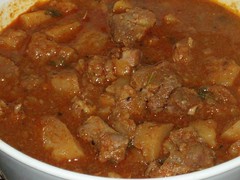
This was a post written with a lot of reservations, hence that title! I thought the picture of the mutton curry looked too red and chunky, the picture of the vegetarian dish too undistinguishable, but put it down to addiction to blogging, and hey presto, it becomes a post, deserving or not!


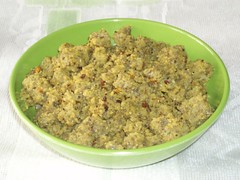
The vegetarian dish further below was an attempt at cleaning out my pantry – it’s made of whole green gram/moong that is at least two years old. Miraculously, it didn’t attract any life forms so I used it to make something called ‘siriyali’ that I found in a Telugu cookbook written by Ms J. Kanthamani. More about that later, on to the curry.

Nigella is a spice I love and use mostly in Bengali dishes, but over the years, have begun using it in others too. In the mutton curry, I threw in a teaspoon of nigella on an impulse and it made all the difference to this dish which didn’t have curry powder or other whole spices beyond the basic tastemakers.

Here’s the recipe:

Mutton: 250 – 300 gm (less than 1 lb)
Potatoes, chopped: 2 big (about 1 lb)
Onion, chopped: 2
Ginger-garlic paste: 2 tsp/1 tsp of each
Chilli powder: 1 – 1-1/2 tsp / as per taste
Turmeric: 1 tsp
Salt: To taste
Nigella/kalonji: 1 tsp
Oil: 1 tbsp
Water: upto 3 cups

Coriander/cilantro: for garnish

Note: I made this in a pressure cooker, I’ve never cooked mutton/lamb otherwise because I’ve known it to take ages without one.

Heat oil, add nigella.

Now add the onions, fry till pink-brown.

Then add the ginger-garlic paste, fry well, till you notice some oil around the edges of the mixture.

Now add the meat, saute till well browned.

Add the turmeric, salt and chilli powder. Mix thoroughly.

Now add the potatoes. Saute well.

Add water to cover the contents and a little more.

Close the pressure cooker and wait for the steam to build up.

Once it comes out of the vent, close it with the weight.

Let it whistle once, turn down to simmer and cook for 15 minutes.

After the pressure drops on its own, check for doneness. If the meat isn’t soft enough, add some more water and cook for a little longer in the way described above.

Garnish with coriander.


Now on to the other dish. The original recipe called for hulled yellow moong dal so you could use that if you like, but I’ve no idea of how that would turn out.

Here’s how I adapted it:

Whole green gram/moong beans: 300 gm
Tamarind extract, watery: 4-5 tbsp
Urad dal/hulled black gram: 1 tsp
Dry red chillies: 2, broken
Curry leaf: 1 sprig
Chana dal: 1 tsp
Mustard seed: 1 tsp
Oil: 2 tsp
Turmeric: A pinch
Salt: to taste

Soak moong for 2-3 hours, wash well and grind it to a grainy mix.

Steam this in idli plates or in an ordinary vessel for 10-12 minutes. It will set, like a cake.

After it cools, cut it into small pieces, or just crumble it.

In a pan, heat oil, splutter mustard seeds, add black gram, red chillies, chana dal, curry leaf, tamarind extract, turmeric and salt.

Add the crumble/pieces and mix. If you’ve cut it into pieces, don’t mix too much as they can break up.

It’s somewhat like a coarse, green upma, not bad tasting at all! Curds/yoghurt went well with it; so did some lime pickle. Could do for breakfast!

Wednesday, July 04, 2007

Purple Passion


Monday, July 02, 2007

Value-Added Mix

I’ve mentioned Sambaar Kaaram a couple of times on the blog and also mentioned that it was different from Saambaar Podi. It’s used to flavour vegetable stir-fries and daals, sometimes I’ve used it with tamarind-based gravies and I once even used it with meat when I ran out of chilli powder.


Over the years, I’ve tried finding out why it’s called Sambaar Kaaram but nobody I know could come up with an explanation, only that it doesn’t have anything to do with Saambaar, something that I faithfully repeat every time I refer to it. I haven’t seen any reference to it on the Net either, well, beyond the first 50-60 results that Google threw up, anyway. I suspect this is what is called koora kaaram though the recipes vary in ingredients and proportions.

This kaaram featured in my previous post, where I showed off all my acquisitions from my recent trip home. It attracted the attention of Mathy, who wanted the recipe for this as well as some other kaarams mentioned there. I was able to provide a link to some of them but for this, had to ask my aunt.


It has a great aromatic smell, reminiscent of that of raw mango smeared with salt and chilli powder, which probably comes from the garlic (now figure that out if you can, that’s the irrational romantic in me speaking) but let me tell you this – its uses do not end with flavouring other dishes – it makes a great accompaniment to idlis with ghee! Let your imagination run riot!

Here’s the recipe:

Dry red chillies: 500 gm (remove the stalks)
Coriander seeds: 250 gm
Fenugreek/Methi seeds: 50 gm
Cumin/jeera seeds: 50 gm
Black gram/urad dal: A little less than 50 gm
Salt, to taste
Garlic: to taste

Dry roast the first five ingredients separately.

Let cool, whiz to a powder in the grinder.

Add salt.

Crush garlic roughly, add to the powder and whiz again. Not too much, though!

Store in an airtight container.

Thursday, June 28, 2007

Shameless Display


Foreground, from left to right: Ginger pickle, Peanut Powder/Spice Mix, Yellow Lentil Powder, Green Chilli Powder, Sun-dried mango pickle
Centre, left to right: Sambaaru Kaaram (a red chilli powder mix for veggies and daals, not to be confused with Saambaar Podi), Fish Curry, Bittergourd Powder
Last row, left to right: Channa Daal Powder, Mango Pickle (two jars). At the back, mangoes.


A short trip home yielded this bounty – pickles, powders and mangoes – see that huge tub at the back?

But before you begin to get jealous, let me tell you that I lost about half a dozen of those beauties – I readied some newspapers on my worktable, a large bowl to slice the fruit into and catch the nectar dripping down, and began to lovingly peel a golden orb, and peel I did, till thin, wiggly white worms came rushing out like they’d been freed from moist mango misery! And another, and another, I lost count after four, but I suspect it ended at six. Three were wormless, but after the events of this morning, which ruined my appetite for lunch and tea, I checked each and every piece I ate at dinner!

Not sure when I'll have my Mother Hubbard moment at this rate (sigh!) but at least one of these powders is galloping towards the finish line.

Cook at home also made and froze a few dishes that will last us till the end of this week, and an aunt gave us that fish curry you see in the steel container in the centre. The mango and other pickles are home-made, so are some of the powders.

This is an impromptu post, otherwise I would have slaved over the containers, tablecloth, photos and what have you, but this trip did yield a planned blog thing – I bought some background. Yes, background. I went to a marble-and-granite seller, turned over several slabs and selected a few pieces, telling the polite but puzzled manager there I am a photographer by hobby and needed some props. You’ll see them by and by, I’ll know if it was a great idea or not only when I begin using them, but tell me, what unlikely things have you done for your blog?

Tuesday, June 19, 2007

A Liteness of Being

When Coffee announced MBP’s theme is Going Lite, several thoughts came to my mind: At last, I can finally buy the stuff but justify the expense as going towards a good cause and make that flourless cake with an expensive pound of ground almonds and orange and pass it off as a somewhat low-carb version; I can finally make use of the nice, thick, glass cake dish I just bought at a 30 per cent off sale; I can use the slowly rotting plums in my refrigerator to make a crumble using up some more of the sturdy oats in my larder …

Then I noticed some channa/chickpeas that were somewhere in the inner recesses of the shelf and I decided to take another shot at salad – I am usually disappointed with my own attempts as the dressing never seems to come together. My friend was coming to lunch so that was motivation enough. It gave me a chance to use up some vegetables from my cornucopious fridge as well. And that was the perfect excuse to boil up some wholewheat pasta and tomato-basil sauce and bake some garlicky potatoes and have ourselves a feast. And another new acquisition from the sale, a pudding bowl, could double up as a salad bowl! I do realize the meal went way past the Going Lite theme but that was lunch, not a theme party, so I suppose we can skip the guilt this time. I’m presenting just the genuinely lite dish here. MBP, here I come!


This salad is inspired by Kalyn’s Kitchen. I didn’t have/use many of the vegetables she mentioned, nor the lime juice, nor the carrot, so I used some dill-chilli vinegar, red pepper and zucchini instead. I wasn’t able to print Kalyn’s recipe, so I just worked from memory and this is what I came up with:

Dry channa/chickpeas/garbanzo: 2 cups, soaked overnight and cooked
Zucchini – Half of a big one, diced small
Red pepper – 2, cut into small pieces

Dressing:
Vinegar – 3 tbsp
Olive oil – 3 tbsp
Garlic – 5 cloves, minced as fine as possible
Cumin/jeera powder – 1 tsp
Chilli powder – ½ tsp
Salt, to taste

Steep garlic and the other spices in a mixture of vinegar and oil for some time.

Put all the vegetables in a salad bowl, add dressing, mix, let chill in the refrigerator.


It wasn’t too bad for me, my friend loved it and praise be to God, it didn’t last beyond a day in my refrigerator because I had the brains to take it to work, where my colleagues too liked it. I’m hoping you will, too!

Sunday, June 17, 2007

Stalking in Cyberspace

Ok, ok, the title was just a piece of sensationalism! All I wanted to say was that the answer to the question in my previous post is 'stalks'. GD and Mamatha got it right. Congratulations! They are the stalks of Malabar Spinach .


As the post was an afterthought, I didn’t take any pictures of the leafy greens or the stalks but you can see a good, clear picture here. We usually make a stir-fry or gravy of this with amaranth stalks but this time, after I finished using the leaves in daal, the stalks looked too good and fresh to throw away, so I used them for this stir-fry with a bit of the daal I had soaked for the main dish a little earlier.

Funnily enough, the stalks reminded me a lot of ladies’ fingers/okra – they gave off a bit of slime when I tossed them in the pan but gradually the goo wore off and I was rewarded with a crunchy, bright, dry stir-fry that was great with curds/yoghurt but can also be used as an accompaniment with a sambar or chaaru/rasam. It can even be served with plain rice.

Stalks, chopped – 2 cups
Toor daal/yellow lentils – a fistful, soaked for about 30-40 minutes
Garlic – 3-4 cloves, bruised/chopped
Red chillies – 3-4, broken
Mustard seeds – ½ tsp
Split urad daal/black gram - 1 tsp
Chilli powder – 1 tsp
Salt, to taste
Oil – 1-2 tsp

***A frying pan with a lid.

Heat oil, add mustard seeds.

Once they splutter, add the black gram, brown.

Add the red chillies and garlic.

Now add the daal with just enough water – it should cover the daal, but barely. Lower the flame.

Cover, and let the daal cook till it’s soft but not mushy. (It should hold its shape.) The test – if it’s not done, it will have a spot in the centre – boil till that spot disappears and the colour is uniform.

Now add the stalks, sprinkle some water, saute. Add salt and chilli powder. Cover.

Keep checking to see that the stalks don’t stick to the pan – sprinkle some more water if they do. Cook covered.

I didn’t cook it too long so there was quite a lot of bite and crunch in them, you can go in for a softer version.

I’m sending this off to Kalyn’s Weekend Herb Blogging, hosted this week by Rachel’s Bite. Bon appetit!

Friday, June 15, 2007

No Prizes For Guessing :(


What is the green stuff you see in the bowl? Answer/recipe on Sunday.

Tuesday, June 12, 2007

Flaking Out

Operation Springclean is making me eat healthy. Well, somewhat, if you ignore the peanuts I added to this dish. Those of you who read my previous post know I have a lot of healthy, organic stuff languishing in my pantry – today, I chose to deal with organic red rice flakes (poha, atukulu, aval, beaten rice).

I wanted to make a tamarind version but there was no recipe in my books, no cartridge in my printer, and no memory in my brain, so I couldn’t register when I had to add the tamarind extract to the flakes, and those recipes on the Net didn’t mention how much water I had to soak the tamarind in.


I first tasted Maharashtrian poha only last year. A couple of friends and I had gone to Matheran for a break, and before we fixed up transport to go to our resort, we had breakfast at the canteen at the local authority. It was full of monkeys, grimy and rather sparsely furnished but there was no other option and we needed breakfast after the early morning ride from Bombay. My friends, used to living in Bombay, passed up the poha and asked for toast and omelette but I opted for the poha – I’d only heard of it till then, had never had the real McCoy.

Of course, I’d had these red rice flakes even then and attempted poha from a cookbook but on both occasions it ended up tasting wrong even though I had no standard to compare it with – I just put it down to the thickness of the poha – today I realized I should have soaked it for twice as longer.

The poha at the Matheran canteen, was, of course, a revelation – it triggered off the memory of ‘atukula pulihora’ that my grandmother had rustled up for a friend and me a few years ago when we visited her but that was more like lemon rice. That was made with white flakes, as was this - with a few peanuts, a little sugar, and not much tempering. I think there was a bit of onion as well, I can’t be sure though it was only eight months ago – put it down to fatigue!

The recipe I’m posting today is a variation of that. Again, I made do with what I had at home – having a pantry bursting at the seams doesn’t necessarily mean I have everything it takes all the time, so I had to buy a few peanuts, make do with fewer limes than I wanted … you get the drift.

Here’s what you need:

Red rice flakes/poha/atukulu (the thick variety) – 125 gm/1-1/2 cups
Peanuts/groundnuts – a handful, roasted, coarsely crushed

Tempering:
Mustard seeds – ½ tsp
Split, husked urad dal/black gram – ½ tsp
Red chillies – 3-4, broken
Green chillies – 1 big or 2 small, slit
Coriander - chopped, a handful
Curry leaves – 1 sprig
Oil – 2 tsp
Salt

Wash the rice flakes well in a colander – make sure every grain is washed and wetted through – and let it be for 45 minutes. The right consistency is when the flakes should feel firm when pressed but mash easily – I know that sounds contradictory but you will understand when the flakes yield. Check after 30 minutes, if they aren’t ready, wash them once more. But soaking, or washing in hot water, is a no-no because they break or disintegrate very easily.

Heat oil, season with mustard, urad dal, red chillies and curry leaves, in that order. Let 1) the mustard pop, 2) urad dal begin to brown, 3) red chillies turn brighter and 4) curry leaves crackle.

Add the peanuts, swish around the pan just once.

Now add the green chilli(es) and the rice flakes.

Season with salt.

Mix well, but with a light hand.

Add coriander, mix.

Eat with a squirt of lime juice or plain.

Tuesday, June 05, 2007

My Wild Oats

Once, just once, I want to see my pantry bare. Devoid of everything except the very basic stuff I use in normal cooking – salt, chilli powder, curry powder, some lentils, some rice. This has not happened in years, and I fear it never will, thanks to my predilection for buying all fancy and not-so-fancy stuff, under the justification of being health-conscious, gourmet, adventurous, environment-friendly, farmer-supportive, moving-towards-organic and more such labels.

I’m sure at least a few of you will identify with me and my pantry – little bundles of plastic secured with rubber bands filled with spices, bottles and jars of bran, oats, wholegrains and alternative grains such as buckwheat, bought in the hope of using that exotic cookbook which promptly goes missing, cake sprinkles and coloured sugar crystals which you hang on to despite knowing you will never ever use them, exotic spices from my Goa trip two months ago, which haven’t seen the light of day, various ready-mixes (without preservatives, of course) bought in bouts of let’s-be-prepared-for-guests (who are swiftly whisked off to restaurants as soon as it’s mealtime), brown Basmati rice fondly intended for a healthier biriyani, calming chamomile tea which only induces more stress as I discover I haven’t even opened the pack each time I see it, even an everyday pack of red chillies that refuses to get exhausted and clings on dully to the gloomy interiors of my cupboard.

Just once, I want to see all these used up – thence, there will be no well-meaning but wasteful stocking up, no unsightly reminders of my spendthrift ways, only what I need for the next few days – so here I am, with a concoction of oats which is a beginning to this noble end.


Wild oats, as the name says, because I literally threw in whatever I had in the refrigerator, soul sister of my pantry, to make this an appetizing yet healthy dish – tomatoes on the verge of rotting, a cup of capsicum chopped two days ago, shelled peas which were wrinkling because I hadn’t found a lid for the container …

I intended this to be more like a tomato bath/upma, but despite five tomatoes, it didn’t look as red as I wanted it to. But then the green in it was no mean thing – capsicum, peas, curry leaves, coriander – not to mention a pinch of turmeric.

Here’s the recipe, then:

Quick-cooking white oats – 2 cups, dry-roasted
Water – 3.5-4 cups
Tomatoes – 5, medium-sized, chopped, as fine as you can
Green capsicum/bell pepper, chopped – 1 cup
Boiled green peas – 1-1/2 cups
Green chillies – 2-3, chopped
Garlic – 3-4 cloves, bruised

Tempering:
Oil – 2-3 tsp
Mustard seed – 1 tsp
Cumin seed – 1 tsp
Curry leaves – 1 sprig

Salt, to taste
Turmeric, a pinch
Coriander/cilantro – to garnish


Heat the oil.

Put in the mustard seeds, let them pop.

Add the cumin seed and curry leaves.

Now add the tomatoes and green chillies and saute well.

Add the salt, turmeric, mix well.

Let the tomatoes get all squishy.

Then put in the capsicum and boiled peas and let it acquire a ‘curry consistency’.

Now add the roasted oats, mix well and add 3 cups of water. Check for doneness. If it’s not soft enough, add more.

It won’t be slide-down-your-throat soft, but it shouldn’t be pasty, either – you will know when you test it between your fingers/taste it.


It was a smasher, and the best part was that it didn’t even taste ‘boringly healthy’ – it almost slid down my throat, effortlessly. Now there’s just a third of the oats left in its jar – I’m tackling a jar of 3-year-old whole moong tomorrow – hopefully, by the end of the year, I’ll have an Old Mother Hubbard moment!

Thursday, May 31, 2007

Pearls of Health?

Ever since I tasted barley pulao at a health food restaurant, I’ve eyed the barley packets in the store with some curiosity. I’ve often seen descriptions of cooked barley as a chewy affair but I prefer to think of the grain as one that offered me the opportunity to savour its taste and texture, unlike rice which is gone in a trice!


After checking images on the Internet, I’ve come to the conclusion it’s pearl barley I used, though the pack didn’t say so. Pearl barley is a processed form of the grain, with the husk and more components (and so nutrients) removed, but I get the impression it’s still a better alternative to rice and wheat. (My barley was white enough for me to believe it was processed.) There’s more information here and here.

In any case, it doesn’t go down as easily as rice or roti, so there must be some truth that it’s healthier – the path of logic proceeding from the point that whatever’s yummy is bad for you and whatever’s not so tasty is good for you!

A recent visit to the restaurant again hastened me into buying some barley and experimenting with it. I didn’t put too many elements in it as it was the first time and I wasn’t sure how long it would take to cook and how well it would absorb the flavours. The result was a tasty and mild dish that looked pretty with all the raisins and almonds that I used to give it some crunch.

Pearl barley – 1 cup
Water – 4-5 cups

Bay leaf – 1
Cinnamon – 2-inch piece
Cloves – 2
Cardamom – 1

Onion, chopped – ½
Green chillies, chopped – 2
Almonds – a fistful, chopped
Raisins – a fistful, soaked for a while in water
Olive oil – 1 tbsp
Salt – to taste

I will take you through how I cooked the barley first – as it was new to me, I first boiled three cups of water and added the barley to it. I let it absorb the water but the grain still had a hard core so I added one more cup and then another. Midway through the fifth cup, I decided the barley had cooked well enough so I drained it and added some salt to the barley.

In a pan, heat the oil, add the whole spices.

Add the onions, fry till translucent.

Add the green chillies, fry till they lighten.

Lower the heat. Now add the almonds and raisins, swish them around briefly.

Add the cooked barley, mix well.

Plain, thick curds/yoghurt makes a great accompaniment, as I was to discover last night. This could even make a filling breakfast if the idea of garam masala/curry spice in the morning doesn’t put you off.

Sunday, May 27, 2007

Culinary Crossover

Tagine and couscous are as native to Morocco as lime pickle and channa masala are to India. What happens when these two come together with nothing but the intention of finishing some of the stuff in the pantry in as authentic (!) a manner as possible? It’s a glorious mess when you discover it’s easier to depend on hazy memories of the recipe rather than spend some time searching for the book on Moroccan cuisine. After all, it’s your only time off in the week, don’t you just have to get on with it, give it a snappy headline and put it on the blog too? And it can't be any worse than Pepper Paneer Pasta, can it, though deconstructing it leads you to cream, cheese and pasta, which is what go into pasta all the time!


I’m sure there’s a tagine with chick peas, though my book seems to have a chicken tagine which called for some slices of pickled lemon, the vinegary kind. And channa masala calls for a souring agent. When time is precious on a Sunday morning which you would rather spend vegetating on the couch than soaking tamarind for extract, and in the absence of an instant one such as amchur/dried mango powder, lime pickle comes in handy. I put things together willy-nilly and the result was a not-very-strange but not-very-traditional gravy.

The lime pickle I used is a traditional Andhra recipe but as haphazard was the operative note, I used three teaspoons of it in the tagine masala - now how’s that for a crossover name? It was hot, naturally, but definitely tamed by the onions, tomatoes and ginger-garlic paste that kept it company.

Here’s the recipe:

Couscous - 1 cup
Channa/chickpeas/garbanzo beans - 1 cup, soaked overnight if you’re using the dry ones
Onions - 3, chopped
Tomatoes - 3, chopped
Green chillies - 2, slit
Ginger-garlic paste - 1 tbsp
Garam masala/Curry powder - 1 tbsp
Cumin seed/Jeera - ½ tsp
Turmeric - ½ tsp
Salt, to taste
Lime pickle - 3 tsp, with pieces
Oil - 2 tsp
Coriander, for garnish

Boil the chickpeas or pressure cook them till soft.

Heat the oil, add the cumin seed.

Now fry the onions till they become transparent.

Add the green chillies, saute.

Now add the ginger-garlic paste. Mix well, fry a while.

Add the turmeric, salt, curry powder and mix really well.

Now add the tomatoes, mix well, cook on simmer, covered, till mushy.

At this stage, the gravy will begin to talk to you. If it needs more water, give it some.

Add the chickpeas and the lime pickle.

Mix well, check the consistency of the gravy and add more water if you want to thin it down. Let it simmer for 3-5 minutes.

Check for taste, turn off the heat. Garnish with coriander.

Bring five cups of water to the boil, add a pinch of salt, add couscous and cook for 7-9 minutes. Drain.

I prefer to serve the couscous and the gravy separately so that whoever’s eating can decide the proportions for themselves.

I'm sending this off to Presto Pasta Nights hosted by Ruth at Once Upon a Feast

I've also joined The Foodie Blog Roll. You can find it in my sidebar, details when you click on it!

Tuesday, May 22, 2007

Open Sesame

Yes, there’s the answer - those photos in the previous two posts were of sesame paste and what it ultimately became _ Nuvvula Porutu (which translates as Scrambled Sesame). This is a very unusual dish that I came across in a Telugu cookbook called ‘Kantamani Vantakalu’ by Ms J. Kantamani. This is just the second time that I'm making it - the first time, it turned out bitter, this time, not too bitter. The bitterness had to do with the time it was kept on the stove but I think I have the solution.


I'm not having fun doing this post because of various reasons. I'm agonised about whether it will go through, and I just discovered that posting through Flickr is eating up the right side of the photo. That means another round of help forums and I'm really tired of that, what with all the trouble Blogger is giving me publishing photos! So I'll go straight to the recipe.

Sesame seeds – 200 gm
Onions – 5 (big), chopped
Oil – 8 tsp
Green chillies – 6, minced
Salt – to taste
Chilli powder – 1-1/2 tsp
Turmeric – ½ tsp
Curry leaves, chopped coriander – a little
Garam masala/curry powder – ½ tsp (optional)

Wash and soak the sesame seeds for 30 minutes or more. Grind into a fine paste (well, as fine as you can).

Heat the oil in a pan, fry the onions and green chillies well.

Now add the salt, chilli powder and turmeric and turn the heat down to the lowest setting.

Now add this paste, curry leaves and coriander to the onions in the pan, give it a quick and thorough stir (be careful) and add the curry powder if you’re using it. Remove from the heat.

Don’t ignore it or take it easy while it’s in the pan – it will go from nutty and sweet to bitter in a jiffy! The book says it is supposed to taste sweet. I, of course, took my own sweet time to take it off the fire – but it was much better than my first attempt.

The solution I mentioned above: the key words are ‘quick and thorough stir’. A couple of swishes of the ladle, and please turn off the heat, you can continue mixing it later if you feel the spices haven’t melded for a uniform colour.

I really don’t have any information on the history of this dish or where it’s made, in which part of Andhra Pradesh. Definitely not where I’m from, what we mostly see there of sesame is something called a ‘jeedi’, a hard ball of candy made with jaggery. And, of course, gingelly oil, which is extracted from sesame seed. And as a sprinkling for ariselu (adirasam in Tamil). So maybe this is from Telangana or Rayalaseema where sesame is used more widely to give body to curry bases, as in the famous Mirchi Ka Salan of Hyderabad.

I love its warm, mellow, nutty taste, but be aware that it’s one of the most notorious allergens the world knows!

This is to be eaten with rice!

I’m sending this off to Latha of Masala Magic who’s hosting RCI-AP this month.

Monday, May 21, 2007

Another Chance


I was attacked by a pang of guilt - is the previous photo for the guessing game all too white and undistinguishable for it to remind people of anything but cashew paste and coconut (despite the title, but hey, isn't that the point? Oh well, no harm in being nice!) So here's the finished product, be good sports and take a few more guesses! I promise, the recipe will be next, God and Blogger willing!


Sunday, May 20, 2007

Coconot! (Republishing)


coconot2, originally uploaded by sra.


Guess what this is? What it's not is clear in the title.

Folks, I'm having some trouble publishing pictures and making the comments link active - please bear with me.

Wednesday, May 16, 2007

Swift and Simple

It’s nostalgia time again at my blog. This dish stems from the days of my first job which often involved long and late hours. My colleague and friend would take me to her house to spare the relatives I was staying with the bother of having to open the door for me at that hour.

At her place, her mom would be ready with some hot food, after wolfing down which we would sit in my friend’s room and chat throughout the night and fall asleep only when dawn broke and our throats began to rasp and our eyes fell shut much against our will. Often, another friend would join us. Then we’d be up again at 9 or 10, by which time her mom would have breakfast ready. And then we’d unwillingly go about the rest of the day.


Her mother would often make this chaaru with moong dal. I remember a couple of tomatoes and an onion going into the pressure cooker along with dal, but my variation is to include many other vegetables and finish it off with a generous dose of lime juice, which provides all the flavour.

What you need:
Mixed vegetables, chopped – 2 cups (I used carrots, drumsticks, chikkudukaya/avarekkai, radish, yellow pumpkin)
Tomatoes – 1 big, chopped into small pieces
Onion – 1 medium, quartered
Green chillies – 2, slit lengthwise
Moong dal/Split, husked green gram – ¾ cup, boiled and mashed

Chilli powder – ½-1 tsp
Turmeric – a pinch
Salt to taste
Curry leaves – 5-10
Coriander leaves – to garnish

Mustard seeds – 1 tsp
Fenugreek/methi seeds – 1/4 tsp
Oil – 2 tsp

Lime juice – from 2 big limes/as per taste

Pressure cook/boil the veggies till done – they shouldn’t lose their shape.

In a pan, heat the oil. Add the mustard seeds, let them splutter. Then add the fenugreek and the curry leaves.

Saute the onions till transparent. Then the green chillies till they lighten in colour.

Now add the mixed vegetables and the tomatoes. Add turmeric, salt and chilli powder. Saute for a minute.

Now add the mashed moong dal and dilute it with water till it reaches a thick soup consistency. Let cook for a couple of minutes. (I like it to be of light and flow-y consistency.)

Check for taste. Remove from heat. Garnish with chopped coriander leaves.

Let cool completely. Stir in the lime juice.

Tastes good with papad and vadiyalu/vadams. I'm sending this off to Latha of Masala Magic who's hosting RCI-Andhra Pradesh this month.

Sunday, May 13, 2007

Stewing in the Heat!

Summers are, among many other things, an opportunity to show off how much we in this (any) city are suffering the most, compared to whoever’s trying to boast of how much they have to endure in their city!

The conversation goes something like this:

Us: Ooh, it’s so hot!
Them: Here it’s torrid! You’re so much better off, look at us!
Us: Why? It’s humid and yucky here, it sticks!
Them: Yeah, but it’s searing, dry heat here, that’s worse!
Us (gripping the phone harder, how dare they assume we suffer any less?): I don’t know, it feels like hell all the same!
Them: Oh, it’s dreadful here, believe me. At least you have the sea breeze!
Us: Huh! That’s a myth! Come here and go out in the afternoon, you’ll find out!
Them: Oh, my place is the worst! Now, if only we were in (so-and-so city), things would have been different!
Us: Hey, it was 43 C here today!
Them: We have power cuts too!
Us: Yeah, well, there’s no telling when we will start having them either! And you have a nice, airy house, we’re cooped up in flats in these cities … (and I can’t even open my kitchen windows as we don’t know when the carpenter will come, he hasn’t even gotten back to us with the estimate for the rat mesh, it’s been a week, the place reeks of cooking, grumble, grumble …)
Them: Ok, ok, what else …

Isn’t this a familiar scenario? We’re always trying to outdo each other in the heat stakes, but life goes on, the heat has to be borne, meals have to be made, events have to be participated in, which brings us to the crux of this post – two stews for RCI-Andhra Pradesh, hosted this month by Latha of Masala Magic.


Colocasia and tamarind are the common ingredients, so if you have half a kilo (about a pound) of the first, you can divide it between both. Stew 1, on the left, is chamadumpala pulusu, and that on the right is a mixed pulusu which includes chamadumpa. If you have some stray and suitable vegetables crying to be used up, this is your dish!

Stew 2

Colocasia/taro root/chamadumpalu – ¼ kg, boiled but not mushy, peeled, cut into roundels
Tomato – 2 medium, chopped
Green banana – 2 medium, boiled but not mushy, peeled, diced (You can also use six okra/ladies finger, halved, but make sure you fry them in Step 2.)
Brinjal/Eggplant – 3-4 small, round ones, quartered (you may put them in water with a pinch of salt till you use them)
Onions – 2, medium, chopped
Green chillies – 4, chopped
Turmeric – ¼ tsp
Salt to taste

Tamarind – ½ a fistful (Soak in a cup of water, squeeze about 30 minutes later for the juice, discard pulp – hot water speeds up the process)

Tempering
Mustard seeds – 1 tsp
Curry leaves – 3-4
Fenugreek seeds – ½ tsp
Oil – 3 tsp

Coriander leaves – for garnish

1 Heat oil, add mustard seeds. Once they splutter, put in fenugreek seeds and then the onions and the chillies. Fry well.

2 Now add the brinjal, green banana, salt, turmeric, saute, and then let it cook covered, on simmer.

3 When the brinjal is soft, add the tomatoes, continue cooking on simmer, covered.

4 Once the tomato cooks to pulp, add the colocasia, stir, let cook for two minutes.

5 Now add the tamarind juice, let it cook again for a while. You can add water if it’s too thick for your liking.

6 Garnish with coriander.

If it’s too sour, you can add a bit of jaggery at the end.

Now for Stew 1

Colocasia/taro root/chamadumpalu – ¼ kg, boiled but not mushy, peeled, cut into roundels
Onions – 2, medium, chopped
Green chillies – 2, slit
Chilli powder – 1-1/2 tsp
Turmeric – ¼ tsp
Salt to taste

Tamarind – ½ a fistful (Soak in a cup of water, squeeze about 30 minutes later for the juice, discard pulp – hot water speeds up the process)

Tempering
Mustard seeds – 1 tsp
Curry leaves – 3-4
Fenugreek seeds – ½ tsp
Dry red chillies – 2, in bits
Oil – 2 tsp

Jaggery – 1-2 tsp
Coriander leaves – for garnish

Heat oil. Temper with the mustard seeds, curry leaves, red chillies, fenugreek seeds.

Add onions, green chillies and turmeric, fry well.

Put in the colocasia, add the chilli powder and mix.

Now add the tamarind extract and salt. Cook on simmer.

I usually add some jaggery at the end to give it a hint (just a hint) of sweetness, but it’s optional.

Now revel in these stews of your own making!


Thursday, May 10, 2007

Another Avatar

Three, or is it four, MBPs (Coffee's event) have gone by but I haven’t participated for various reasons, mainly because I was too lazy for the hard work that the themes demanded but as it was sweets this time, I decided I would try the simplest dessert I came across and set about making this.


That it turned into something else is entirely my mistake, or my genius, as you like it. A misunderstanding of 1 cup evaporated milk and 1/3 cup sugar as 1 cup of sweetened condensed milk is probably what changed the nature of the dessert, not to mention the fruit mix that went into it.

Nandita had recommended two cups of mango puree. I had a variety of fruit but a single unit of each – one small mango, one big pear, one medium golden apple. I’m the impatient sort, and there are so many more events I want to participate in, so without waiting to buy more mangoes, I pureed everything into a reluctant two cups.

That done, I proceeded to open a can of condensed milk, patting myself on the back for using up stuff from the larder, but that was a short-lived joy, as I discovered I’d had this can since 2004!

I soldiered on gamely – after all, who said we had to eat what we made for MBP as long as we linked to the host and the original recipe and posted a photograph –whether it went into me or my dustbin would be my secret! I pulled the ring on the can and out burbled a toffee- or was it jaggery- coloured substance! It didn’t smell but there was no way I was sullying a potentially good (ok, tolerable) photograph with this gook! Oh no, the trash can received its first bit of refuse for the day, the grocer down the street got an order for home-delivery of a tin of condensed milk (and half-a-dozen eggs as incentive), and I settled down with a murder mystery.

Two hours later, doorbell rung, transaction made, I take the condensed milk into the kitchen, and horror of horrors, things have changed since 2004! The manufacturer has decided it’s cheaper to dispense with convenient packaging (read ring) and go to the old ways, so there I was, hammering one of my biggest and best knives into the can with the handle of my Oxo vegetable peeler. Serves me right – I finally want to take a stab at MBP and this is what it entails!

Well, after the milk came sputtering out of the various gashes I managed to make, I mixed it with the puree, the 1–tbsp-china-grass-melted-in-200-ml-water solution and tenderly ladled it into ramekins, the rest into a larger bowl and went off for a much needed, long and leisurely bath.

Unhappily, the pudding didn’t set. I hadn’t expected much by way of colour, of course, as the puree’s colour got diluted by the milk, but it was still like baby food. One ramekin went into the freezer. After I returned from work, I went straight to the fridge and poked another ramekin gingerly! Tough luck, it remained soft. But the freezer had yielded results!

Dinner followed, and it was time for the photography session. A mango was diced, a plate produced, the stuff decorated, pictures taken, lessons learnt! It can only get better next time!

Saturday, May 05, 2007

Ever the Twain Shall Meet

Apologies to Rudyard Kipling, but this is Pepper Paneer Pasta! Does the alliteration set your teeth on edge? Or is it the combination that’s doing it? Are you thinking, ‘Oh, no! unholy combination, I’d rather go somewhere else?’ Are your fingers snaking towards the next link on a self-rescue mission?

I would probably feel the same way too, if I were to see this elsewhere. But as it happens, it’s my blog, my copy of Tarla Dalal’s Microwave Subzis, an unhealthy overdose of salt (my doing) plus a birthday gift of organic wholewheat pasta that inspired this dish. And the ingredient that gave me the notion this paneer/cottage cheese dish could be added to pasta was the Spouse, who said the cream and pepper in it reminded him of pasta.

The photo is all white and brown and singularly unattractive, but believe me, the paneer and the pasta combine well!


The cream in my pantry was fast approaching its best-by date and after the bread pudding, this was one more dish that offered me a route to its (the cream’s) salvation. And when I saw this book in the store, I had to buy it. Not only was it reasonably priced, it had several illustrations. And in the heat of the Indian summer, the promise of quick cooking in my small and hot kitchen, made all the more difficult by windows closed to prevent the visit of an unfriendly rodent, was a Godsend! (If you’re wondering why couldn’t she open the windows as she began cooking and close them when she finished, it’s because I’ve to climb on to the kitchen ledge, open the mosquito netting the rat/mouse bit into, open the windows, descend, cook, then climb back up, close windows, stick netting back in place, and climb down – that’s too much hassle and too many calories more than I can afford to lose - yeah, right!)

Now that my post is long and chatty enough, let’s cut to the chase. Here’s how I made the Pepper Paneer – the measures are mine, not the author’s.

What you need:
200 gm paneer/cottage cheese, cut into ½-inch cubes
6 tbsp heavy cream
3 tbsp milk
2 tsp oil
Salt to taste

Grind to a coarse paste:
½ cup chopped onion
9-10 cashewnuts
1 tsp ginger-garlic paste
2 tsp peppercorns

Combine the oil and the paste in a microwave-proof bowl and microwave on High for two minutes.

Add the cream, milk and salt, mix well and microwave on High for 30 seconds.

Add the paneer, mix well and microwave on High for 1 minute.

Taste at this stage. If it’s fine, you can stop there and eat it with rotis or naans or whatever. If it’s too salty, one of the options is to mix it with pasta and not waste it, like I did.

For the pasta:
Add two handfuls of wholewheat maccheroni rigati to 2 cups of boiling water. Boil for 9 minutes, drain, lubricate with a splash of edible oil if you like (not necessary) and immediately toss with pepper paneer.

Bon appetit!

I'm sending this off to Presto Pasta Nights hosted by Ruth of Once Upon a Feast.

Wednesday, May 02, 2007

The Colour of Summer ... and a Recipe

Hot, bright, sunny, sizzling, blazing, sweaty, sweltering, baking, scorching, roasting, glowing, shimmering shining, radiating, searing – there are any number of adjectives with connotations positive and negative to describe the nature of summer. To us in tropical countries, summer is often an unwelcome quantity of heat, dust, ants, and more irritants; it is also the season of a bounty of delights that include mangoes, watermelons, jamun (Indian blackberry), muskmelon, oranges and much more.

As children, summers are a time for fun, excursions and treats, but you also had to answer those tiresome annual exam question papers all over again. In my school, at least. Summer is the time for older relatives to summon kids and ask for some chilli powder to sprinkle on green mangoes, only to discover it is kumkum (vermilion powder used to decorate the forehead)!

Summer is the time for munjalu (tadgola/ nungu/ toddy palm fruit/ ice-apples) to be sold in baskets or brought in from relatives’ villages in a conical sack fashioned from the tree’s leaves. Summer is the time when Grandfather, with his graceful surgeon’s hands, skillfully peeled these and slipped them into our waiting hands so that they could slide down our throats like silk. A time that found him diligently cutting mangoes into a steel basin and putting it in the fridge so they could make a juicy, cool treat for us later. Yes, summer is all this and more – in terms of food, its colours are yellow, orange, grey, purple, pink, red, green.


That this could make a post hit me last week when I was landed with a pile of mango skins all golden and gleaming – I set about photographing these peels after cubing the mangoes and tucking them away in little individual containers in the fridge – they make a cool, sweet, tangy refreshing treat all by themselves. Eat them plain and succulent, the juice running down your chin greedily, squished into vanilla ice-cream or use them in a variety of desserts, they rarely fail to please. I know that’s probably a sweeping generalization, but I can’t help feeling it’s true.

Of course, I’m talking about Indian mangoes. I haven’t tried the ones found outside India but family and friends complain the ones in the US are not quite the same. The newspapers last week were full of news about how the first batch of mangoes was exported to the US after years; maybe you can taste some so you know what they mean. But that was just one variety. There are several. There are some that you can’t peel, either, the rasalu – they are so fibrous and full of pulp that the only way to eat them is squeeze them slowly but surely from the bottom so that the juice finds its way up, puncture the top and ingest it.

Want to know how to cube mangoes? It’s probably old hat but I’m allowing myself to get carried away – if it’s a firm mango, just ripe, wash it thoroughly, peel it with a peeler. Make sure it doesn’t slither out of your hands. Once you’ve peeled it, score both sides lengthwise and breadthwise with a sharp knife. Now stand the mango in a plate/dish, and use the knife to sever the scored side as one half – the cubes will separate neatly by themselves. Repeat on the other side. Do the same with the bits on the side. Scrape the remaining flesh off the stone or just eat it with abandon!

If it’s squishy, don’t bother peeling it. Cut it into slices and serve. Or cut it into two discs lengthwise, one on either side of the seed, and scoop the flesh out with a spoon. Cut it into two halves around the middle, from one point round to another, through to the stone, so that it forms two cups when you twist one side against another – like an avocado? – one will stay attached to the stone (which you will have to remove), the other will be hollow – fill it with fruit or more ice-cream, dig in!

And now, to come back to the present, I have a recipe that’s quite different and unconnected. It’s for mutton fry – here’s how you go about it.


Mutton – 500 gm
Onions – 3, finely sliced, fried brown (sprinkle some salt on them, fry in two tbsp of oil, in simmer mode – takes time, but worth it)
Ginger-garlic paste – 2 tsp
Turmeric – ½ tsp
Salt – to taste
Chilli powder – 1 or 1-1/2 tsp
Garam masala/curry powder – 1-2 tbsp
Water – 1.5 cups
Oil – 1 tbsp
Coriander/cilantro – a little, chopped, for garnish

Apply salt, chilli powder, ginger-garlic paste and turmeric to the mutton, pressure cook with the water. Make sure the meat doesn’t turn mushy (for beginners, this is trial and error, I’m afraid) - this took me about 15 minutes after the cooker came to full pressure. Let the pressure drop by itself. Once you open the cooker, strain the stock and put it away – you can use this for soup later. Saute the meat in the oil, check for salt and chilli, add the curry powder and the browned onion. Fry some more, turn off the heat and add the coriander. The addition (or substitution) of fresh cracked pepper makes a nice variation. You can even use a green chilli in place of the chilli powder.

I am sending this off to Weekend Herb Blogging hosted by creator Kalyn this week.

Friday, April 27, 2007

The Best Thing Since Sliced Bread

Or is it? Bread pudding, I mean. As we are now told, white bread (and flour) is one of the nastiest things to ever happen to this world, we’d rather get our carbs from wholegrains. Yes, it’s soft and tasty, goes down better than breads made with wheat and oats and rye and spelt, but healthy it is not, in large quantities, of course. It’s the bread universe’s equivalent of chips or nuts – start with one, there’s no telling when you can stop.


Ever gone on a strict diet or altered your eating plan to make it low-carbohydrate? Sometimes, you’ll find yourself entertaining visions of fluffy, white bread, smelling all fresh and yeasty, slathered with butter and jam. If your resolve has weakened and you’ve found yourself reaching for just that one croissant spread with melty butter and jam, you’re well on the way to more!

And if that’s not enough, we have to have bread pudding as well! Another luscious, utterly satisfying, wicked, tempting, all-such-adjectives creation. Not only is it white bread, it’s soaked in a bath of eggs, sugar, cream and milk, showered with raisins and nuts and served with beaming smiles urging you to taste just a bit! As if that would suffice! And to think this super-rich dessert was the poor person’s way of using up stale bread three or four centuries ago!

If you’ve noticed that I don’t have too many dessert recipes on my blog, you would know this post is the equivalent of a blog binge – but what do you know, I tasted very little of it! Two scoops went into the fridge but the lion’s share went to feed a hungry friend who stays in the hostel, and our mid-afternoon tea group at work.

We had been talking about bread over tea, and I was telling my friends how an uncle of mine said one shouldn't waste the crusts on bread in bread pudding but save them to lattice the top. This was met by hoots and snorts of sarcasm and indignation - as if it wasn't painstaking enough to cut the crusts off the bread, you had to save them, glaze them with egg white and criss-cross them over the pudding too, had you?

I don't recall how the mood slipped into a more benign one but the little conclave had my hostel friend longingly ask me to make bread pudding. I promised her I would, but told her I would put some marmalade in it because I wanted to use up some that was hanging on to my pantry.

Oh yes, put in anything you want, I'll eat anything, she said.

Excitedly, and thinking of my blog, innovative recipes, Sitemeter statistics and a torrent of comments, I'll put in some fruit as well, mangoes perhaps, I said.

Oh, please don’t put fruit, that will make it healthy, she said.

Oh, okay, then, it will be truly unwholesome, I promised.

Though I went looking for sophisticated recipes in my numerous cookbooks and on Google, a bad night’s sleep and another search on the Net led me to this very simple, no-fuss, relatively light and healthy recipe with no added sugar. It seemed unusual too, in that it asked for lemon juice and no vanilla.

However, to honour my promise of making it thoroughly unhealthy, I had to fill it with sin – that involved substituting most of the milk with heavy, heavy cream and adding two tablespoons of sugar though none was mentioned. I do know that I didn’t use the ¾ cup of orange marmalade that the recipe called for, but I really wouldn’t claim it a saving grace. The method stays uncomplicated, and my tea group said it didn’t taste eggy despite the lack of vanilla, and that the lime juice added a nice flavour.

Here’s how you go about it:

5-6 slices white sandwich bread
3 tbsp soft butter
Orange-ginger marmalade - as much as is needed to spread on those slices – I only know I used 1 or 1-1/2 tsp per slice.
3 eggs, beaten lightly
1 cup heavy cream
¾ cup milk
2 tbsp sugar
3 tsp lime juice
1/8 tsp ground nutmeg

Heat milk, dissolve sugar in it, let cool.

Toast bread, spread with butter and jam. Cube the toast (don’t cut the crusts), put in a buttered dish/casserole.

Mix eggs with cream and milk, lime juice and nutmeg.

Pour this mixture (custard) over the bread.


Bake in a slow oven at 150 C (300 F) for 45 minutes.

Try hard to ignore the sound of your arteries thickening. (G)Ulp!


PS: There are several recipes for bread pudding with alternative, wholegrain breads on the Internet.

Sunday, April 22, 2007

No Couch Potato This!


It was a shot in the dark. I vaguely remember reading somewhere or someone telling me that you could marinate potatoes in curds/yoghurt and fry them later so when I found some nice-looking spuds in the store, I brought them home as they held out the promise of lasting long. Well, that was not to be, as they started sprouting no sooner than they went into the storeroom so last night found me scrubbing and peeling and dicing rather than turning into the couch potato that I love to be at that time of the day!

Potatoes processed, I marinated them in a mixture of curds and spice powders, stuck them in the fridge and went off to the Land of Nod. This morning found the marinade had become pale yellow buttermilk (well, that’s the consistency) – though it looked pretty, I was rather dismayed because I had no clue how to use it in the stir-fry I’d planned these potatoes for, until the Spouse said we could use it in the lamb he was cooking for lunch.

I acquiesced, but as things progressed, knew it wouldn’t gel with that dish as it already had gravy of its own. By this time, I had picked the potatoes out of the marinade, stir-fried them on high heat, then turned it down to simmer, covered them and softened them. I hated the idea of pouring the marinade down the drain so in sheer desperation, I poured the marinade into the potatoes and let it take its own course!

And wonder of wonders! The curds did not disintegrate into a million particles as usual but went on to thicken ever so slightly into gravy of the perfect consistency that I’ve only ever seen in other people’s homes! What an accomplishment!

Here’s how you go about it:

Potatoes – 500 gm, peeled, diced into 1-inch pieces
Mustard powder – 1-1/2 tsp
Cumin/jeera powder – 1 tsp
Coriander powder – 1 tsp
Chilli powder – 1/2-1 tsp
Turmeric – a pinch
Salt – to taste
Curds/yoghurt – 1 cup
Oil – 2 tbsp

Beat the curds, add the spices. Add it to the potatoes, marinate overnight in the refrigerator.

Pick the potatoes out of the marinade. Reserve marinade.

In a pan, heat the oil, stir fry potatoes on high. Turn heat down to simmer mode, cover and let the potatoes cook till half done – they should yield when you try to cut through, but grudgingly, not too easily.

Then add the marinade, mix, and cover the dish again. All through, make sure the dish is only simmering, never on high or even moderate heat.

I'm sending this off to Kalyn's Weekend Herb Blogging hosted this week by Sher of What Did You Eat.


Check for done-ness and turn off the fire. Enjoy!

Tuesday, April 17, 2007

A Colourful Affair

Yep, all of us know this could only mean a tame vegetarian dish with lots of veggies in it. Nothing to do with anything more colourful than that, fortunately or unfortunately!

The picture of this in a Hyderabadi cookbook has had me itching to make this dish for about two weeks. However, fate had assorted germs in store for me and that meant very little cooking, leave alone blogging. And yesterday, when I did summon the energy to make this, which involved a lot of slicing and dicing, and photograph it, I ended up worse than I had felt in the past two weeks – the pain I developed from all the coughing, sneezing and blowing my nose froze into a funny crick – the only benefit was that the fumes from the onions cleared up my sinuses for the next few hours!

Should I continue with this post? It's obviously labour-intensive, didn’t do much to cheer me up and didn’t look like anything in the original illustration - but ended up being much appreciated at my great-aunt’s place that evening.


I didn’t follow the original recipe at all because it called for a lot of oil and frying first and frying next and so on, so here’s my adaptation – a mixed vegetable dish that you can adapt to your own tastes. It’s a great way to rescue the veggies in your fridge, by the way! Add potatoes, cauliflower, any vegetable that occupies space in your pantry and weighs heavily on your conscience! The result is an almost rainbow-striped dish with a light gravy that’s high on taste and low in calories? Yes, I think so, relatively speaking.

Carrots – 300 gm, cut into ½-inch pieces
French Beans – 300 gm, cut into 1-1/2 inch pieces
Eggplant/Brinjals – 4-5, cut into 2-inch pieces
Capsicum/bell pepper – 2 big, diced
3 medium onions – finely sliced
2 tsp ginger-garlic paste
A pinch of turmeric powder
1 tsp red chilli powder
1 cup curds/yoghurt, beaten
2 green cardamom
4 cloves
1 bay leaf
1/4 –inch piece cinnamon
¼ tsp fennel seeds (saunf)
Salt to taste
Oil – 3-4 tbsp
A bit of curry powder/garam masala, if you like

Parboil carrots and French beans.
Fry brinjal till more than half done in a little oil, remove, fry capsicum the same way, remove.
Fry the whole spices till they turn colour, then the onions till golden brown.
Add ginger-garlic paste, fry.
Add salt, turmeric and chilli powder, mix till they blend well with the onions.
Add the cooked and fried vegetables. Put in the curds. Stir and cook on simmer, covered, till the vegetables are fully cooked. Sprinkle a little water while cooking, if required. Add the curry powder and stir. Serve.

Thursday, April 05, 2007

Rai-ta!


I like 'punny' headlines and give them a fair bit of thought. Though I'd been racking my brains since morning to think up a witty title for this raita, I didn't realise the pun was staring me in the face. For my dish in this post is a mustard raita, and in Hindi and possibly certain other languages, mustard is known as 'rai'.

Well, actually it's a tomato raita but the predominant flavour is that of mustard. The idea struck me when I visited a supermarket that stocked hulled, split mustard and methi, rarities in a South Indian kitchen. The methi met its inevitable fate of infestation and dustbin before I could get myself to explore what to do with it but the mustard lent itself beautifully to this unusual raita.

So without further ado, here's the recipe, it's pretty fluid, experiment with whatever vegetables you want, proportions too. I've tried this with cucumber and grated carrot as well. Be warned, though, that it can be pretty pungent.

2-3 tomatoes, chopped
1-1/2 cups curds/yoghurt
1-2 tsp of split mustard
A pinch of salt
1 or 1/2 of a green chilli, chopped, de-seeded if you like

Beat the curds, season with salt, mustard, add the green chilli and vegetable. Let it rest for a while, chilled if you like. Consume! This tastes great by itself but will probably go well with a mild rice preparation or even a bland variety of bread.

Sunday, April 01, 2007

A Kut Above


Was it the original apple in the Garden of Eden? Was it the reason why it all began? Come to think of it, it’s amusing to think of this everyday, squishy vegetable as being the love apple that led to the original sin.

There is quite a bit of information on the subject and for me, this round of Jihva For Ingredients, hosted by RP of My Workshop, was an occasion to rediscover the tomato. When the ingredient was announced, I was a little disappointed – an unusual Tomato Bread Pudding was already on my blog (no picture, though, as I deleted it by mistake and re-posted it). So were Oaty Tomatoes. And a busy month ensured I couldn’t give it much more thought. I usually try to post a recipe that at least I find special/unusual as it keeps my interest alive and kicking, so after some hurried exploration, I settled for the Hyderabadi tamater kut. Which turned out to be a good choice, because it’s all tomato but so different from the everyday tomato curry or soup or gravy that’s made in our homes.

Frenzied workday cooking doesn’t always remind you that there is food waiting to be smelt and savoured from beginning to end. Though I made this on a work day that was sure to be frenzied, boiling a kilo of tomatoes with a bit of spice jolted me out of automaton mode into a brief connoisseur, reminding me this was how tomato daal smells at home, how tomato used to smell soon after it was boiled to make the day’s chaaru, which came in very handy for me to recover my appetite after a long bout of jaundice.

“Ever seen a dried tomato?” asked a school friend one day, with an I-know-you’d-never-have-seen-it glint in her eye. I hadn’t. She bent over to reach for her school bag, extracted her rough notes from it and from its pages, produced a thick and transparent slice of tomato – it has never ceased to amaze me. How did she do it? How could it not have rotted? And despite it being a dried tomato, how did it still feel so fleshy? She had pressed it much as we used to press leaves and flowers between pages, and come up with this. I tried it later, but didn't have the patience to keep a soggy slice inside my notes inside my school bag, so it must have gone into the dustbin.

I don’t have too much more nostalgia to dish out about tomatoes but do remember that there’s a song from an old movie about a hero caught between two heroines likening himself to a tomato in a sandwich!

I have searched for information on the dish but could come up with little on why it’s called Kut. I wonder if it could be a Hyderabadi variation of ‘Kattu’, the Telugu word for a kind of chaaru/rasam usually made by roasting and powdering daal. This Kut recipe involves straining boiled and mashed tomatoes into a soupy liquid, simmering it with spices and a bit of flour to thicken it and tempering it.

Here’s how you go about it:

You need
A kilo of tomatoes
1-1/2 cups of water
2 tsps of ginger-garlic paste
3 medium onions, sliced
1 tsp red chilli powder
A pinch of turmeric
¼ tsp fenugreek seeds
A few sprigs of curry leaf
1 tsp cumin/jeera powder
1 tbsp sesame seeds, roasted and ground (need not be fine)
2 tbsp gram flour/besan/senagapindi, roasted and mixed with a little water to form a paste
2-3 tsp oil
Salt to taste
Six hard-boiled eggs, halved lengthwise (optional)

For the tempering:
½ tbsp cumin seed
½ tsp mustard seed
¼ tsp fenugreek seed
¼ tbsp nigella seed/kalonji
3-4 dry red chillies
a few curry leaves
2 tsp oil

Pressure cook/boil the tomatoes with the water, ginger-garlic paste, ¼ tsp fenugreek seeds and cumin powder. Mash it well within the cooker, sieve through a strainer – I got 6 cups of extract – I can’t bring myself to call it puree because it was more soup than puree! (At this stage, add a green chilli or two, some salt, then temper it with mustard, jeera, some pepper, curry leaves and bit of fenugreek, and you've got yourself some nice tomato chaaru. Add some tamarind extract to it if you think it's not sour enough and boil it briefly - but before you temper it.)

In a frying pan, heat the oil and fry the onions till brown. This can be time-consuming, so sprinkle a bit of salt on the onions to make them fry faster – yes, it really works.

Now add the tomato puree, salt, turmeric, red chilli powder and the ground sesame seed. Stir in the gram flour paste. Simmer for about 10 minutes on a medium flame.

To temper, heat the oil (in a separate pan). Add the mustard seeds, cumin, whole red chillies, nigella seeds and then the fenugreek seeds. Finally, add the curry leaves. Make sure the fenugreek doesn’t look burnt-brown – it can turn the whole dish bitter. When the red chillies brown, add this to the tomato soup/puree and cover. Serve hot. Add the eggs, if using.

The initial taste disappointed me. It seemed that the fenugreek was burnt and I was stuck with a bitter, gritty dish that no one would touch with a bargepole. Photo session over, I went off to work. When I returned and settled down to dinner, unloaded this dish from the fridge (grimacing at the thought of having to possibly finish it all myself), heated it and put some on my plate. Was I pleasantly surprised! There was no trace of the morning’s bitterness, and it had finally condensed into puree!

Tags: