Showing posts with label daals (lentils). Show all posts

Sunday, July 10, 2011

Muddapappu For MLLA - A Guest Post

Friend, shoulder and guide. Literally, she's all three of them - never fails to listen when I rant and whine and took me on a day-long walking tour of New York city in 2009. When Susan of The Well-Seasoned Cook invited me to write for her special anniversary event to commemorate MLLA which is entering Year 4 this month, I was only too happy to say yes.


I'd initially thought of posting this for various events but it somehow seems fitting that I never got around to doing it all these years - maybe it deserved a better effort and a bigger showcase and I'm glad to say it's finally here!

Saturday, April 09, 2011

Unfried Green Tomatoes

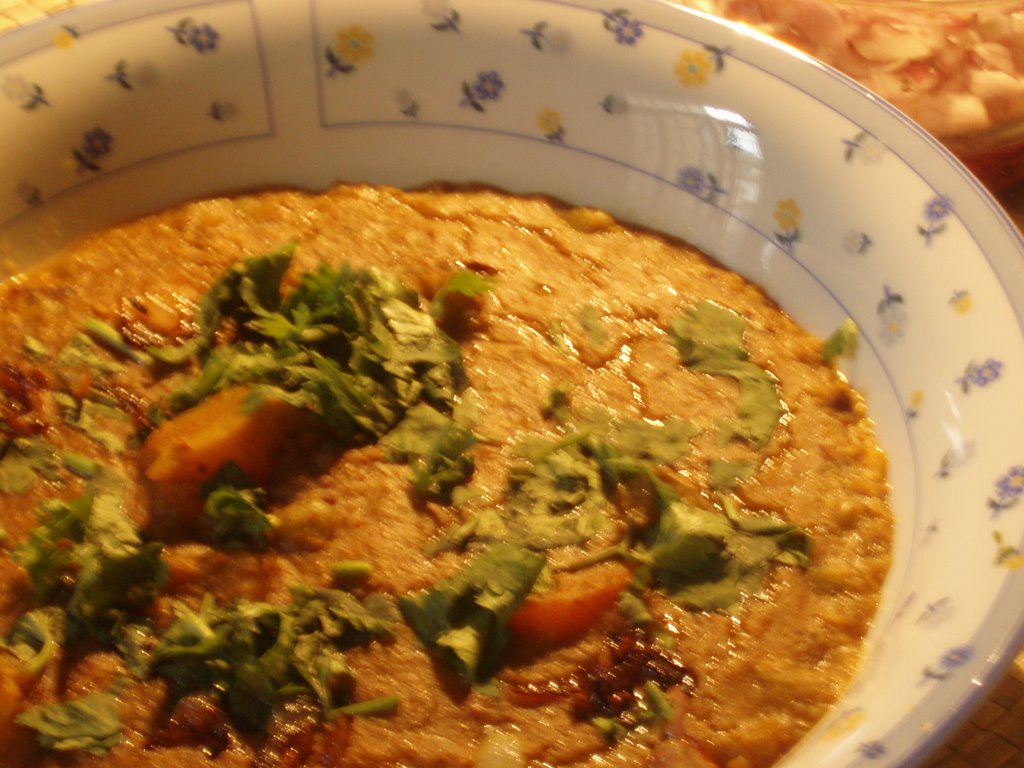
I like my tomato pappu (dal) as red as a tomato. The yellow of the dal adds its own hue so ultimately it's like a burst of orange-yellow sunshine in a child's drawing.
(Okay, this picture is less sunshiney than I want, but do as I say, not as I show.)

Take two fistfuls of tur dal (red gram/pigeon peas), add a disproportionate amount of tomatoes to it, at least five, if not more, and boil away the excess water and it's ready.

When I saw some green tomatoes at the store a couple of weeks ago, I had to grab them. Of course, I had no clue whatsoever what I was going to do with them, but I had to have them. Looking at several recipes several days later on the Net didn't help either - I wanted to use them up quick and not have to buy extra ingredients to be able to use them up so I decided I would look for recipes for kootu - it would be like the dal I'm used to yet not quite, I told myself, and it would be a healthy and easy balance between my impatience to get on with using something and not wasting it and my desire to experience a new and unfamiliar taste.

But kootu recipes usually mean the tiresome processing of a coconut, which is the rarest of rare commodities in my home. I decided to tilt the balance in favour of the familiar - do away with the coconut, with the dal of choice (green gram) and use tur dal, with pepper and fennel to impart the novelty.

As the cooking hour progressed, I took a look at the pestle and it felt incredibly heavy. Never mind, the peppercorns will split when I splutter them in oil, I told myself, and got on with it. All they did was spit. And get shiny.The fennel didn't make any difference; I should have reached for that pestle, after all! I didn't add too much turmeric because I wanted the dal to look green, and added two or three round red chillies to add some contrast to the dal.


Here's how I think I made it:

In a pressure cooker (or pan),
- take half a cup of washed toor dal (pre-soaking will help it cook faster and softer in a shorter time)
- 6-7 quartered green tomatoes
- water
- a small onion, chopped up (optional)
- 1 or 2 green chillies, slit (optional)
- a pinch of turmeric

Make sure the dal is well covered by the water but not overwhelmed by it.

Let the pressure cooker whistle 2-3 times and then cook it on simmer for another 5 minutes. (Or just cook it till mushy in a pan)

Let the pressure drop on its own and mash it as much as you can.

Add the salt and some red chilli powder, if you like, at this stage.

If it's too watery, thicken it down by cooking it some more on medium heat, uncovered.

In a spoon of oil, pop 1/2 tsp each of mustard, cumin, peppercorns and fennel. A bit of asafoetida, if you like, or garlic. And 4-5 curry leaves and a couple of curry leaves. Chop up some coriander and garnish.

I'm sending this dal to Desi Soccer Mom who's hosting My Legume Love Affair, created by Susan.

Tuesday, October 07, 2008

Legumes All The Way!

I know it's a month-long event, and it's only the beginning of the month, but I was beginning to get anxious when no mails announcing contributions for MLLA-Fourth Helping arrived in the first few days of this month. The only legume dishes being made, it seemed, were those in my kitchen and I was wondering if posting all of them would be seen as hogging space, and attention. After all, I'm the host, is it right for me to post so many? Funny how the ethical dilemma of a host in the food blog world plays out - a real-world host is expected to make as much as s/he can, but would that be deemed an attempt at monopoly in the virtual world? What do you think?

I tried quelling these qualms for a few days by accepting an invitation to a certain social networking site and immersed myself in locating cousins and friends, having them discover me and the messages that dot our pages, how much of ourselves we are revealing, whether I should put up a picture, risk revelation, but the call of the blog is too insistent and loud to ignore. Funnily enough, it calls out as stridently even when I don't have my usual wit-/humour-/anecdote-laden (and yes, humility-laden) pieces to say, which leaves me feeling blue and wondering how I can sustain the blog ...

A couple of these dishes are rediscoveries, and one in particular was one I used to classify as "Oh-that-same-old-tiresome-must-eat-but-why-the-hell-should-I" salad. Made with moong bean sprouts, some tomato, some cucumber, an eighth of a medium-sized onion and a simple garlic-steeped-in-lemon juice dressing, it WAS zingy, but wouldn't have featured here except for Aparna's insistence.


The other rediscovery was of tomato pappu, or toor dal made with tomatoes. I know there are a number of recipes out there for this very basic, very typical Andhra dish, those even simpler than mine, but when I cook old favourites, the standards I aspire to are my grandmothers', not out of any unreasonable, fanatical loyalty to tradition but simply because they tasted better.


All you have to do for this recipe is this:
In a pressure cooker (or pan),
- take half a cup of washed toor dal (pre-soaking will help it cook faster and softer in a shorter time)
- 4-5 chopped tomatoes (the sourer varieties would be nice),
- 1 cup of tamarind juice (extracted from a small fistful of tamarind soaked ahead of cooking time in a cup of water)*,
- some more water,
- a small onion, chopped up
- 1 or 2 green chillies, slit
- a pinch of turmeric

Make sure the dal is well covered by the water(s) but not overwhelmed by it.

Let it whistle 2-3 times and then cook it on simmer for another 5 minutes.

Let the pressure drop on its own and mash it as much as you can.

Add the salt and some red chilli powder, if you like, at this stage.

If it's too watery, thicken it down by cooking it some more on medium heat, uncovered.

Temper with mustard, cumin, split and hulled urad dal, crushed garlic and curry leaves in a teaspoon or two of oil. You can even add a tiny bit of onion to the tempering. Garnish with some chopped coriander.

* In fact, you can even cook this without the bother of the tamarind extract - you can simply plop the tamarind into the pressure cooker along with the rest of the ingredients and mash it all up together. Accomplished cooks do that but I've not had much success this way.

** I find that adding the tamarind juice after the cooker's opened and then boiling it down works best.

And now we come to the discovery of the day - a moong dalma. You may remember my Orissa posts but soon after those, I acquired a book on Oriya cuisine and adapted this recipe from there.


Green gram/moong dal: 1/2 cup
Potato: 1, peeled, cubed
Small brinjals: 2, cubed
Drumstick (the vegetable): 1/2, cut into 1-inch-long pieces
Cubed radish: A fistful
Cubed carrots: A fistful
Red chillies: 2
Mustard seed: 1 tsp
Cumin powder: 2 tsp
Salt
Water: 1-1/2 cup
Oil: 1/2 or 1 tsp
Turmeric: A small pinch
Dry-roast the dal, wash it.

In a pressure cooker, or pan, place the dal, turmeric and all the vegetables except the drumstick.

When you sense the cooker's about to hiss (or just before the dal reaches the crumbly stage), remove from fire, open carefully and add the drumstick. Close it again and let it hiss once. Temper with the mustard and red chillies. Add the cumin powder. Mix well.

Eat well! And Happy Dasara!

Don't forget to send in your entries for My Legume Love Affair - Fourth Helping, originally created by Susan. The details are in the sidebar.

Monday, July 21, 2008

Sunday humour, Bengal hangover

Once in a while, we visit an Uncle and Aunt who live at one end of town. Uncle is always exhorting us to bring a spare set of clothes, stay over and go to work right from his home but we've managed that just once. Aunty whips up a feast of home-made stuff typical of the cuisine we grew up with but yesterday, they both felt five home-made dishes weren't enough, so supplemented that with four Chinese dishes that they ordered in!

In any case, this was a problem of plenty, compounded by the fact that I'd carried along one of my dishes for them to sample. I'm still on a high from my Calcutta trip and the last couple of days have seen me trying my hand again at Bengali food, which I used to experiment with earlier. Funnily enough, I found parwal in my vegetable store the day after I came back from Calcutta, and bought a few other vegetables to make the shukto and charchari that are so typical of Bengali cuisine. While most of those vegetables are waiting in the fridge, I put to use the one coconut that I retained from a bounty of about 10 that were presented to me last month. It had dried neatly inside its shell and I finally cut it up into pieces and put it in the fridge. I had planned on buying some chicken to make a Kerala-style chicken curry with coconut chips that my friend S introduced me to, but the bird proved elusive, so I made this dal instead.


I had made it for a potluck years ago, when some of us still had the schedules for one without much planning - and it had been much appreciated. Now all I needed to do was buy some raisins, brush up on the recipe and my chholar dal would be ready! I couldn't make out which of my two Bengali cookery books I'd referred to all those years ago, but one book didn't mention the coconut and raisins and neither mentioned whether the dal had to be cooked to a mash or to soft but grainy - I went for the latter as that's what I remembered.

I did away with the 2 tsp of sugar that was mentioned in the recipe and added more raisins than prescribed. I didn't powder the spices as was required. Amidst hoots of laughter over a funny anecdote narrated by Uncle, we savoured this mild and mellow dal. Aunty said it was "variety ga undi", a famous Telugu-English expression for anything unusual, the Spouse said it tasted like prasadam (food made for rituals, as offerings to the deity and worshippers) and Uncle picked out the pieces of coconut and ate the rest.

And the funny anecdote: Well, a visiting nephew of Uncle's was about to reach for a cup of coffee which was on the table when Aunty said, "Oh, God! Chee Chee! That's for your Uncle, don't take that! We'll make other coffee for ourselves!" "You do exaggerate, Mama!" I said, giggling. But Aunty piped up honestly, saying, "No, I DID say that, I think," and also giggled herself, setting us off on another round of laughter. It must have been the sugarless/diet nature of the coffee that provoked that outburst, but it was so funny listening to my Uncle who narrated this with a mixture of amusement and indignation.

On to the recipe now!

Channa dal/Bengal gram: 100 gm/1 cup
Green chillies: 2, slit
Coconut pieces: 1/2 a cup
Raisins: Half a handful
Water: 2-3 cups (and more if you need later)

Salt, to taste

Turmeric: 1/2 a tsp
Bay leaf: 1
Red chillies: 1-2, broken
Cumin seed/Jeera: 1 tsp
Whole clove, cardamom: 2 each
Cinnamon: 1/2-inch stick
Oil: 1-2 tsp

Wash the lentils thoroughly. You can soak them ahead to cut down on cooking time.

In a pan/saucepan, boil the water.

Once it comes to a boil, add the dal. Cook till half-done, then add the salt, turmeric, green chillies.

Cover and cook till done on a medium fire. Add some more water if the lentils are not done. As seen in the picture, they should maintain their shape but should crumble when prodded with a finger. Stir the dal now and then so that it doesn't stick to the pan.

In another frying pan, heat the oil to smoking. Lower the heat and add the bay leaf, cardamom and cloves. Once they sizzle, add the coconut. Let the coconut brown slightly. Add the raisins. Add the cumin and red chillies and wait just until they begin to turn colour, a couple of seconds. Switch off the fire and pour it over the dal.

Cover and simmer the dal for five minutes.

I am sending this to Mansi's Healthy Cooking event. I think it qualifies because I've done away with the sugar (though I do realise some is present in the raisins), the coconut can be omitted if necessary or left uneaten and the oil can be limited to one tsp.


Wednesday, August 01, 2007

Going Regional

A good friend’s wedding at Berhampur, Sambhalpuri and Pasapalli weaves, Gopalpur-on-Sea, the priests at Puri, the irritating guide who insisted on explaining only the juicy bits of the Konark sculptures, a cruise on the Chilka lake to see the flying ducks and flamingoes, traditional Oriya meals in Bhubaneswar and Puri and an Oriya colleague’s grievance that Bengal appropriated much of the credit for what was originally Oriya – when RCI-Orissa was announced, I knew I had to participate for all these memories.

It seems to be such a modest State, one that doesn’t thump its chest despite a wealth of treasures. Till I met the two people I mentioned, I didn’t know much about Orissa, except a little bit about its natural resources from Geography text books, Emperor Ashoka and his repentance on realising the gravity of what he had done by waging the Kalinga War, and my mother’s childhood memory of frightening, baton-wielding pandas at the Jagannath temple in Puri. To date, I’ve not seen a single cookbook on Orissa cuisine available in English in India, and even on the Internet, there are just those few recipes circulating in various sources.


Thankfully, though, somebody did write about a restaurant called Dalma in Bhubaneswar and that’s where we went for an Oriya thali. What did we have – we had dalma, which looked nothing like mine, a lovely mustardy fish preparation or two, a raita of fresh curds and banana stem, a santula, which is a mild, vegetable preparation. At a resort near Puri, we had, among other things, a preparation of fried vadis with spring onion and garlic, almost Indo-Chinese in taste (!) and chena poda pitha, that lovely, sweet baked paneer preparation that we saw everywhere we visited in the State!

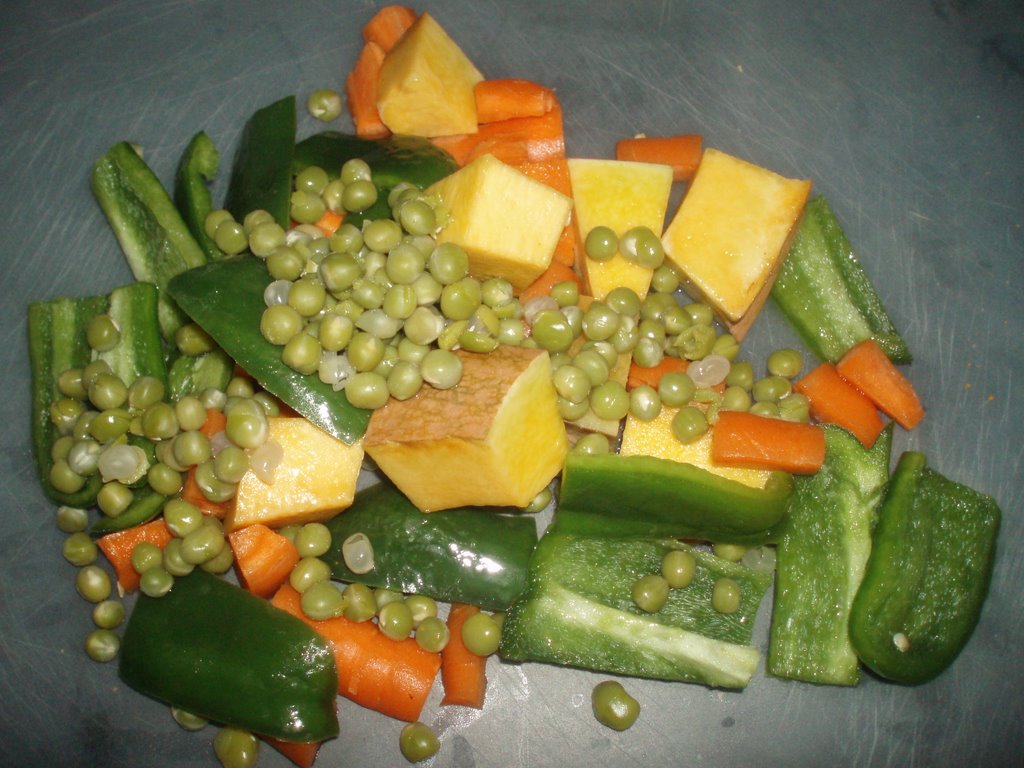
This is the first of the dalma dishes I am posting – I gather that the vegetables and the lentils can be varied; this version uses yellow lentils, the other uses toor dal!

Here we go, it’s adapted from this http://www.indiacurrents.com/news/view_article.html?article_id=7de1730e53649217dd5e422186f7793b">source

Channa dal/chickpea lentils – 1 cup, pressure cooked till soft
Kala channa (black chickpea) – ½ cup, soaked overnight, pressure cooked for just two whistles
Potato – 1, medium, diced
Sweet potato – 3-4 pieces, each an inch long
(Yellow) Pumpkin – 10 pieces, each an inch long
Eggplant – 1-2, diced (I used the round, small, purple variety)
Turmeric – ½ tsp
Salt – to taste
Garlic – 1-2 pods
Oil – 2 tbsp

Pancha phutana – Cumin (jeera), black mustard, fennel (saunf), fenugreek (methi) and nigella (kala jeera) in the ratio of 4-4-2-2-1

Cumin powder, made from 1 tbsp of roasted cumin
Chilli powder – 1 tsp

In a pressure cooker, cook the cut vegetables, lentils and black chickpea for 5 minutes.

In a pan, heat oil, fry the garlic. Add the pancha phutana, let it pop and add to the vegetable-lentil mixture once the pressure cooker cools down.

Add the cumin and chilli powders, mix. Serve with rice.

RCI - Orissa is hosted by Swapna of Swad.

Sunday, July 08, 2007

Mixed Up Fare


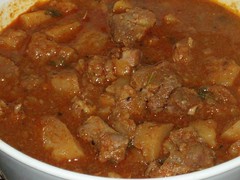
This was a post written with a lot of reservations, hence that title! I thought the picture of the mutton curry looked too red and chunky, the picture of the vegetarian dish too undistinguishable, but put it down to addiction to blogging, and hey presto, it becomes a post, deserving or not!


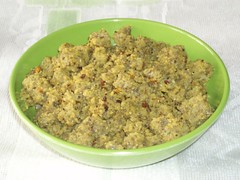
The vegetarian dish further below was an attempt at cleaning out my pantry – it’s made of whole green gram/moong that is at least two years old. Miraculously, it didn’t attract any life forms so I used it to make something called ‘siriyali’ that I found in a Telugu cookbook written by Ms J. Kanthamani. More about that later, on to the curry.

Nigella is a spice I love and use mostly in Bengali dishes, but over the years, have begun using it in others too. In the mutton curry, I threw in a teaspoon of nigella on an impulse and it made all the difference to this dish which didn’t have curry powder or other whole spices beyond the basic tastemakers.

Here’s the recipe:

Mutton: 250 – 300 gm (less than 1 lb)
Potatoes, chopped: 2 big (about 1 lb)
Onion, chopped: 2
Ginger-garlic paste: 2 tsp/1 tsp of each
Chilli powder: 1 – 1-1/2 tsp / as per taste
Turmeric: 1 tsp
Salt: To taste
Nigella/kalonji: 1 tsp
Oil: 1 tbsp
Water: upto 3 cups

Coriander/cilantro: for garnish

Note: I made this in a pressure cooker, I’ve never cooked mutton/lamb otherwise because I’ve known it to take ages without one.

Heat oil, add nigella.

Now add the onions, fry till pink-brown.

Then add the ginger-garlic paste, fry well, till you notice some oil around the edges of the mixture.

Now add the meat, saute till well browned.

Add the turmeric, salt and chilli powder. Mix thoroughly.

Now add the potatoes. Saute well.

Add water to cover the contents and a little more.

Close the pressure cooker and wait for the steam to build up.

Once it comes out of the vent, close it with the weight.

Let it whistle once, turn down to simmer and cook for 15 minutes.

After the pressure drops on its own, check for doneness. If the meat isn’t soft enough, add some more water and cook for a little longer in the way described above.

Garnish with coriander.


Now on to the other dish. The original recipe called for hulled yellow moong dal so you could use that if you like, but I’ve no idea of how that would turn out.

Here’s how I adapted it:

Whole green gram/moong beans: 300 gm
Tamarind extract, watery: 4-5 tbsp
Urad dal/hulled black gram: 1 tsp
Dry red chillies: 2, broken
Curry leaf: 1 sprig
Chana dal: 1 tsp
Mustard seed: 1 tsp
Oil: 2 tsp
Turmeric: A pinch
Salt: to taste

Soak moong for 2-3 hours, wash well and grind it to a grainy mix.

Steam this in idli plates or in an ordinary vessel for 10-12 minutes. It will set, like a cake.

After it cools, cut it into small pieces, or just crumble it.

In a pan, heat oil, splutter mustard seeds, add black gram, red chillies, chana dal, curry leaf, tamarind extract, turmeric and salt.

Add the crumble/pieces and mix. If you’ve cut it into pieces, don’t mix too much as they can break up.

It’s somewhat like a coarse, green upma, not bad tasting at all! Curds/yoghurt went well with it; so did some lime pickle. Could do for breakfast!

Tuesday, June 19, 2007

A Liteness of Being

When Coffee announced MBP’s theme is Going Lite, several thoughts came to my mind: At last, I can finally buy the stuff but justify the expense as going towards a good cause and make that flourless cake with an expensive pound of ground almonds and orange and pass it off as a somewhat low-carb version; I can finally make use of the nice, thick, glass cake dish I just bought at a 30 per cent off sale; I can use the slowly rotting plums in my refrigerator to make a crumble using up some more of the sturdy oats in my larder …

Then I noticed some channa/chickpeas that were somewhere in the inner recesses of the shelf and I decided to take another shot at salad – I am usually disappointed with my own attempts as the dressing never seems to come together. My friend was coming to lunch so that was motivation enough. It gave me a chance to use up some vegetables from my cornucopious fridge as well. And that was the perfect excuse to boil up some wholewheat pasta and tomato-basil sauce and bake some garlicky potatoes and have ourselves a feast. And another new acquisition from the sale, a pudding bowl, could double up as a salad bowl! I do realize the meal went way past the Going Lite theme but that was lunch, not a theme party, so I suppose we can skip the guilt this time. I’m presenting just the genuinely lite dish here. MBP, here I come!


This salad is inspired by Kalyn’s Kitchen. I didn’t have/use many of the vegetables she mentioned, nor the lime juice, nor the carrot, so I used some dill-chilli vinegar, red pepper and zucchini instead. I wasn’t able to print Kalyn’s recipe, so I just worked from memory and this is what I came up with:

Dry channa/chickpeas/garbanzo: 2 cups, soaked overnight and cooked
Zucchini – Half of a big one, diced small
Red pepper – 2, cut into small pieces

Dressing:
Vinegar – 3 tbsp
Olive oil – 3 tbsp
Garlic – 5 cloves, minced as fine as possible
Cumin/jeera powder – 1 tsp
Chilli powder – ½ tsp
Salt, to taste

Steep garlic and the other spices in a mixture of vinegar and oil for some time.

Put all the vegetables in a salad bowl, add dressing, mix, let chill in the refrigerator.


It wasn’t too bad for me, my friend loved it and praise be to God, it didn’t last beyond a day in my refrigerator because I had the brains to take it to work, where my colleagues too liked it. I’m hoping you will, too!

Sunday, June 17, 2007

Stalking in Cyberspace

Ok, ok, the title was just a piece of sensationalism! All I wanted to say was that the answer to the question in my previous post is 'stalks'. GD and Mamatha got it right. Congratulations! They are the stalks of Malabar Spinach .


As the post was an afterthought, I didn’t take any pictures of the leafy greens or the stalks but you can see a good, clear picture here. We usually make a stir-fry or gravy of this with amaranth stalks but this time, after I finished using the leaves in daal, the stalks looked too good and fresh to throw away, so I used them for this stir-fry with a bit of the daal I had soaked for the main dish a little earlier.

Funnily enough, the stalks reminded me a lot of ladies’ fingers/okra – they gave off a bit of slime when I tossed them in the pan but gradually the goo wore off and I was rewarded with a crunchy, bright, dry stir-fry that was great with curds/yoghurt but can also be used as an accompaniment with a sambar or chaaru/rasam. It can even be served with plain rice.

Stalks, chopped – 2 cups
Toor daal/yellow lentils – a fistful, soaked for about 30-40 minutes
Garlic – 3-4 cloves, bruised/chopped
Red chillies – 3-4, broken
Mustard seeds – ½ tsp
Split urad daal/black gram - 1 tsp
Chilli powder – 1 tsp
Salt, to taste
Oil – 1-2 tsp

***A frying pan with a lid.

Heat oil, add mustard seeds.

Once they splutter, add the black gram, brown.

Add the red chillies and garlic.

Now add the daal with just enough water – it should cover the daal, but barely. Lower the flame.

Cover, and let the daal cook till it’s soft but not mushy. (It should hold its shape.) The test – if it’s not done, it will have a spot in the centre – boil till that spot disappears and the colour is uniform.

Now add the stalks, sprinkle some water, saute. Add salt and chilli powder. Cover.

Keep checking to see that the stalks don’t stick to the pan – sprinkle some more water if they do. Cook covered.

I didn’t cook it too long so there was quite a lot of bite and crunch in them, you can go in for a softer version.

I’m sending this off to Kalyn’s Weekend Herb Blogging, hosted this week by Rachel’s Bite. Bon appetit!

Sunday, May 27, 2007

Culinary Crossover

Tagine and couscous are as native to Morocco as lime pickle and channa masala are to India. What happens when these two come together with nothing but the intention of finishing some of the stuff in the pantry in as authentic (!) a manner as possible? It’s a glorious mess when you discover it’s easier to depend on hazy memories of the recipe rather than spend some time searching for the book on Moroccan cuisine. After all, it’s your only time off in the week, don’t you just have to get on with it, give it a snappy headline and put it on the blog too? And it can't be any worse than Pepper Paneer Pasta, can it, though deconstructing it leads you to cream, cheese and pasta, which is what go into pasta all the time!


I’m sure there’s a tagine with chick peas, though my book seems to have a chicken tagine which called for some slices of pickled lemon, the vinegary kind. And channa masala calls for a souring agent. When time is precious on a Sunday morning which you would rather spend vegetating on the couch than soaking tamarind for extract, and in the absence of an instant one such as amchur/dried mango powder, lime pickle comes in handy. I put things together willy-nilly and the result was a not-very-strange but not-very-traditional gravy.

The lime pickle I used is a traditional Andhra recipe but as haphazard was the operative note, I used three teaspoons of it in the tagine masala - now how’s that for a crossover name? It was hot, naturally, but definitely tamed by the onions, tomatoes and ginger-garlic paste that kept it company.

Here’s the recipe:

Couscous - 1 cup
Channa/chickpeas/garbanzo beans - 1 cup, soaked overnight if you’re using the dry ones
Onions - 3, chopped
Tomatoes - 3, chopped
Green chillies - 2, slit
Ginger-garlic paste - 1 tbsp
Garam masala/Curry powder - 1 tbsp
Cumin seed/Jeera - ½ tsp
Turmeric - ½ tsp
Salt, to taste
Lime pickle - 3 tsp, with pieces
Oil - 2 tsp
Coriander, for garnish

Boil the chickpeas or pressure cook them till soft.

Heat the oil, add the cumin seed.

Now fry the onions till they become transparent.

Add the green chillies, saute.

Now add the ginger-garlic paste. Mix well, fry a while.

Add the turmeric, salt, curry powder and mix really well.

Now add the tomatoes, mix well, cook on simmer, covered, till mushy.

At this stage, the gravy will begin to talk to you. If it needs more water, give it some.

Add the chickpeas and the lime pickle.

Mix well, check the consistency of the gravy and add more water if you want to thin it down. Let it simmer for 3-5 minutes.

Check for taste, turn off the heat. Garnish with coriander.

Bring five cups of water to the boil, add a pinch of salt, add couscous and cook for 7-9 minutes. Drain.

I prefer to serve the couscous and the gravy separately so that whoever’s eating can decide the proportions for themselves.

I'm sending this off to Presto Pasta Nights hosted by Ruth at Once Upon a Feast

I've also joined The Foodie Blog Roll. You can find it in my sidebar, details when you click on it!

Wednesday, May 16, 2007

Swift and Simple

It’s nostalgia time again at my blog. This dish stems from the days of my first job which often involved long and late hours. My colleague and friend would take me to her house to spare the relatives I was staying with the bother of having to open the door for me at that hour.

At her place, her mom would be ready with some hot food, after wolfing down which we would sit in my friend’s room and chat throughout the night and fall asleep only when dawn broke and our throats began to rasp and our eyes fell shut much against our will. Often, another friend would join us. Then we’d be up again at 9 or 10, by which time her mom would have breakfast ready. And then we’d unwillingly go about the rest of the day.


Her mother would often make this chaaru with moong dal. I remember a couple of tomatoes and an onion going into the pressure cooker along with dal, but my variation is to include many other vegetables and finish it off with a generous dose of lime juice, which provides all the flavour.

What you need:
Mixed vegetables, chopped – 2 cups (I used carrots, drumsticks, chikkudukaya/avarekkai, radish, yellow pumpkin)
Tomatoes – 1 big, chopped into small pieces
Onion – 1 medium, quartered
Green chillies – 2, slit lengthwise
Moong dal/Split, husked green gram – ¾ cup, boiled and mashed

Chilli powder – ½-1 tsp
Turmeric – a pinch
Salt to taste
Curry leaves – 5-10
Coriander leaves – to garnish

Mustard seeds – 1 tsp
Fenugreek/methi seeds – 1/4 tsp
Oil – 2 tsp

Lime juice – from 2 big limes/as per taste

Pressure cook/boil the veggies till done – they shouldn’t lose their shape.

In a pan, heat the oil. Add the mustard seeds, let them splutter. Then add the fenugreek and the curry leaves.

Saute the onions till transparent. Then the green chillies till they lighten in colour.

Now add the mixed vegetables and the tomatoes. Add turmeric, salt and chilli powder. Saute for a minute.

Now add the mashed moong dal and dilute it with water till it reaches a thick soup consistency. Let cook for a couple of minutes. (I like it to be of light and flow-y consistency.)

Check for taste. Remove from heat. Garnish with chopped coriander leaves.

Let cool completely. Stir in the lime juice.

Tastes good with papad and vadiyalu/vadams. I'm sending this off to Latha of Masala Magic who's hosting RCI-Andhra Pradesh this month.

Sunday, December 03, 2006

A Party Piece - Haleem Goes Vegetarian


This is a party piece even when it’s non-vegetarian. Come Ramzan, and visitors to Hyderabad would be whisked off to the Old City to try the Haleem and other dishes that would make an appearance only that month, apart from the kababs and khubani ka meetha (stewed apricots with custard) that the city is so famous for.
Now Haleem seems to be available everywhere in the city – I visited last year during Ramzan and every restaurant big and small worth its name had banners advertising its availability. I even remember Hareesh (a dish, not a guy), but am not too sure what it was or even whether I tasted it.
However, in the after-life (life after Hyderabad, that is, this is no ghost writing this piece), most of my friends are vegetarian, and pulaos, fried rice and “variety rice” (that favourite Madrasi term for various flavoured rice dishes) soon pall as they are commonly found. I had just begun collecting cookbooks then, and was thrilled to find this dish which proved to be the delight of every get-together we had since. Sadly, though, work and different schedules ensured we couldn’t meet often, but as a ‘welcome back’ dish for someone who loved it but told me not to bother with it, it’s just right.
The basic recipe is from Rotis & Naans of India by Purobi Babbar (Vakils, Feffer and Simons, 1990) but I made a few changes based on what I found in my fridge. On to the recipe, then!

1 ½ cups broken wheat (I used coarse wheat rava)
4 tbsp red gram/toor daal/kandi pappu
2 tbsp green gram/moong dal/pesara pappu (the book suggested masoor daal)
2 tbsp split Bengal gram/channa daal/senaga pappu
100 gm altogether – peas, yellow pumpkin, and carrots, cut into pieces (the book suggested peas, cauliflower and brinjals)
2 capsicum/green bell pepper, cut
3 medium onions, sliced

8 cloves garlic and 2 tbsp grated ginger, ground to a paste
1 tsp turmeric powder
1 tsp chilli powder
1 tbsp curry powder/garam masala
1 tbsp coriander/dhania powder (the book suggested 1 tbsp each of coriander and cumin seeds ground to a fine paste)
2 level tsp salt
6 cups of water
8 tbsps of ghee or oil (I used my flavoured ghee)

For garnish:
1 onion, sliced and fried crisp
Coriander leaves/hara dhania/kothimeera, chopped

Soak wheat and dals separately overnight. Wash well. Drain and keep aside for 20 minutes.

Heat half the melted ghee or oil. Fry onions until brown. Stir in garlic, ginger paste, fry for a few minutes. Add coriander powder, turmeric, chilli, salt and add wheat and dal mixture. Stir well.

Pour in the water. Cover and cook slowly over low heat for one hour till the wheat is soft and pulpy and the daals are tender. Add vegetables. Stir well. When ready, add curry powder and the remaining ghee or oil.

Keep stirring often. Despite all my heroic, conscientious efforts, it did keep sticking to the bottom of the pan between the stirs. Cook over low heat even now, but without the lid until the ghee floats to the top and the colour turns golden.

Once you’ve transferred it into a serving bowl, sprinkle the fried onions and coriander on top. Serve hot with lemon slices, mint leaves and a simple salad of cucumber, onion and tomato.

Warning: This takes at least two hours to make and a tremendous amount of patience. You also need to be alert. This stew can splutter and burn your arms and fingers. The end result is worth it, but then, make sure you serve it in limited doses to those who shouldn’t be eating all that ghee or oil!

As I was finishing it off and reached for something in my shelf, I noticed my bottle of olive oil looking down at me. Given that most of the ingredients are also used in Mediterranean cuisine, this dish would have probably tasted as good but lighter with olive oil, if any of you try, don’t forget to drop me a line.
And to borrow what many of my vegetarian friends unfamiliar with paneer/mushroom/tofu would say: “I believe it tastes just like non-veg.” It does.


Tags:

Wednesday, November 08, 2006

Paatoli (Veggie-Lentil Crumble)

Posted by Picasa

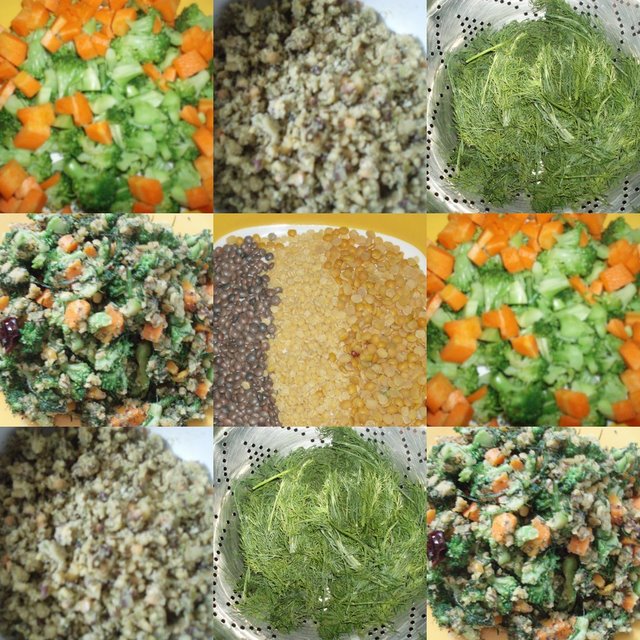
It sat in its box at the grocer’s, tossed along with the other heads. As soon as I saw it, I knew what my next post was about – paatoli with broccoli, carrot for colour and dill for flavour. It’s a versatile dish I first tasted only a few years ago, but seem to have achieved an approximation of perfection with only in the last few weeks.
Paatoli (paruppu usili in Tamil - that's the only other name I know) looks very pretty with green and red capsicum (peppers) bits, nice and green with the traditional French beans or cluster beans and I even made a slightly magenta version once with beetroot and carrot! The broccoli version is a serendipitous find – made years ago to see whether an “English vegetable” goes with a very traditional Indian dish.
Here’s my recipe:

1 small head of broccoli, cleaned, separated into small florets
1 big carrot, diced small
1 bunch of dill, washed thoroughly, chopped
Turmeric powder – ¼ tsp
Oil – 3-4 tbsp
Mustard seeds – 1 tsp
Green Chilli – 1, slit
Red chilli – 1, halved
Salt

½ a cup red gram
¼ cup black masoor daal
¼ cup green gram
All three lentils are to be washed and soaked in warm water half an hour in advance

3-4 green chillies, slit
Cumin – 1 tsp
Peppercorns – 1 tsp
Ginger – chopped, a tbsp
Coriander leaves – ½ a cup


1. Boil/microwave the broccoli and carrot with the turmeric and salt till just tender. They should not lose their crunch.
2. For the crumble:
Drain water from the soaked lentils, grind them in the mixer with some salt, slit green chillies, cumin, pepper, ginger and coriander leaves. Try not to use water – it should have the consistency of a coarse mixture - see centre picture, first row.
3. Put this mixture in a dish and steam it in a pressure cooker for about 12 minutes without the weight on – if you use the weight, you’re in for a watery paste and an irredeemable dish.
Make sure that the water at the base of the pressure cooker does not boil over into the dish containing the crumble. Keep an eye on the pressure cooker – it will emit steam only as long as there's water in it – as soon as it stops steaming, turn off the heat and put it in more water if the mix inside isn’t done yet.
4. Once it’s done, cool, crumble and set aside.
5. In a pan, heat the oil, put in the mustard, wait for it to pop, lower flame and then put in the green and red chillies. Add the dill, sauté for a minute or two.
6. Now add the broccoli, carrot and crumble. Fry for a while, check for seasoning and add salt if required.
7. The perfect paatoli will be powdery, light and not stick to the pan – but I find that this comes with practice. I also find that the veggies and lentils are disproportionate sometimes, but I don't see it as a failing unless the crumble obscures the veggies. You can always refrigerate extra crumble or extra veggies for another day!
8. This goes well with chaaru/rasam and rice, and is good to eat with a bowl of curds/yoghurt as well.

Thursday, November 02, 2006

Daal with Greens

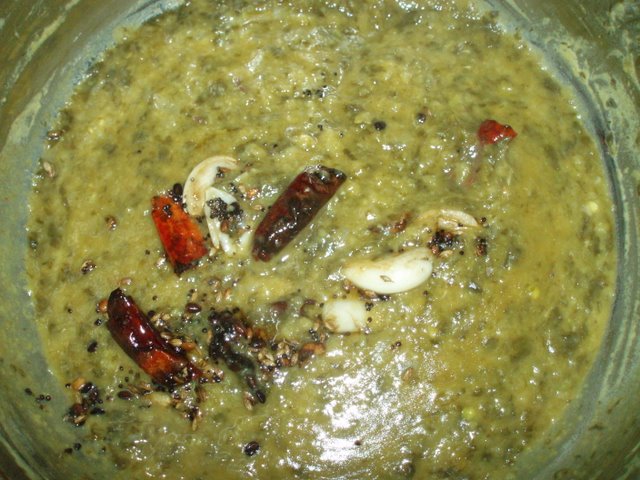
One of the distinctive features of Andhra cuisine, I think, is its daals with greens. Be it spinach, sorrel, amaranth and other varieties I don’t know the English names of, they can all be combined with lentils to make greeny-yellow affairs that go well with rice, pickles and appadams and even breads such as chapatti and puri. And if you soak the daal for a while and use a pressure cooker, it’s done in a jiffy! For today’s recipe, I’ve chosen what is known as chukkakoora in Telugu. Madhuli of My FoodCourt has a picture of these greens on her blog – I didn’t decide to put this in mine till I chopped up the greens and assembled everything in my spanking new stainless steel pressure pan and decided it made a pretty picture. This recipe works well for most greens and most daals, though I’ve never used channa daal, I must say. Chukkakoora (and gongura) is naturally sour, but for the other greens, you can use a little tamarind extract and one or two country tomatoes for added flavour. You can also go with just one of these or try a combination to see if the proportions work well — I confess I’ve never got the formula standardized so each daal is a discovery everyday, but rarely a tragedy! Now that I’ve made one confession, here’s another – I’ve never bothered with quantities, just rough measures so here’s what you need:
Posted by Picasa
1 bunch of greens – 100-150 gm – thoroughly washed and then chopped - if the stalks are big and tough, you can discard them
A cup or so of daal, preferably red or green, usually hulled – soaked well in advance
1 small onion, chopped
A pinch of turmeric
2 or 3 green chillies

(Optional)
2 tsps thick tamarind extract
A tomato or two, chopped

Tempering: Some cloves of garlic, crushed
Mustard seeds, cumin, black gram daal – all approx half a tsp
Red chillies – a couple, torn into three or four bits
Some curry leaves
A tsp or two of oil

1. Put everything in the pressure pan, check that there’s enough water to just cover the daal, and once the steam builds up and comes through, put the weight on the vent. Let it hiss a couple of times, turn the heat down to the lowest, wait a couple of minutes and turn it off.
Don’t force the pressure cooker open, wait for the steam to escape on its own – if you absolutely have to, sit the cooker in a plate or dish of cold water, that will hasten the process, and gingerly flick the weight to see if it’s ready to come off – if it hisses, it isn’t, if it’s a slow sigh, you’re almost there! If you don’t use pressure cookers, you’ll just have to boil the daal in a pan – I haven’t attempted that with success, so I won’t pretend I know about it, but something tells me it’s simpler to boil it without the other stuff first.
2. Now, once you open it, mash the contents into as homogeneous a mass as you can, season with salt and red chilly powder. (I don’t usually put in the salt till the daal is cooked as it might interfere with the cooking.) I also don’t put in the tamarind until after the daal's cooked but I’ve seen others successfully throw it in with the rest of the ingredients.
3. Now heat the oil in another pan, put in the black gram, let it brown, then the mustard seeds, let them splutter, now the cumin, then the garlic and red chillies and curry leaves – let them soak in the oil as much as they can. Make sure the pan isn’t burning, though. Now turn off the heat, tip the tempering into the daal, stir. Or alternatively, you can put the daal into the tempering, add the tamarind extract and salt and chilli powder at this stage, let it boil a bit and take it off the fire. I prefer the first method as the tempering doesn’t lose its crunch, relatively speaking. Posted by Picasa