Showing posts with label vegetarian. Show all posts

Tuesday, September 15, 2026

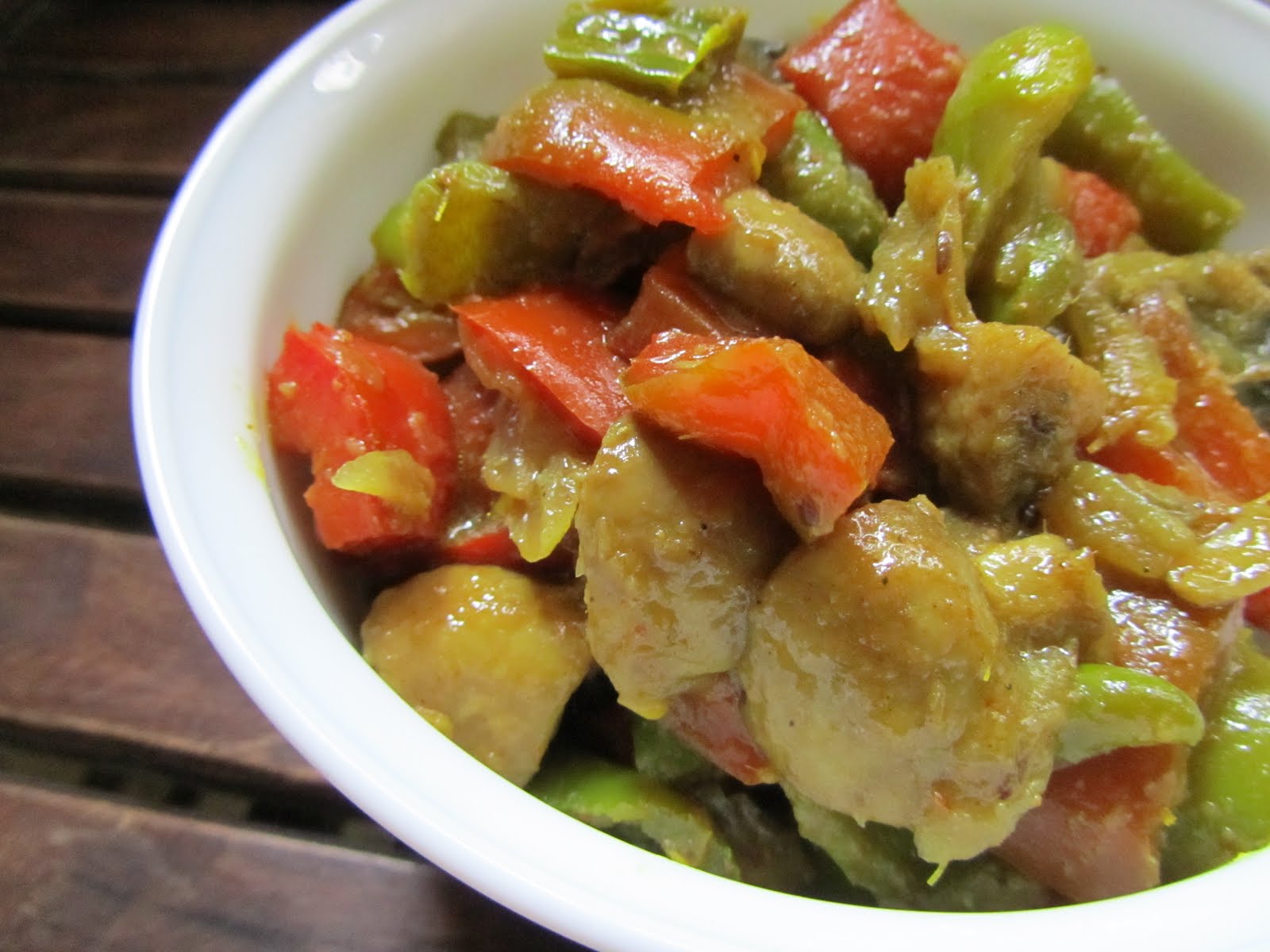
Mixed Vegetable and Paneer Curry


I've gone some three years without blogging here. But this impending 20th anniversary (Sept 14, 2026) and the gleaming, colourful picture of the vegetables in the photo below pushed me to post this. I almost didn't when it came to this moment, but decided to push myself, just for the fun of it. If you're interested, see my first post here.

I know most of us no longer want to read long or even medium-long posts - our phones, social media and glamorous bloggers, influencers and lovely, good-looking food have taken over (the latter always did) so here's the recipe, or what I remember of it after a month of having made it. It's neither original nor unusual - it's just what I mixed up in a pan and then thought it looked and tasted good, that's all. 

I don't remember the focus on protein before Instagram, or even three years ago when I last blogged, and I'm no nutritionist, but there's probably a little bit of it here with the paneer and the green peas. 


The raw materials
An onion sliced long
A capsicum/green pepper
A handful of carrot juliennes
One tomato, without the pulp, cut into strips
A fistful each of green peas and corn
Paneer - 200 gm, cubed

Other stuff, spices, etc
Puree of two tomatoes, about 3/4 cup
Three green chillies, slit and deseeded
1.5 tsp chilli powder, or to taste
1 tsp iodised salt
1 tsp tomato sauce (I wouldn't add it next time, didn't add any value)
Ginger, garlic (I can't remember if I added any but about 1 inch of the former and 2-3 cloves of the latter should do)
Kasoori methi - 2 tsp
Water, as needed
Garam masala - 1 tsp
Oil - 2 tbsp (and I mean exact tablespoons, not a casual measurement with any ladle hanging around)

Directions
Heat 1 tbsp of oil and add the carrots. Saute for a while and then add the capsicum.
Saute the capsicum and while it's still firm, add the green peas, corn and tomato strips. Saute. Keep aside.

In the rest of the oil, saute the onions till translucent.
Add the ginger and garlic if you are using them. Cook for a minute. Add half of the green chillies and let cook for a minute.
Add the tomato puree and the tomato sauce. Cook this for a while. Add the salt and the chilli powder. If you think it's necessary, add some water and bring it to a nice boil.
As it's thickening, add the vegetables and paneer and let the gravy coat it all till there's no gravy left (er ... but I'm sure you understand what I mean)
Let it cook for a minute or two. Stir so that it doesn't burn.
Rub some kasoori methi between your palms and sprinkle it on the curry. Add the garam masala, give it a good mix. 
De-stove. (That is to say, ha ha, take it off the stove. Also, switch off the stove.)
Garnish with the rest of the green chillies.
Enjoy a bowl or two ... or three!


Friday, May 12, 2023

Idli in a Bundt Pan


I thought this act of mine, a brainwave, if you will, deserved a post on this dormant blog. 

My baking tins are about thirty years old, the result of a summer when I had some free time. You can read more about that here, at the beginning of this post. I acquired a few over the following years but didn't really use them as I got busy with studies and work and diets and so on and so forth. Naturally, they became 'space-occupying lesions', as my mother likes to call clutter, and I recently gave most of them away.

One of the things I kept was a Bundt pan. Last week, we had bought some idli batter just in case my guests wanted breakfast. (My nieces slept in till at least 11 a m so they did not.) I am having my kitchen renovated and did not want to spend much time in what is still a disorganized and messy situation. I didn't have the patience to grease the idli plates so I decided to steam it in a vessel and cut it into pieces. My eyes fell on the Bundt pan and voila, that's what you see in the picture. 

I decorated it with some senaga karam (dal powder made primarily with roasted gram dal, red chillies and garlic) and inserted a small bowl of pappucharu in the centre. (Turned out it was the rajma I'd made that day, but it will do, for effect)


Unmoulded beautifully


Beloved Bundt


Tuesday, July 20, 2021

Whole Masoor Dal, Some Nostalgia for Grindless Gravies, and Other Things


I recently got a pack of whole masoor dal and wanted to make misal or usal with it, as I had taken a fancy to it after seeing some picture on Instagram. Soon enough I tired of that whim as I'd have to sprout the dal and that would involve some waiting. I kept looking for brown masoor recipes but all I came across were recipes for dal (plain brown gravies) which I found unappetising. It then struck me that I could probably adapt the Kerala green gram thoran recipe to these lentils.

When I was in hostel, this dish would appear in our mess once in a while. The first time it did, I thought the cook, Mr Nair, had run out of vegetables for the day and was making do with the green gram. I was not curious about food those days so I kept thinking that till many years later I ate this at a friend's house and realised it was a full-blown dish all its own!

I followed this recipe with one change. I use very little coconut when I cook, and do not enjoy having to grind stuff, all the more so now as my mixie is in poor health. I do have a jar of desiccated coconut, though, and I needed to begin using it. So I looked for ways to make the coconut fresher, and I found this. It involves soaking the coconut and straining it in a colander but I was using only a tablespoon so I used a tea strainer. The next time I make this, I will use the desiccated coconut directly and see if there's a difference in taste.

Talking about mixies ... In 2007, I came up with a food blog event called Grindless Gravies, much to the amusement/annoyance/frustration of the participants. I guess I was pretty anal about the rules and even changed them once or twice. But many indulged me and participated. The round-up is here. So many good memories!

***

Then, recently, I came across this recipe for Turmeric Fried Eggs with Tamarind and Pickled Shallots by Yotam Ottolenghi. I adapted it to brinjal (eggplant) and used an extra chilli. I didn't use tamarind at all but combined a lemongrass wok sauce and hoisin sauce to make a dressing. It was very oily but good enough. It was a hit with the Spouse. You can see it in the picture below.


This salad that you see below is a combination of a few recipes for spinach-sesame salad in Korean/Japanese style. It was excellent. I saw so many recipes I cannot list them all here. I even used a couple of Guntur chillies and they smoked up my kitchen so much we coughed and hacked for about twenty minutes straight - and worried that the neighbours would wonder if we had COVID-19.


The next picture is my attempt at making a broken glass/stained glass jelly dessert. Some of the darned jellies did not set well and I could not make it more colourful than this. I found blue and green jellies too, for once. Too bad they did not cooperate!


A fruit vendor who appears at our door every few years and vanishes for the next two or three years brought some wonderful guavas at varying stages of rawness and ripeness the other day. This seller always wants me to buy two or three kilos but of course, that's too much for a small household like mine. This time he handed me a packet with many fruit and I did not feel like refusing him as he was coming after a long time. It was just Rs 50. Later on, I discovered there were eleven guavas inside! I doubled this recipe, added raisins to make up for the jaggery I fell short of and realised I had added too much chilli powder and too many chillies. I then toned it down by adding a cup of tamarind juice. It was still hot, but tolerably so.


Sunday, April 19, 2020

Repurposing a Mango Salad As Fried Rice


Recently, we got a bounty of five mangoes from the tree in our building. The tree has been bearing fruit for a few years now. It grazes my window, and I revel in the greenery amidst all the concrete. Now I had to find a way to use up the mangoes.

I came across a recipe for a Myanmarese mango salad for the first time. It struck me as very unusual, combining raw mango, cabbage, roasted gram flour, sesame seeds and a host of other things. It suited me well as I had most of them - and that included a shrivelling, shrinking cabbage. I did not have soy sauce but I decided to give it a try anyway, it was sufficiently new and exotic for me.

However, things started going awry towards the end as the method mentioned one ingredient not previously mentioned and left out details about where to add some others. I added what I could and mixed it all up and dropped the dressing totally. It tasted like the masala mixture you get on the streets in South India, especially Andhra Pradesh.

It was tasty, but super sour. (I had decided to drop the sugar.) Neither The Spouse nor I felt we would enjoy a second overpowering dose so I decided to turn it into a pulihora, some versions of which share many ingredients with the salad. For the Telugu New Year day, we sometimes make a mango pulihora with shredded sour mangoes. Amidst the hurry over the sudden lockdown announcement, I had forgotten that Ugadi was the next day so could not celebrate with food. We got the mangoes well after Ugadi had gone by.


Ingredients

Green mangoes - 1/2 a kilo, peeled and shredded
Cabbage - 1.5 cups
Onion - 1, big, finely sliced
Tomato - 1, medium, sliced
Dry red chilli - 3, broken
Garlic - 4 cloves, minced
Shallots/sambar onions - 8, minced
White sesame seed - 2 tbsp, toasted and ground
Peanuts - 2-3 tbsp, roasted and crushed
Gram flour/besan - 3-4 tbsp, roasted
Salt  - start with 1 tsp of table salt
Pepper - freshly ground
Lime - 1
Chopped coriander - 3 tbsp
Cooked rice - start with 2 cups
Gingelly/sesame Oil - 1 tbsp


Notes

The shallots and garlic were fried for the salad and added to it somewhere along the way as the original recipe was not clear to me. Everything got mixed up and rather soggy ultimately. The taste was good, if somewhat overwhelming.

Method
The next day, I heated the sesame oil and added the salad to it. Saute the salad for a couple of minutes and add the rice to it. Add more rice if it's too sour for your taste. Check seasoning, adjust according to taste and consume.


Friday, April 26, 2019

Experimenting with Bok Choy

Remember this post about bok choy? Remember me? Whether you do or not, I'm going to tell you about my latest experiments with bok choy.


I found a couple of good specimens recently and became fixated on the idea of a garlicky stir-fry. I recently acquired a jade green stone pestle and mortar so it's easy to throw in any number of cloves of garlic, pound them and use them. (Not that it was much more difficult earlier.) 

I made this about two weeks ago, I think. There is no fixed recipe for this. I wanted the taste of the garlic and the chilli to be prominent, and decided to use mustard oil to cook this in. So I heated the oil, added the garlic and the chilli and all the bok choy chopped up, let it wilt and wilt and dry, and then added a bit of salt, stirred it and took it off the fire. It tasted bitter and sharp initially but I soldiered on and managed to finish two cups. I quite liked it, finally.


My leftover problems haven't been left behind - so I had visions of the bok choy going into a nice and colourful fried rice with a little leftover beetroot, leftover rice and a fresh fried egg. As I'm consciously cutting down on salt, it all tasted a little bland, but I'm sure when you toss everything together and liberally add salt and pepper and remember to add the egg after it's been fried both sides and not worked through the rice sunny side up, it will be much better.

Oh yes! This dish also has some snow peas I purchased for a rather obscene amount at a store expats frequent - they too me two weeks to finish, but they're finally gone, unsucculent and shrivelled as they were! (They were never very good, unlike their ilk I have tasted elsewhere.)  Hurrah for me! I ate every single bit of my Rs 350.


Thursday, November 09, 2017

Lazy Beans, Cool Beans


I came up with the idea for these beans on a lazy Saturday. Now when I say lazy Saturday, don't for one minute think the Saturday was one when i lazed about the house. (Recently, all my plans to laze about the house and watch nothing but travel and food shows on TV are coming to naught for some reason or the other.) Oh no, it was a day a friend was coming for lunch, and I had drawn up a decent list of things to make for her. However, I didn't feel up to slaving over the stove for long, and one of the things I made was a brainwave - from years of Internet exposure to whole cooked beans, I suppose. No topping, tailing, chopping, none of that tiresome stuff. However, the poppy seed addition was my idea. Their appeal is mostly visual, but tell me, how often don't we look for style over substance. (And the substance here is not half bad!)

"Cool beans!" is an expression a young friend of mine uses, fairly new to me, but Urban Dictionary tells me it's been around since the Sixties, and is used to describe something very favourable or pleasing. It fits this dish well.

Here's the no-fuss recipe where I didn't bother with measurement or proportion.

Wash green beans well.

Pressure cook them with just a little water, don't immerse them. One whistle will do. (Alternatively, boil them for a couple of minutes.)

Open cooker, and plunge the beans in cold water. Leave to drip in a colander.

Heat some olive oil, saute the beans for a minute or two. The important thing is to ensure they don't turn colour.

Add some crushed/ slivered almonds, mix, and let cook for half-a-minute.

Throw in a very small fistful of poppy seeds, some salt, mix once again, warm through, and you're done!

Bon appetit!

Tuesday, March 20, 2012

Of Dubai, Barberries and Vegetarian Food Without Vegetaybles


In January this year, I flew to Dubai en route to Ireland. I had half-a-day there before I caught the flight to Dublin. After a late lunch, I hired a taxi and set about exploring the place. The photo above is the Burj al Arab hotel photographed from the beach.


I loved the beach. There were hardly any people there even though it was a Sunday. It was almost deserted, except for a family, a couple and a solitary man who kept making sand tunnels and playing with them.


This is the Dubai skyline as seen from my taxi en route to the spice souk.


This was a friendly guy at the first shop I saw in the spice souk. Notice the little sheikh in the picture, behind the preserved limes?

Inside a store at the spice souk. I could identify most of the spices.


Another store at the souk.


Baby corn chips, that's what they're called.


A picture is worth a thousand words.


And a thousand more.

This was where I met the old man mentioned in the previous post. He kept extending his arms and contracting them with a smile. I couldn't understand what he was saying. And then he got off his seat and came up to me and started pointing at me and the shelf and back and forth, keeping up the chatter and the arm movement. By this time, something about his widening smile and the brightening glint in his eye had started to bother me. He must have seen several of them but he wasn't about to dismiss me as an involved tourist photographing all the strange and amusing things that caught her eye. Oh no, he wasn't about to pass up the opportunity of a sale. He thought I had potential as his customer. He was mistaken. I left.


A variety of dates, stuffed and processed in various ways.


Barberries/Zereshk (soaked, above, and below), from Iran, which I bought in the spice souk. I also bought some asafoetida and saffron, those too were claimed to be from Iran.


Dal/Lentil and barberry stew - vegetarian food without vegetaybles (vegetables, of course - just spelling it the way it's pronounced in certain parts of the country, it rhymes with vegetarian, you see).

How to make it:

In a spoon of oil,

fry two cloves and a piece of cinnamon.

Then, add a handful of onions.

Add 1 green chilli, slit

and 1 tsp of ginger-garlic paste.

Add 3/4 cup of boiled but not mushy chana dal/gram dal to the  pan

with 1/2 cup of water.

Simmer. Add some salt.

Add a fistful of soaked barberries and continue simmering for a couple more minutes - don't let the barberries turn brown though.

Remove from fire.

I found out about this stew when looking for barberry recipes on the Internet. The search threw up zereshk polow from a lot of Persian cooking blogs. The stew seemed to be the next most popular recipe, usually one with meat, lots of slivered nuts, lentils and the barberries.

The barberries are a delight - whenever I discover something new, I tend to use a lot of that in the recipe. But I am glad I didn't this time. The sour berries are quite unobtrusive once they are inside your mouth - they are small and you can't feel them unless you try hard - so when you bite into them, it's a tiny and refreshing spurt of sourness.

Notice the picture of the barberries in the sieve above - that's a tip that I picked up from the Persian cooking blogs which was really useful: The berries are very dusty, with mud and stems and such stuff. So put them in a sieve and immerse that in another vessel full of water. Pour some water into the sieve to soak the barberries. (I soaked them for an hour.) This ensures that the dirt sinks into the vessel below the sieve. It yields quite a bit of dirt, believe me. Wash the barberries a few times and use them.


Thursday, March 01, 2012

Currying Flavour, A Month Later

I've always wondered how it would be to begin a post by saying 'I'm back'. This blog has been around for five years so I may well have done it, but I don't think so. Not in such precise terms. I mean, what if I made this announcement, and you (and millions of my other readers) said to yourselves 'But when did you ever go away?' or worse, 'So what?' or worst of all 'Okay, now who are you?'

Consequently, I won't tell you why I've been posting just once a month for the last few months, barring one early reason: Internet problems. And after that, I guess I have to say I was the problem. Let's leave it at that.

I had visualised another post about my travels to strange and foreign lands, one of which made for last month's post. I thought I would write a rib-tickling piece about how a seemingly benign but rather dirty old man tried selling me his non-spice wares in Dubai's spice souk. I visualised bringing to you a barberry-flecked pilaf (zereshk polow) at the end of a photo feature on the spice souk. I imagined you rolling on the floor laughing your butts off (ROFL LMAO) over The Adventures of Sra and The Dirty Old Shopkeeper. I imagined posting stunning pictures of the pilaf, one of them black and white with just the barberries in vibrant ruby red, thanks to the Colour Accent feature on my camera. But alas, it was not to be!

Here's one picture, for now. The barberries are the maroon ones in the front row, between the green slivers of pista and the black raisins.


This time, I'm bringing to you a rather quotidian curry that I made on Monday. Actually it isn't quotidian for me, but it's not as exotic as pilaf. It did meet one condition: It had to have some gravy, and the gravy had to be achieved without grinding. Remember Grindless Gravies?


The not-so-quotidian-for-me curry was hastened by the discovery of some nice mushrooms found on Sunday evening at the store. Evening find spells bad mushrooms, but these were good. I also bought some green and red capsicum (peppers) to add crunch and vibrance. A generous hand led to much oil splashing into the pan. It was good. Is good. I still have some left over, though I may go off it by the time I finish with this post.

Here's how you make it:

Capsicum/peppers, chopped: 4-5 cups
Mushrooms, chopped: 2 cups
Onions, chopped: 1.5 cups
Oil: Ahem! (I must have used at least 6 tsp)
Ginger-garlic paste: 1 tsp
Green chillies, halved: 3
Salt, to taste
Garam masala: 1 tsp
Cumin seed: 1 tsp
Water: A few splashes

Heat the oil in a pan, pop the cumin.

Fry the onion till pink, then add the ginger-garlic paste. Fry well for 3-4 minutes, as mushy as you can let it get. If you need to add some water to prevent burning, add a splash or two now.

Now add the capsicum, saute on medium heat but make sure they don't lose their succulence.

Add the mushrooms, mix well and saute. There will be much water as the mushrooms cook - keep an eye on that.

When you've had enough of the watching-over-the-curry experience, and too much water still, turn up the heat and let it evaporate till the gravy reaches the consistency you desire. Stirring it vigorously will speed things up a bit.

When it's looking nice and unctuous, add the salt and stir.

Now add the garam masala stir it once more. Turn off the fire.

Sunday, October 16, 2011

Tasty Solutions To A Hairy Tale

Coriander and mango-ginger chutney - don't you love the colour?

Idiyappam with shallots and mango-ginger

To go from really short hair to hair that's just 2-3 inches longer is an endeavour fraught with impatience, irritation, heat, sweat, rubber bands, clips and such paraphernalia one hasn't used in a while. Enough is enough, I told myself, a good stylist will not whine about the non-growth, but they did. I walked out of one salon as the smile on the stylist drooped but stayed put in the second because frustration took over - and, of course, the stylist there marketed it (my hair - to me) better. It really isn't that much longer, he said, acquiescing to my request to 'give me more volume at the top but retain the length' and doing none of that (or so it seemed). He spent a few minutes, charged a lot and I came away looking and feeling just as I had earlier. Just a lot poorer.

My friend, who came over to drop off a macaroni-spinach-paneer creation yesterday, exhorted me not to give in to frustration. "It's only going to get cooler. Grow it, grow it, he's cut off just half an inch anyway," she said. So for now I've abandoned the thought of cutting my hair after six weeks, and will probably only cut it six months later. I have been looking at various Web sites to find out how to make hair grow faster and one of them has some really kinky suggestions, including grinding up birth control pills and mixing them up with some shampoo, and trimming the tips of your hair each month during a waxing crescent moon.

In the face of such exotica, bizarrerie or whatever you may call it, I'd rather fall back on my own innovativeness for hair growth. Which includes grinding up some oh-so-good for health good old greens and a cup of mango-ginger into a chutney.

Mango-ginger, cut

I love mango-ginger (go here for another picture) and how it smells all mangoey and summery, but haven't used it with much variation, so I'm glad I came up with this recipe one night after coming home to dosa batter and no accompaniment.

Mango-ginger, sliced: 1 cup
Coriander: About a handful
Curry leaves: About a fistful
Green chillies: 2
Peanuts: Less than a fistful ***
Oil: 2 tsp

Heat the oil and fry the mango-ginger for about 6-8 mins on a low flame.

Add the coriander, curry leaves and green chillies and fry for a couple of minutes more.

Grind with the peanuts and just a little splash of water.

*** I only added the peanuts to give the chutney some body. The amount I used did not affect the taste but next time I would use more coriander and curry leaves and not use the peanuts at all.

The other discovery I've made recently is idiyappam. Yeah, yeah, I know it's been around for ages, just not in my home or in my consciousness. The abovementioned friend had me over to lunch a couple of weeks ago and that's when I learnt idiyappams could be crumbled and tossed with tomatoes and onions. I did that for a couple of weeks. It's a very convenient and simple thing to make if your grocer stocks ready-made idiyappam. (A friend tells me I can do this with the rice sevai/noodles that one finds in stores - I haven't tried it.) When I brought the mango-ginger home, I tossed the idiyappam with some minced shallots and grated mango-ginger. I resisted the temptation to add lime and was glad I resisted.

Idiyappam, broken up: 2-2.5 cups
Oil: 2-3 tsp
Mango-ginger, grated: 1.5 tsp
Shallots, minced: 10
Green chilli, chopped: 1
Mustard seed: 1/2 tsp
Turmeric: 1/2 - 3/4 tsp
Water: A little
Salt

Heat the oil and temper it with the mustard seed.

Add the shallots, chilli and the mango-ginger and fry for 3 minutes.

Add the idiyappam and the turmeric, moisten with a little water.

Mix carefully. Taste it (the idiyappam already contains some salt, and add salt accordingly.) Let the flavours meld on low heat for a few minutes and then turn off the heat.

This post if off to Cinzia at Cindystar who's hosting Kalyn's WHB.

Sunday, July 24, 2011

When The Drumsticks Came Home To Curry

My mother is the kind of person who, as a busy doctor without household help, would make a meal of salt, chilli powder and leftover rice. So it comes as a surprise whenever she expresses an interest in a recipe or proffers one herself. Which is why this recipe is very special and unusual, because she told me about this recently when I was stressing out about how to cook a full meal for someone I'd invited home for lunch.


Now invitations from me are rare because I too, though not a busy doctor, have a hectic life, what with my insomnia and harried rising, gym-and-back-from-gym routine, and work and after-work routine, my insomnia and harried rising gym ... you see how it goes.

I have a two-hour window in the morning with which to turn out some stuff to eat and I managed to make this rather swiftly along with some payasam and two other vegetables. Now that's not a spread by any stretch of the imagination but that's what you can expect if I invited you on a weekday and you accepted my invitation. I had tomatoes and with my mother who arrived the previous day, came from my grandmother's garden fresh drumsticks (or saragwa - always reminds me of Sarajevo and Archduke Ferdinand ever since I heard the name not too long ago).


Known as mulagakaya in Telugu, drumsticks are a household vegetable in South India - not only are they popular, many houses have a tree. It's notorious for harbouring furry and itchy caterpillars, but the benefits outweigh that risk, with the leaves being considered extremely nutritious as they are sources of beta carotene, Vitamin C, iron and protein.


They have a taste that I can only describe as delicately pungent, an oxymoron, I know, but really, you have to taste it to know it. They're the kind of vegetable that you appreciate better as a grown-up. Like brinjal/eggplant, for instance. In my house, we've never had the leaves, only the fruit. And now I don't find any in my locality though there are a few saplings struggling to grow in my apartment building. I've even seen recipes using the tree's flowers. Here is more information.

It's pretty much an as-you-like-it curry and it was almost two months ago that I made it so I'll give you the general guidelines about how to make it.

You will need

2-3 tomatoes, chopped
2 drumsticks, cut into 2-inch pieces
Mustard seeds - 1 tsp
Cumin seed - 1/2 tsp
Turmeric powder - 1/4-1/2 tsp
Red chilli powder and salt to taste
Oil - 1-2 tsp

In a pan, heat 1-2 tsp of oil.

Pop the mustard and then the cumin.

Add the tomatoes and cook on medium heat till pulpy.

Now add the spices and cook a little more.

Ensure the tomato isn't drying up - if need be, add some water.

Then add the drumstick pieces, mix well, add just 1/4 cup water if there isn't any already in the pan, cover and cook till insides are soft.

Chew to your heart's content once it's done. My mother's grandfather is supposed to have chewed them so long and hard, with such relish, that they were bleached white!

One more way to cook them.

This goes off to Chriesi at Almond Corner who's hosting Kalyn's Weekend Herb Blogging, now run by Haalo.

Saturday, April 09, 2011

Unfried Green Tomatoes

I like my tomato pappu (dal) as red as a tomato. The yellow of the dal adds its own hue so ultimately it's like a burst of orange-yellow sunshine in a child's drawing.
(Okay, this picture is less sunshiney than I want, but do as I say, not as I show.)

Take two fistfuls of tur dal (red gram/pigeon peas), add a disproportionate amount of tomatoes to it, at least five, if not more, and boil away the excess water and it's ready.

When I saw some green tomatoes at the store a couple of weeks ago, I had to grab them. Of course, I had no clue whatsoever what I was going to do with them, but I had to have them. Looking at several recipes several days later on the Net didn't help either - I wanted to use them up quick and not have to buy extra ingredients to be able to use them up so I decided I would look for recipes for kootu - it would be like the dal I'm used to yet not quite, I told myself, and it would be a healthy and easy balance between my impatience to get on with using something and not wasting it and my desire to experience a new and unfamiliar taste.

But kootu recipes usually mean the tiresome processing of a coconut, which is the rarest of rare commodities in my home. I decided to tilt the balance in favour of the familiar - do away with the coconut, with the dal of choice (green gram) and use tur dal, with pepper and fennel to impart the novelty.

As the cooking hour progressed, I took a look at the pestle and it felt incredibly heavy. Never mind, the peppercorns will split when I splutter them in oil, I told myself, and got on with it. All they did was spit. And get shiny.The fennel didn't make any difference; I should have reached for that pestle, after all! I didn't add too much turmeric because I wanted the dal to look green, and added two or three round red chillies to add some contrast to the dal.


Here's how I think I made it:

In a pressure cooker (or pan),
- take half a cup of washed toor dal (pre-soaking will help it cook faster and softer in a shorter time)
- 6-7 quartered green tomatoes
- water
- a small onion, chopped up (optional)
- 1 or 2 green chillies, slit (optional)
- a pinch of turmeric

Make sure the dal is well covered by the water but not overwhelmed by it.

Let the pressure cooker whistle 2-3 times and then cook it on simmer for another 5 minutes. (Or just cook it till mushy in a pan)

Let the pressure drop on its own and mash it as much as you can.

Add the salt and some red chilli powder, if you like, at this stage.

If it's too watery, thicken it down by cooking it some more on medium heat, uncovered.

In a spoon of oil, pop 1/2 tsp each of mustard, cumin, peppercorns and fennel. A bit of asafoetida, if you like, or garlic. And 4-5 curry leaves and a couple of curry leaves. Chop up some coriander and garnish.

I'm sending this dal to Desi Soccer Mom who's hosting My Legume Love Affair, created by Susan.

Thursday, February 17, 2011

Mixed Vegetable Kachri


Scene1

Spouse, Sra having dinner

Spouse: Uncle just didn't like this dish, you know, he found it too sour, but I loved it, of course, because I love sour stuff.

Sra: Hmm.

Scene 2

Dinner next day

Spouse: Hey, there's brinjal (eggplant/aubergine) in this!
Sra: No, there isn't.
Spouse: Come on, I can see the pulp, all squishy.
Sra: Yes, it's there.

Spouse, Sra continue with their dinner

And so there was, the brinjal pulp. But it wasn't any ploy to get the Spouse to eat something-that-he-doesn't-which-is-good-for-him, just a way to include more vegetables into a mixed vegetable dish and include him in the process of cleaning it out faster!

Most of the vegetables are stuff that the Spouse won't even deign to look at when their identity is clear - yellow pumpkin, beans of the country variety, small gourds further cut up, you get the picture ... It did have something the Spouse took a liking to, though - kachri powder from my recent trip to Rajasthan.


See that wrinkly little thing there, looking like a bleached walnut, a crumpled dead leaf? It's actually a gourd itself, like a small, tiny watermelon. My friends and I visited the market near our hotel in Jaipur at about 8 p.m specifically for this - I bought about half a kilo of the fresh ones and during the vegetable seller's patient description of how it could be used in a chutney, lost patience but kept nodding, so naturally, I did not know what to do with it when I got back home. More frustratingly, peeling it didn't help - it depleted the gourd of three-fourths of its substance and I was left with very little to use - the peel was quite tough and took much of the flesh with it!


I probably didn't know how to do it right, because there's a picture below from my trip that shows that someone in Rajasthan got it right!

I put it in dal and it tasted very much like dosakai (melon cucumber). But I got tired of it after two dals and gave it away. Perhaps there is a recipe for fresh kachri chutney on the Net, but none else.


Then I launched into the dried kachri that I had bought in Jaisalmer (which is also where I saw the fresh kachri first). It needs to be pounded to powder, a chore I somehow enjoy. Perhaps pervertedly, but I do.

I used Tarla Dalal's recipe at first but two tries on, I've developed my own mix of vegetables with whatever's available, and spices. In doing so, I'm probably violating some hallowed rule about amounts and proportions or ratio of hard to soft vegetables and non-includables, but that makes it an ever-original, and evergreen recipe, doesn't it, with surprises at every stage! Most recently, I used a combination of yellow pumpkin, brinjal, dondakai/tendli/coccinea and I forget what else, with this recipe.

What you need:

Assorted vegetables, chopped - to make 3-4 cups
Garlic: 5-10 cloves, minced (optional)
Shah jeera/jeera/caraway/cumin seed: 1 tsp
Plain chilli powder/mixed up chilli powder: 1-2 tsp (I use the latter)
Turmeric powder: 1 tsp
Tomato: 2-3, diced
Kachri powder: 1 tbsp
Lime juice: To taste
Salt: To taste
Oil: 2-3 spoons

Temper heated oil with the cumin/caraway and the garlic.

Add the vegetables and the turmeric and chilli powder and mix well. Cover and cook on a slow flame till the vegetables are cooked, ensuring they aren't sticking to the bottom of the pan.

Add the tomato and salt and cook for a few more minutes.

Add the lime juice and kachri, and mix well.

This is a very popular meat tenderizer. See a pretty picture and more info here.

And here's more info from Tarla Dalal herself!

Quite a few recipes mention amchur as a substitute and I've made similar curries with both - the tastes are very, very different.

Here's a post that attracted my attention and two more discoveries and experiences of kachri from the blog world.

This post goes off to Graziana of Erbe in Cucina who's hosting Weekend Herb Blogging now run by Haalo and created by Kalyn.

Wednesday, July 28, 2010

Of Apples, Cheese, Chalks & Chopsticks

They were meeting after twenty-five years. She looked the same, though he could detect a thread of silver here and there in her still luxurious hair. Surprise, not excitement, had been his first reaction when she mailed him out of the blue, saying she needed to meet him. He couldn't bring himself to ask her why. Slowly, though, curiosity and elation took over and he began to look forward to the visit.

The last time he saw her, they were around 20 years old. Her lip had curled in derision when she saw him playing kabaddi along with the other village boys on the beach. He should have known then, that he couldn't expect to be anything to her but a rustic.


"But I'm going to be an engineer," he had protested silently, and could hear her retort, loudly in his head: "So what, you don't have the style!"

He knew she would be married off in the next couple of years. This village visit, he was certain, was to indulge her passion for photography, he was sure it was nothing to do with getting in touch with her roots - she was never to be found without her camera. Every little thing found its way into it - the ixora bush in his house, the haystack, the paddy fields, even the vividly painted staircase.


Though he resisted it, his parents' secret hopes began to rub off on him - that she would become their daughter-in-law, bring home a fat dowry and he would never have to worry about working hard, making money and supporting a family. Her wealth would take care of all that.

Her parents remained mute to the suggestion. She had gone abroad to study and was now a celebrated photographer. Her subjects had changed to more serious ones - ethnic conflict, migration, famine, women's empowerment. He would never have guessed it was more than a passing fancy but who was he to say? Was she as surprised to know he was no longer a dusty, rural lad but a chef in a fancy restaurant in the country's Capital, much celebrated for his innovativeness? "Simplicity, improvisation, imagination," was his favourite, oft-quoted line. Oh yes, he had learnt the English alright, he'd show her!

Would she like to join him for dinner, he'd mailed back. She said yes. Had she turned vegetarian? No, but she liked inventive vegetarian and vegan food, could he come up with some? Had her tone turned teasing? Was she testing him? Flirting with him? Did he have a chance, after all? He'd heard she wasn't married either ... His parents' unrealistic expectations for him had ensured he hadn't gotten married, but of course, they, him included, went around telling people it wasn't easy to find a girl for the likes of someone as talented as him.

He planned the menu with great care. He remembered how she had come upon a pale, coral shell on the beach and said it resembled an ice-cream cone.


Should he serve her ice-cream in a cone-shaped shell? Would she remember those rare moments of pleasantness that had passed between them when she was not being her haughty, city-bred self? The only time she had exhibited any interest in him and his family was when they had their meals - she was full of questions as to how a certain curry was made, why their rice was brown, why their food tasted better than in the city.

He planned a feast. And he served up one that was much appreciated. She asked him about his choice of a career. He lied and said he'd chosen to go into catering because it was creative, and that engineering was run of the mill. (In truth, he gave up after the second year.)

"What about you? But it's not surprising, I suppose," he said.

"Yeah," she said with a laugh. "You know me, I was a shutterbug, but somewhere along the way, I decided to combine it with a greater purpose than pure pleasure, so I specialised in photojournalism," she said. Then both fell quiet. He wanted to ask her about herself, but the gauche village boy surfaced.

"So what brings you here? Work?" he asked.

"No. Life," she said.

His heart leapt in excitement. Would there be a romance ... and marriage, at last?

"Really? What do you mean?"

"Guess! I bet you can't," she said.

"Are you coming back to these parts, hanging up your boots?"

"Not really." (So there was still hope that she COULD be hanging up her boots, after all.)

"You came here to see someone? Someone special?"

"No, no one special. Just you."

Disappointment, nay, despair, filled his heart. Thank God he had bowed his head and she wouldn't be able to make out how hurt he was.

"What is it then?" he asked, with a smile he knew was too bright, tiring instantly of the guessing game.

"You know your signature apple and paneer stew? I want the recipe," she said.

"You came all the way to meet me for a recipe?" he asked incredulously.

"Well, yes. I'm taking a break from all the tragedy I cover. My partner and I are producing a coffee table book on traditional and innovative recipes - and when I came across a mention of you somewhere on the Internet, I knew I had to have it for the book. It's too zany to go without mention," she said.

He realised he'd been nodding weakly. Partner? What sort of partner? Life partner? Business associate? Another journalist? And zany? His recipe was zany? But was any of this more cruel than her saying, "No, no one special. Just you."?

"One minute," he heard himself saying, and then he found himself printing out the recipe. He didn't hear her thank him, didn't hear her tell him how she didn't expect he would part with it so easily. All he could hear was a voice in his head saying, "This too will pass."

{Fiction ends.}

Disclaimer: The above piece, purely fiction, has nothing to do with the photos in this post, I just used the opportunity to show off my photographs - from my much-awaited, much-enjoyed recent vacation. It also does not have much to do with what I think of rural lads or kabaddi or the male of the species in general. I wish them the very best - but that doesn't include wives and easy money they don't deserve.


I came up with this wacky recipe this morning when I over-salted the paneer and the only thing that struck me as remedial measure, besides sugar and jaggery and amchur which I didn't want to use, was lime, and then when it didn't work, apple and some tamarind. It turned into a faintly tangy but mostly mellow dish.

Paneer, cubed: Two cups
Whole cashew nut: Four
Roasted sunflower seeds: A fistful
Onion: 1, sliced
Ginger-garlic paste: 2 tsp
Peas: 1/2-3/4 cup, boiled
Apple: 1/2-3/4 cup, diced
Watery, thin tamarind extract: 1/4 cup
Salt, turmeric and chilli powder

Soak the cashew nuts and sunflower seeds in a little water for about 20 minutes and grind to as smooth a paste as possible.

Saute the onion, then the ginger-garlic paste and then add the ground paste.

Let it cook for a while and then add the peas and paneer.

Mix well and then add the salt, turmeric and chilli powder. Add some water if it's too thick and let it boil well.

Add the apple and cook on low heat, just a tad above 'simmer'. Once you feel the apple softening, add the tamarind liquid, bring to a gentle boil and turn off the heat.

This is for Of Chalks and Chopsticks, the event created by Aqua, which I'm guest-hosting this month. Hurry up and send me your entries, the deadline has been extended to July 31.


Enhanced by Zemanta